Game Show Music
When the host asks for an answer, the cue has to leave room for the thinking, sharpen the stakes and land cleanly when the buzzer sounds. In AI-made game show tracks, a bright hit, a held pause or a low pulse can frame that moment. At Suno, build around a low voice, a brass answer and the silence before the buzzer. Keep the music close to the spoken action, with enough space for the reveal to land without burying the answer.
Showing 18 of 18
 3:04Thrilling Dutch Quiz-show Theme At 128 BPM With Bright Brass Stabs, Punchy Syncopated Bass, Tight Funk Guitar Chops
 2:31Bengali TV Game-show Opening Inspired Directly By The Dadagiri Unlimited Opening Theme. Capture Its Bengali Game-show Feel, Dramatic Buildup, Punchy Brass
 1:14French Television Game Show Theme, Upbeat And Playful, Early 2000s Prime-time TV Atmosphere. Bright Catchy Melody
 1:42Cheeky Retro Talkshow / Pupquiz Intro Jingle In Upbeat 4/4 At 126 BPM, Deutsch Call-and-response Vocals, Brass Stabs
 3:32High-energy TV Quiz-show Theme: Bright Brass Hits, Slap Bass, Cheesy Synth Stabs
 2:55Upbeat Turkish Game-show Intro With Playful **zurna** Stabs, Bright **bağlama** Riffs, Handclaps
 0:35Imagine A Quiz Tv Gameshow, "answer The Question, " 30 Seconds Before Time Runs Out. End With A Dramatic Sound And 30 Seconds.
 0:49Cute Kids Quiz + Soft Mystery Use A Track With: 🎹 Soft Toy Piano 🔔 Gentle Bells/xylophone 🪕 Light Ukulele 🥁 Very Soft Percussion Tempo: Around 90–110 BPM No Vocals
 0:08Can They Say Quiz Better. And Can You Speed It Up A Bit And Make The Jingle Shorter
 1:39Ambient Electronic Quiz-show Groove At 90 BPM With A Sleek Premium Pulse; Soft Rounded Synth Bass And Muted Kick Hold A Steady Pocket While Ticking Percussion, Restrained Hats, And Rhythmic Clicks Keep It Nimble. Verse-like Sections Stay Sparse With Piano Nips And Marimba Plucks; A Middle Lift Adds Brighter Chimes And Filtered Arp Fragments


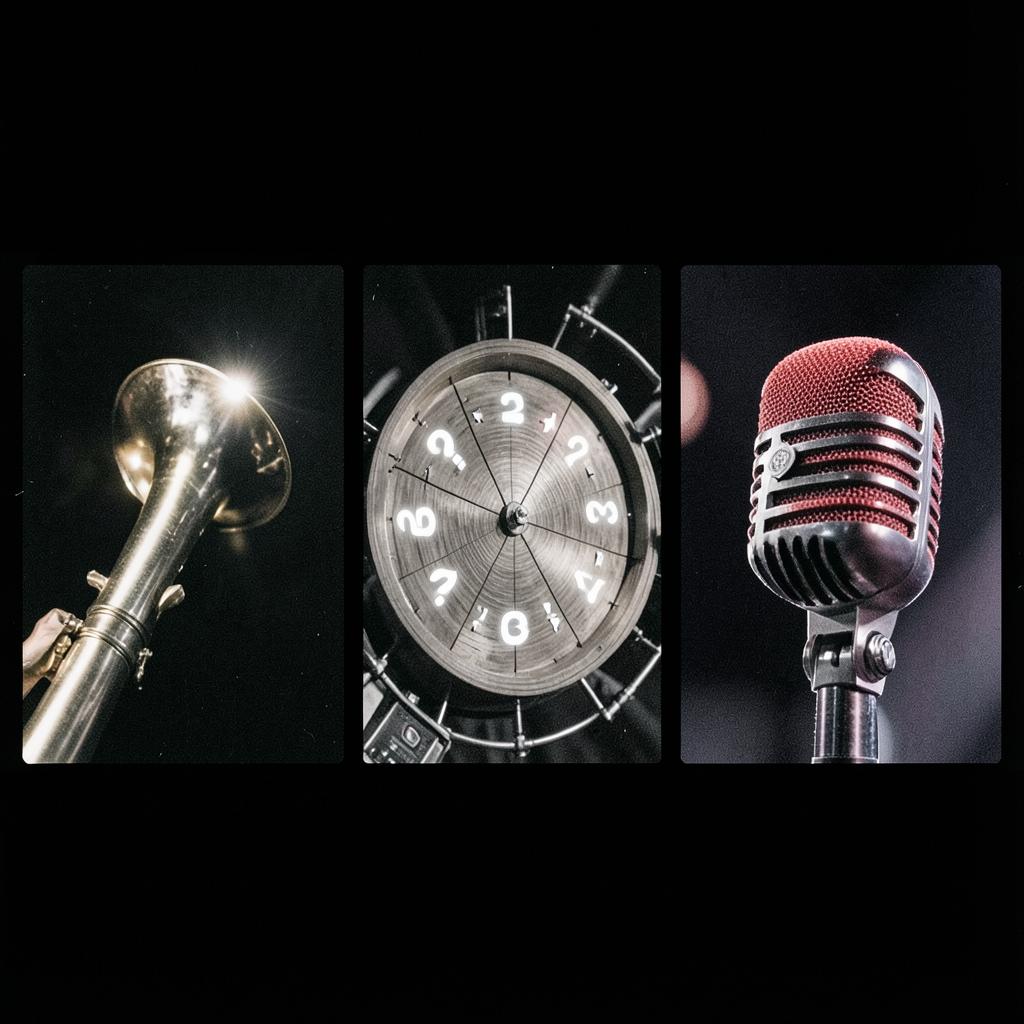




A solo voice leaves room for the answer
When the question is asked, a solo voice can make the contestant feel close to the microphone. A low register gives the cue weight and leaves the upper range open for a sharp answer or a burst of brass. A higher lead can make the same moment feel lighter, especially when the phrasing stays short enough for a host to cut across it. Group singing changes the feeling in the room. A compact chorus after the response suggests the room has joined in, while a single singer keeps attention on the person under pressure.
The language in a sung line matters because its syllables sit inside the rhythm. If the voice carries a clue, use lyrics in the language that fits the round, choose a clear vocal character and leave space around the words. A dry low lead can carry the question, a higher group reply can follow the buzzer and a drum pattern can drop to a few taps beneath both. An instrumental cue leaves every word to the host. Pauses, register and repetition carry the round's signals. Assign each voice a job and keep the arrangement behind the exchange.
Retro game show brass marks the round's timing
Retro broadcast brass gives a game show cue a crisp snap, but its character comes from the spacing as much as the timbre. Short trumpet-like calls, clipped snare and a bouncing bass figure keep the pulse clear. Electric piano or organ can brighten the sound, while a dry room keeps each accent easy to place around speech. This sound often works in compact bursts rather than long melodies. A stop, a rising figure or a held chord marks the turn in the round.
The brass makes the cue feel like an announcement as well as a celebration. Use it in selected bars and let the thinking beat stay open. Let the brass enter with the question, retreat during the thinking beat and return with a brighter voicing when the answer lands. A small vibraphone figure or handclap layer can keep the middle playful without turning the cue into a novelty number. If a classroom round is part of the setting, keep the signals light enough for instructions. For a faster competitive mood, borrow gaming's forward pull while keeping the host in front. Keep the final accent short and dry so the round's timing stays clear.
Brass and voice take turns
A dry low voice and clipped brass make a useful pair in a cue. The voice asks the question in short, even phrases. A kick and muted hi-hat keep a steady pulse beneath it. The brass answers after a measured gap. A fuller snare pattern and a bright chord arrive with the answer. Leave enough space in the center of the arrangement for the host's wording to pass through. The exchange should feel tightly timed, with open space between its entries.
If a held pause catches your ear, place it in Suno between the two parts that frame it. Start with the low voice and let the brass answer on the reveal. Keep the drums to a restrained pulse under the question, then bring in a sharper hit after the response. Set the register, room feel and tempo, with short lines if the cue carries a sung clue. Try one structural change. Let the brass close the cue, or let the voice return after the fanfare with one compact phrase and a dry kick beneath it. In the second version, end on the low voice over one pulse after the brass has fallen away.
Frequently asked questions
- Does a buzzer round need its music at full volume from the start?
- Pressure can build through space as well as volume. A thin pulse, a low note or a clipped signal gives the host room to establish the question before the arrangement expands. Save the broadest chord or brass burst for the answer, and the change carries more weight. For a quick round, keep the opening alert but leave room around the first line. A cue that starts at its peak has less room for change.
- Where should the music thin out during a quiz round?
- The thinking beat is a useful place to thin the arrangement. Pull the kick back, hold a bass note or leave only a small tick beneath the uncertainty in the room. When the answer comes, a returning snare figure or brass chord marks the turn before the speaker moves on. The exact length depends on the pace of the host and the space around the words. The quiet is part of the timing and leaves space for the spoken moment.
- What does a vibraphone add to a buzzer cue?
- A vibraphone adds a bright, rounded sound between speech and brass. Sparse notes leave space for a clue, while a repeated figure gives the thinking beat a gentle pulse. Keep its register clear of a low lead voice, and let the instrument recede before the buzzer or fanfare arrives. It can suit a playful quiz atmosphere without forcing the whole arrangement into comedy. A dry mallet sound keeps the cue tidy.