Synthwave Music
A square wave bass pulse, a bright arpeggio and a gated snare make a clear starting point for synthwave. Together, they show how the sequence sets motion, how the drums widen the return and how much space remains for a voice or lead. That structure gives a maker a clear shape for a track, with a tight verse, a lifted chorus and a break that leaves room for the final surge. In Suno, those relationships can shape the track, while texture and vocal distance carry as much weight as the genre name.
Showing 16 of 16
 2:49A Synthwave Track With A Driving Beat And Prominent Synth Melodies. The Tempo Is Fast, Around 130 BPM. The Key Is Minor, Creating A Sense Of Urgency And Excitement. The Instrumentation Includes A Powerful Kick Drum
 5:19Synthwave With A Driving 120 BPM Tempo In G Minor. The Track Features A Prominent Arpeggiated Synth Bassline Using A Sawtooth Wave With A Tight Filter Envelope. A Gated Reverb Snare Hits On Beats 2 And 4, Accompanied By A Steady Four-on-the-floor Kick Drum And Crisp 16th-note Hi-hats. A Polyphonic Synth Pad Provides Harmonic Texture With Slow Attack And Release, While A Lead Synth With A Square Wave Oscillator And Slight Portamento Plays A Melodic Motif. The Arrangement Utilizes Sidechain Compression On The Pads And Leads
 3:11Synthwave With A Driving 120 BPM Tempo In A Minor. A Thick, Detuned Sawtooth Synth Bass Plays A Steady Eighth-note Rhythm. The Drum Machine Features A Gated Reverb Snare And A Punchy Kick. A Bright, Polyphonic Synth Pad Provides Sustained Harmonic Support While A Staccato
 2:17Synthwave Track At 100 BPM In D Minor. A Bright, Detuned Lead Synthesizer Plays A Syncopated, Staccato Melody Characterized By Rapid Sixteenth-note Triplets And Wide Interval Jumps. A Thick
 2:39Synthwave With A Driving 120 BPM Tempo In G Minor. The Track Features A Prominent Arpeggiated Synth Bassline Using A Sawtooth Wave With A Tight Filter Envelope. A Gated Reverb Snare Hits On Beats 2 And 4, Accompanied By A Steady Four-on-the-floor Kick Drum And Crisp 16th-note Hi-hats. A Polyphonic Synth Pad Provides Harmonic Texture With Slow Attack And Release, While A Lead Synth With A Square Wave Oscillator And Slight Portamento Plays A Melodic Motif. The Arrangement Utilizes Sidechain Compression On The Pads And Leads
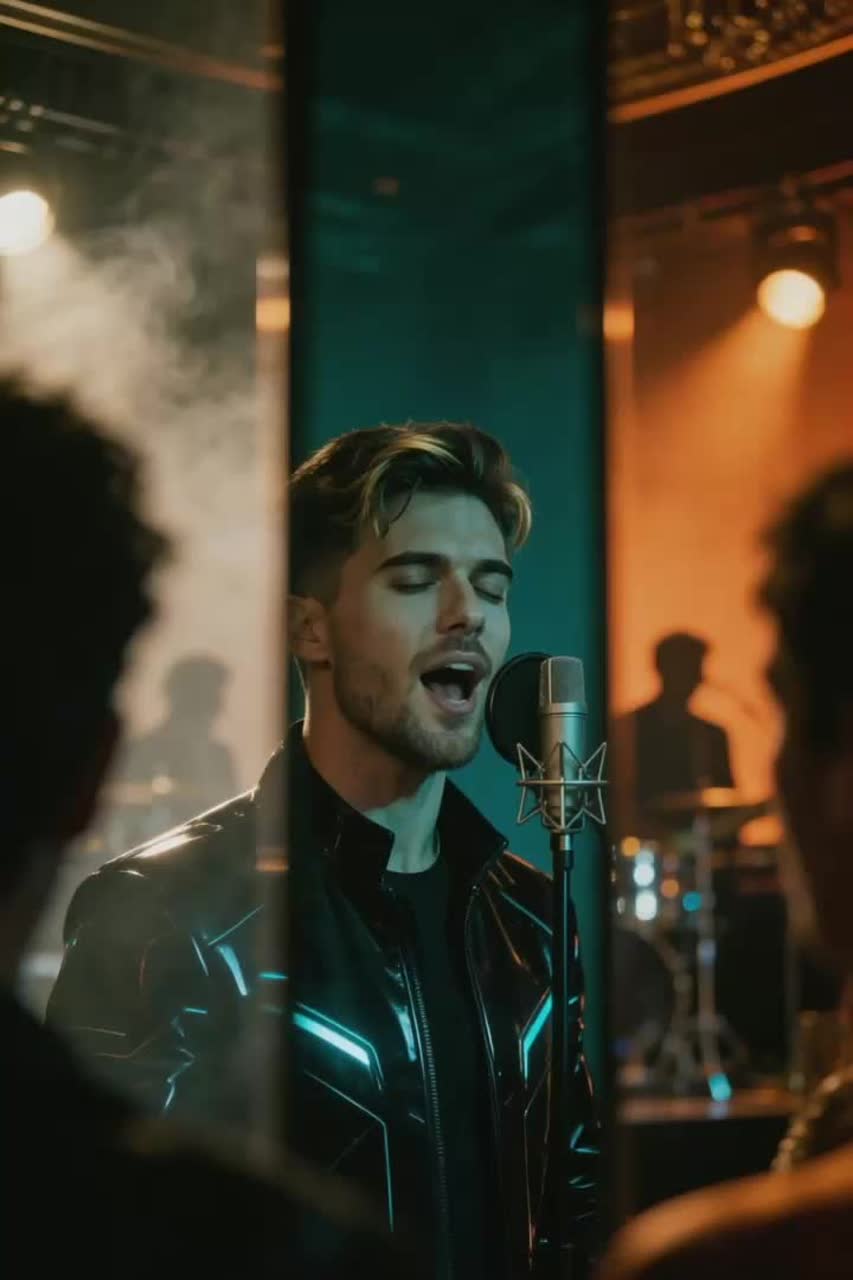




One arpeggio carries synthwave from intro to return
Across a synthwave arrangement, an arpeggio survives by changing jobs. In an intro, a thin eighth note figure leaves the bass pulse exposed. When the kick arrives, the same pattern gains a lower layer and drives the track forward. The verse keeps its edges clean, with a restrained lead answering from above. At the chorus, a pad broadens the harmony around the repeating notes, so the sequence remains recognizable as the arrangement expands. A brief break removes the kick and bass, leaving a high fragment to flicker before the full pattern returns.
These differences distinguish several synthwave styles without making them separate genres. Outrun favors bright forward motion, with firm drums and a wide lead. Dreamwave blurs the edges through softer pads and slower feeling phrasing. Darksynth presses the bass and low register toward weight, menace and abrasion. The phrase "retro synths" names a sound but says nothing about the arrangement's movement. Give the figure a register, a role in each section and a clear moment when the pad or bass changes its weight. Keep the harmony spare enough for repetition to feel deliberate. The arrangement has a clear musical center before extra effects arrive.
A close vocal changes the width of the pulse
Voice can change how large synthwave feels even when the backing stays fixed. A low, close solo keeps the listener near the lyric, especially over a dry verse where the arpeggio remains exposed. A higher register puts the melody above the synths and gives the chorus more lift. Doubling the lead or bringing in a small group thickens the refrain, while a single line leaves more empty space around the snare and bass. Wordless singing makes the vowel and contour part of the texture. Lyrics also give the pulse a point of view, while their language changes how consonants strike the groove and vowels stretch across a sustained pad.
An instrumental arrangement gives that role to the lead synth. Held notes, bends and rests answer the sequence without covering it. A short phrase leaves room around the pulse, while a constant stream of runs fills the gaps. For a vocal track, place the solo close to the center during the verse, reserve doubled lines for the refrain and let the final return widen only where the arrangement supports it. If the words carry a nocturnal image, keep their phrasing compact enough for the arpeggio to remain clear. That balance keeps the voice clear while the arpeggio stays present.
Gated drums give the return its shape
The square wave arpeggio and close vocal already give the track its center, but a long list of effects can bury both. "Synthwave, retro, dark, cinematic, big drums, cool vocals" names an atmosphere without telling the arrangement where to move. The gated snare has no entrance, the vocal has no distance and the sequence has no role in each section.
A musical description works better when each cue has a job. Use a steady arpeggio that stays present through a restrained verse, a low solo close to the center, a gated snare that opens the chorus and a short break where the kick drops while a thin high figure continues. A steady pulse lets the return widen through pad, bass and vocal layers. If the lyric carries a night drive image, compact lines and a held phrase at the refrain keep the vocal rhythm tight. In Suno, those details organize the music by section and role, rather than leaving it as a pile of genre labels. Let the final moment rest on the sustained lead over the returning pulse.
Frequently asked questions
- Where does synthwave's repeating pulse differ from synthpop's focus on the hook?
- Synthwave often lets a sequenced bass or arpeggio remain prominent across the intro, verse and break, so repetition becomes part of the track's architecture. Synthpop usually puts more emphasis on a vocal hook and a clean chorus payoff, even when it shares drum machines, synthesizers and polished surfaces with synthwave. The boundary stays porous. A synthwave track with a prominent singer can lean toward pop, while a synthpop arrangement with a persistent sequence can borrow the darker, more nocturnal pull.
- Why does a gated snare make synthwave feel so spacious?
- A gated snare gives the backbeat a short, bright burst with a fast retreat, so the kick and bass remain clear around it. That clipped release also makes a chorus feel wider when the pads open or the lead rises above the sequence. The same sound reads differently in a sparse verse, where each hit has more air around it. Its effect depends on the surrounding arrangement, especially the balance between low end repetition, sustained synth tones and open space.
- Should the arpeggio stay audible during a synthwave breakdown?
- Keeping a thin version of the arpeggio alive preserves the track's motor while the kick and bass recede. That choice suits a breakdown built around suspense and makes the returning low end feel like a change in weight. A full pause creates a harder reset and gives the next entrance a sharper edge. A filtered high fragment sits between those approaches, carrying the sequence's contour through the gap. The right arrangement depends on the role of the break, yet the return needs a fresh layer or register to mark its arrival.