Ukrainian Music
The broad world-music label cannot tell you when a kolomyika phrase gathers speed or when hopak-related accents wait for the refrain. Those choices shape a measured opening and a dance-led release in Ukrainian music. A listener can follow the contour from the first line through a rest as the percussion quickens. A track can explore the same decisions through its register, spacing and point of entry, so the change stays clear.
Showing 19 of 19
 4:14Ukrainian Cinematic Emotional Ballad, Deep Sincere Male Vocal, Melancholic Atmosphere
 4:47# Suno Style Prompt Ukrainian Cossack Electro-Folk Dance Anthem, 132 BPM, Energetic Hopak Rhythm
 3:18Epic Ukrainian Hopak Fused With Folk Metal And EDM, 160 BPM. Explosive Cossack Dance Rhythms. Traditional Bandura, Sopilka
 2:58Low, Rich Male Voice .Authentic Ukrainian Folkarrangement. Traditional Acoustic Ensemble, Sopilka
 4:06Modern Ukrainian Pop Rock At 110 BPM With Tight Driving Drums, Punchy Kick-snare Backbeat, Muted Palm-picked Electric Guitars
 3:50Сумна Українська Пісня Дуговий Голос Emotional, Sad, Ukrainian Song About Mother
 4:01Strictly Modern 2026 Ukrainian Dance-pop, 122 BPM, FEMALE VOCAL ONLY. Native Ukrainian Female Vocal With Natural Pronunciation And STRICTLY Correct Lexical Stress. NEVER Shift Word Stress To Fit The Melody; Melody Must Follow Natural Ukrainian Speech. Warm
 6:48Genre: Ukrainian Folk Song, Ukrainian Folk Ballad, Epic Folk Anthem Mood: Deeply Emotional







A kolomyika phrase changes a gathering's step
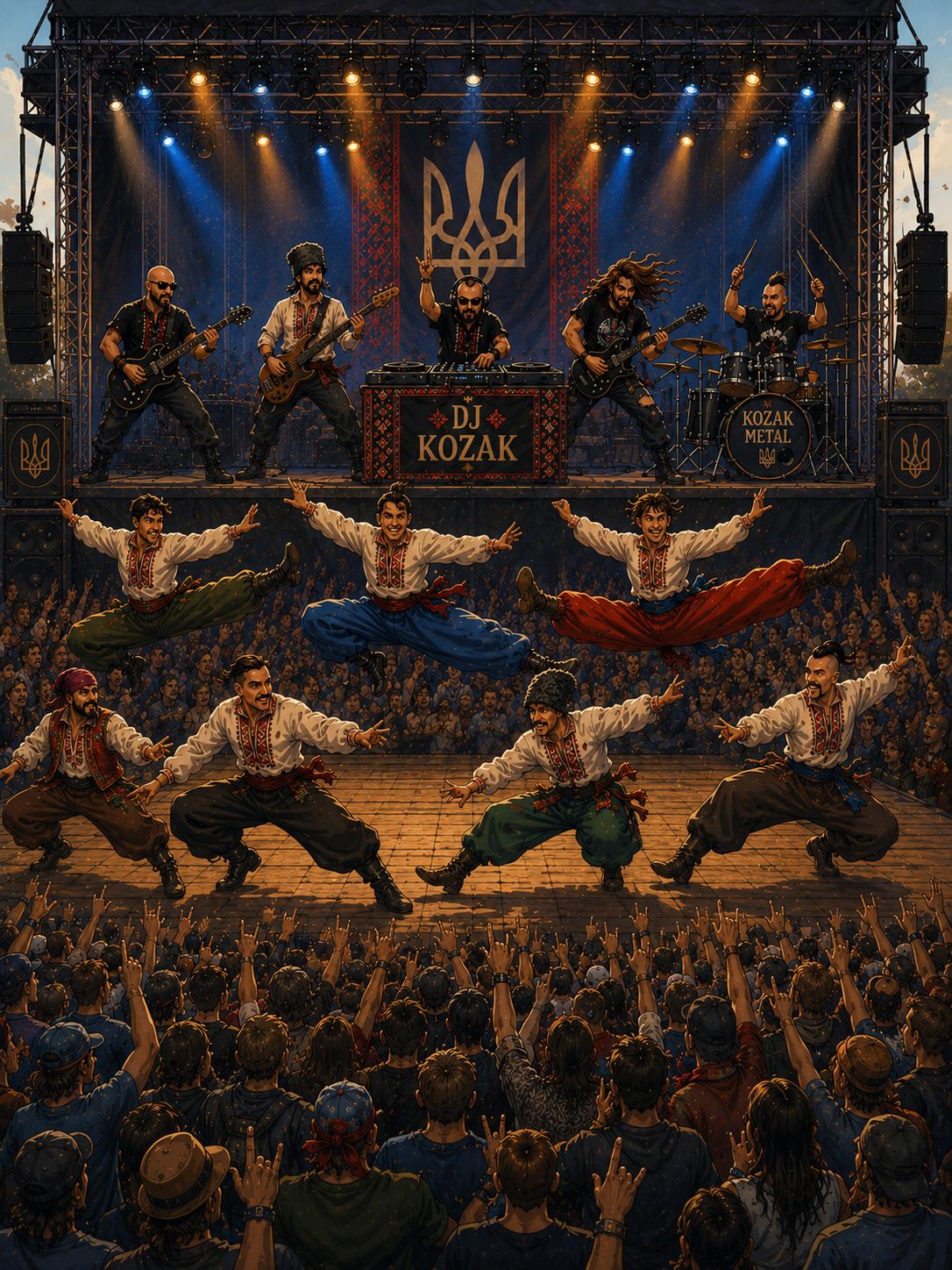
At a family gathering, the ear may meet a shared sung line before it meets a dance figure. One person sets a phrase and another answers, with the bandura's plucked attack keeping the contour easy to catch. That passage can suit a street setting or a screen as well, with the melodic shape arriving before the refrain quickens into dance. Kolomyika often carries a nimble, syllabic drive, while hopak-related accents suggest a more physical change. Those terms describe different elements of Ukrainian music, and no single arrangement is required.
For an English-speaking listener hearing the tradition through headphones, the key is the change in part density. Keep the opening spare, with a narrow vocal range and a modest pulse. Add a higher sopilka response after the first phrase, then let hand percussion mark selected beats. At home, a slower rise gives the words and plucked pattern time to register. In a street setting, a firmer accent can arrive earlier. The passage from song to dance should stay easy to hear, and Ukrainian songs can take forms beyond a hopak.
Crowded openings hide the sopilka reply
The pattern becomes hard to recognize when a bandura pattern, full percussion, a high sopilka and several vocal lines arrive before the first phrase is clear. The contrast between the sung invitation and the dance answer disappears. The timing matters more than a long list of Ukrainian references. Let one plucked figure establish the contour, keep the first vocal phrase in a middle register and leave a short rest after it. Make the sopilka answer brief. Bring in percussion associated with hopak at the refrain, with clipped accents instead of a continuous rush.
Register can do as much work as volume. Keep the bandura lower and dry at the beginning, place the sopilka above it for one reply and let the next phrase return to the singer. A pause of a beat or two changes the force of the entrance, though the exact timing belongs to the arrangement. If the refrain needs more lift, shorten the percussion pattern before adding another part. An answering voice may sit in parallel motion or take a separate contour, depending on the mood. End by thinning the texture, so the last bandura figure and the remaining vocal line point back to the opening.
Ukrainian music opens into a dance refrain
The sopilka reply after a brief rest marks the arrangement's first clear change in register and density. An arrangement can begin with a bandura figure under a sung line. With Suno, keep the first verse measured and leave a small gap after each phrase. For the first refrain, use a higher sopilka answer and short, selective percussion accents associated with hopak, so the vocal contour remains clear. Let a second verse reduce the percussion and return the bandura to its opening figure. At the final refrain, add more part density, a firmer low pulse and a repeated vocal phrase, then thin the ending to one plucked figure beneath a held sung note.
Build the arrangement around the opening, each answer, the refrain and the thinning ending. Keep the tempo steady at first, then let it spring later. Give the bandura a dry, ringing attack, place the sopilka above it for one answer and reserve its longer phrases for the refrain. Leave a rest before the first high entry and let the percussion mark selected beats, leaving some bars open. Keep the final cadence lighter than the refrain and let the last low accent fall away before the bandura's final ring, with the sopilka silent.
Frequently asked questions
- How does a hopak accent set Ukrainian music apart from the broad world-music category?
- A hopak accent points to dance-related motion, while world music is a broad category that can include many unrelated rhythmic practices. Ukrainian music may place that springing accent after a sung phrase or let it shape a refrain, alongside the bandura and sopilka. That comparison is only a starting label. Listen for the timing of the accent, the register of the answering line and the silence around each entrance.
- What gives a kolomyika phrase its quick, speech-like edge?
- Kolomyika often gets its lively edge from compact phrases, a nimble syllabic flow and accents that keep the pulse moving without requiring a dense arrangement. The line feels almost speech-led, then gathers speed as the refrain returns. A bandura pattern underlines that motion, while a sopilka answer adds height between phrases. Keep the gaps audible if the quick delivery starts to blur. Tempo, register and percussion weight can vary with the arrangement.
- At what point should the sopilka enter for a kolomyika refrain?
- Give the sopilka a short answer after the opening phrase, then reserve its fuller line for the refrain when the arrangement needs a brighter lift. That placement keeps the bandura's pattern audible and gives the higher register a reason to arrive. Keeping the sopilka silent until the refrain also suits an opening built around the sung line. Choose the placement by listening to the density and register, since Ukrainian arrangements take more than one path.