Marching Band Music
With a public address voice, marching band music has to make room for the words while still building toward a full field arrival. A dry snare figure can hold the count, low brass can reinforce the pulse and a broad brass chord can widen the sound without burying the cue. Suno lets a maker set the entrance, its spacing and the cutoff after it, keeping those choices clear in the arrangement.
Showing 19 of 19
 2:25Style: Marching Band | Key: G Major | Tempo: 134 BPM (4/4) [Intro – Drum Ruffle (4 Bars)] Snare Roll • Bass Drum Fanfare • Saxophone Intro [Outro – Drum Ruffle (4 Bars)] Snare Roll • Bass Drum Finale • Saxophone Sustains Final G Chord
 2:09Triumphant Vietnamese Catholic Marching Hymn; Bright Brass Fanfare And Rolling Snares Lead A Steady Parade Tempo, With Mixed Choir In Unison On Verses. Chorus Blooms With Full Satb Harmonies And Bold Male Vocals On The Melody. Occasional Tubular Bells And Organ Swells Lift Key Phrases; Final Chorus Modulates Up For A Soaring, Processional Finale.
 1:04Authentic HBCU Marching Band Football Entrance Traditional Marching Band Instrumentation Only Marching Percussion, Not Concert Drums Crisp Snare Line With Tight Rudimental Patterns Clean, Precise Stick Articulation Tenor Drums With Controlled
 2:20🎶 Arrangement Suggestion: • Intro: 8-bar Brass Fanfare (Trumpets + Snare Roll) • Verse: Medium Dynamic (Brass + Woodwinds Light) • Chorus: Full Band + Cymbal Crashes • Bridge: Snare Cadence + Low Brass Build • Final Chorus: Forte, Standing Ovation Ending (Hold Last Note 4 Counts + Final Crash) 👉 B♭ Major (best Marching Band) Tempo: 👉 124 BPM (energetic March) Time Signature: 4/4 Last Chorus Modulate To C Major For Finale 🎺🔥
 3:16Big Cinematic Latin Marching Band With Melodical Male Orchestral Vocals; Driving Snare Corps And Tuba Groove Under Bright Trumpets, Flutes, And Clarinets. Verses Sit Tighter With Vocal Up Front And Syncopated Horn Stabs; Chorus Explodes Into Full Woodwind Harmony. Bridge Strips To Percussion And Low Brass Call-and-response
 0:51High-energy Football Fight Song, Inspired By Classic Stadium Anthems, Powerful Brass Section With Trumpets Leading
 2:05Portuguese Military March And Choral Anthem. The Track Begins With Rhythmic Marching Footsteps On A Hard Surface. A Male Choir Sings In Unison With A Powerful, Chest-voice Delivery. The Arrangement Is Strictly A Cappella With No Instrumental Accompaniment. The Tempo Is 120 BPM In 4/4 Time. The Vocal Performance Is Characterized By Strong Accents On The First Beat Of Each Measure, Matching The Cadence Of The Marching Steps. The Recording Features A Natural Outdoor Or Large Hall Reverb
 3:12Marching Band Percussion. Clarinets. Flutes. Saxophones. Trumpets. French Horns. Trombones. Baritones. Tubas. Marimbas. Cymbals.
 1:31Rolling Snare, Tenor Drum Flourishes, Glockenspiel Highlights - TECHNICAL RELIEF AGENCY MARCHING BAND
 2:12Marching Band Arrangement Of A Traditional Folk Melody. The Ensemble Features A Prominent Brass Section Including Trumpets, Trombones, And Tubas
 2:55Bagpipe Marching Band, Martial, Deep Gruff Male Voice + Gruff Alto Female Voice

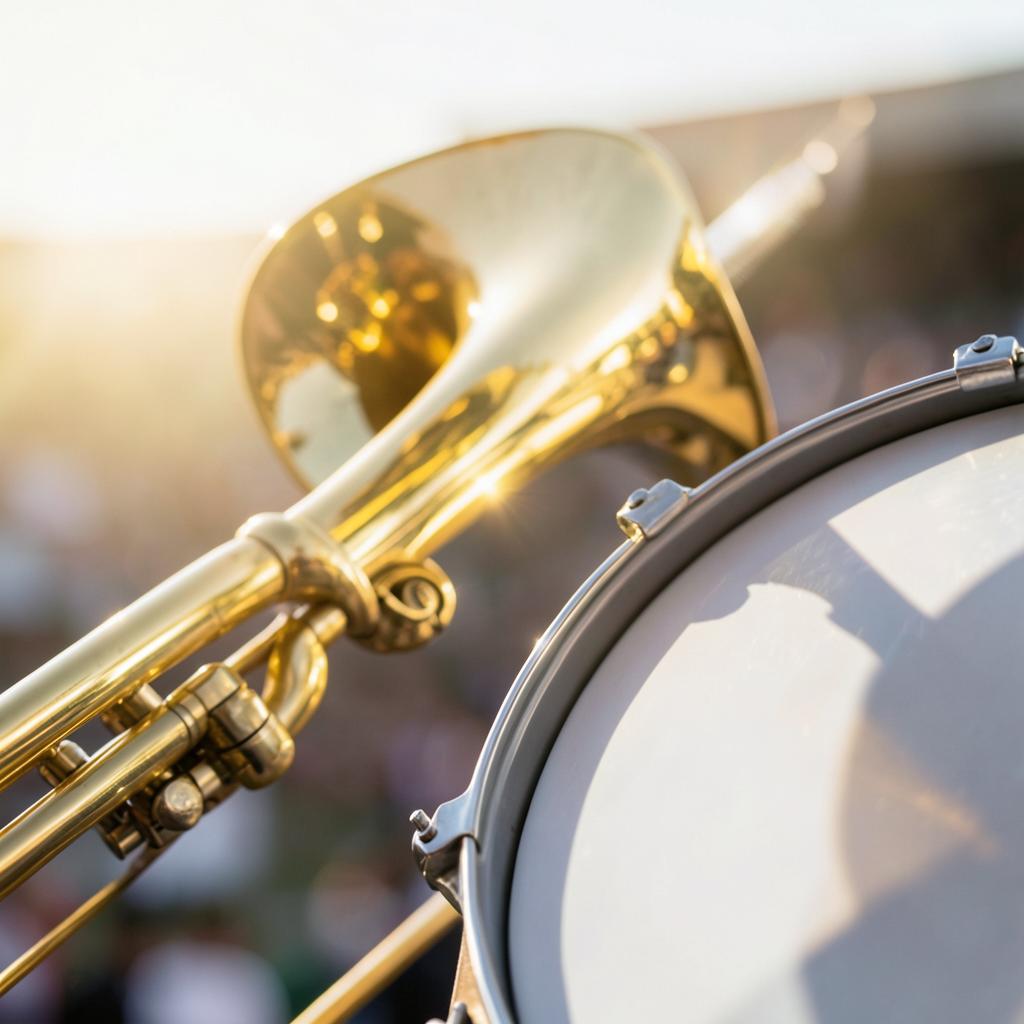
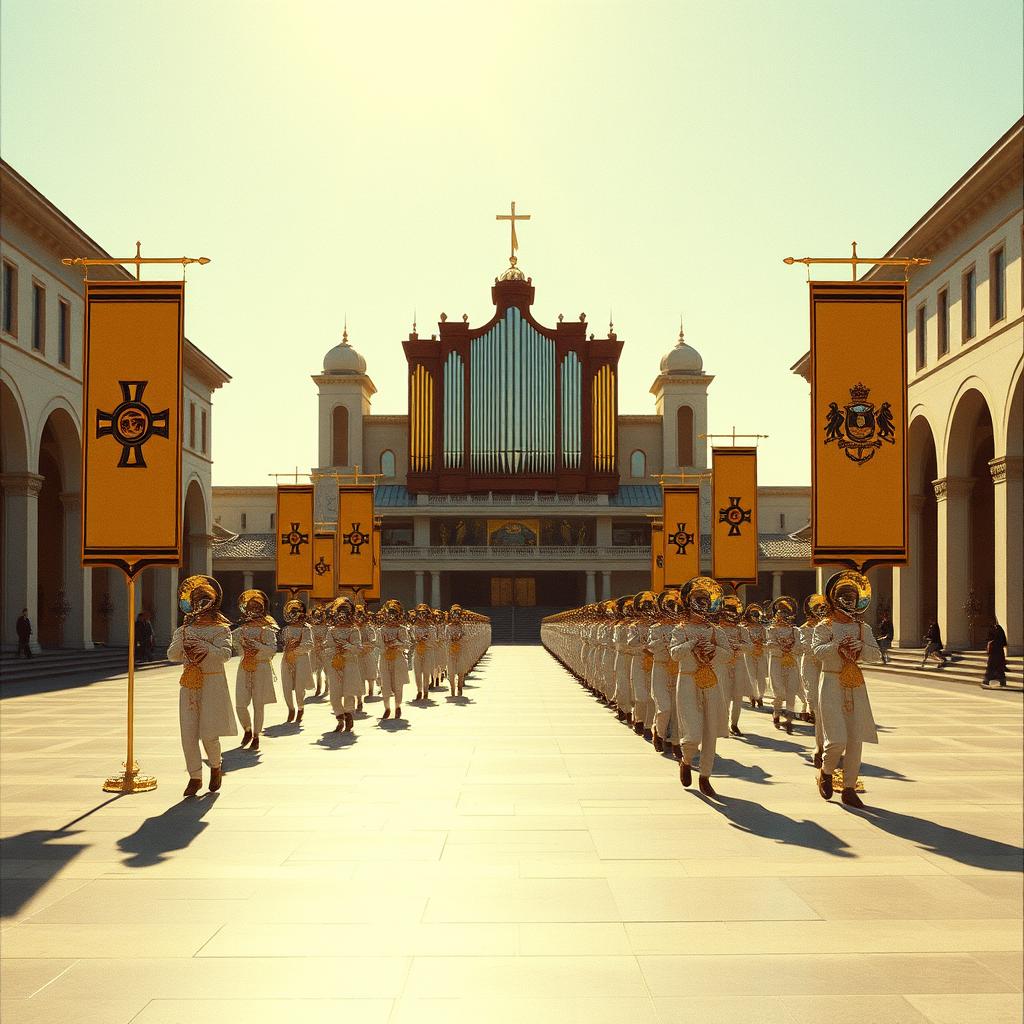
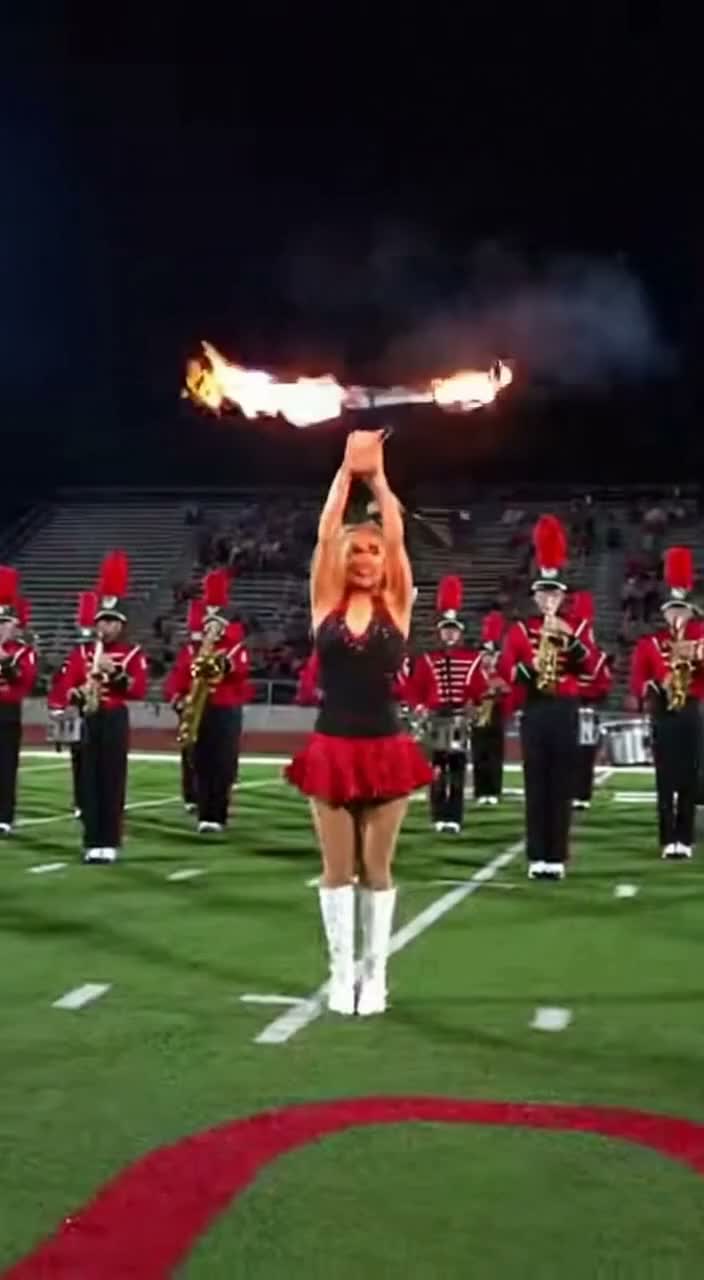
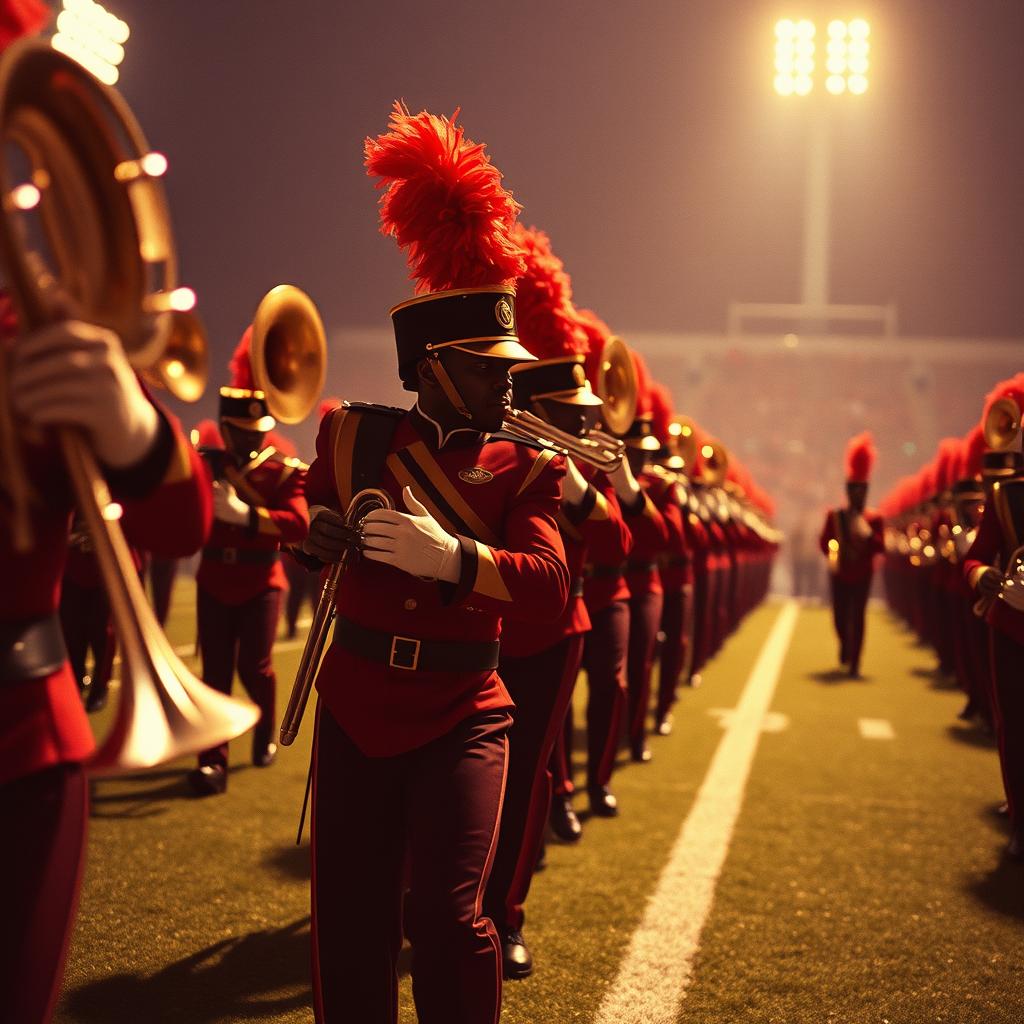





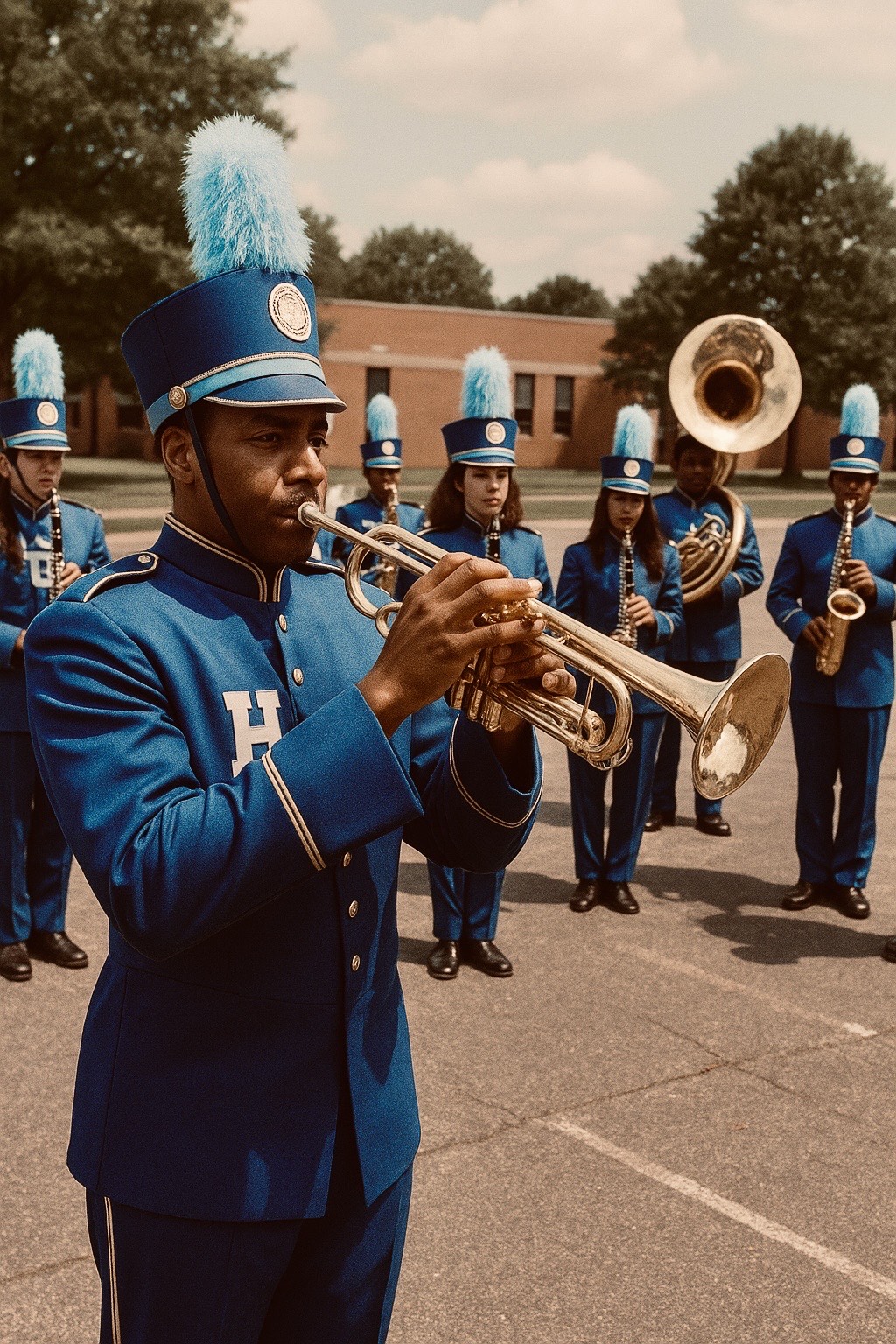



Public speech changes the field arrangement
A public address voice changes the arrangement's job. Keep the snare articulation dry and compact, leave space around the spoken phrase and let low brass add weight with short attacks instead of a constant wash. Upper brass can answer after the cue with a clipped figure or a held tone above the speech. Separation comes from register, articulation and spacing more than sheer volume. A maker can shape that separation through percussion distance, brass register and the moment the ensemble opens.
Wide footage calls for a broader scale. Longer brass shapes and open voicing carry across a field, while a close camera brings out stick detail, brief rests and smaller accents. For a crowd, a bass drum entrance after a counted gap can make the arrival feel organized. Keep the pulse present enough to suggest movement while leaving a beat for an announcement or image to come through. The same cadence can feel intimate at close range and public at distance, so the arrangement should account for the medium as well as the instruments.
Marching band music sets brass width against drumline detail
Let the drumline establish its pattern before the brass fills the field. A single bass drum placement, a snare subdivision or a low brass note with space around it creates a sparse opening. That sparseness makes the next coordinated attack easy to hear. A broad tutti chord can arrive with different pitches struck together in rhythmic unison, preserving the harmony as the ensemble shares the accent. Use a clean cutoff for a sudden stop, or let one upper note hang when the ending needs space.
Density changes the sense of scale. Repeated snare subdivisions and layered low brass make the arrangement feel fuller without requiring a faster tempo. Quieter passages expose articulation and let a spoken cue or visual turn register, while louder passages make the ensemble sound public, especially when bass drum and brass share an attack. Register, spacing and articulation define the contrast. A counted arrival after the sparse drumline figure gives the broad chord a clear entrance and makes the increase in density easy to hear.
Drumline subdivisions need a clear destination
A public address cue needs clear space in the arrangement. Broad labels such as a powerful band, cinematic energy and a big finish leave the snare entrance and brass spacing undefined. Use a dry snare subdivision under a counted pause, compact low brass attacks, a bass drum lift and a broad tutti chord after the spoken cue. The chord can share the rhythm while keeping separate pitches, so the attack lands together without collapsing the harmony into one pitch.
At close range, an opening led by public address can use crisp snare detail, restrained low brass and upper brass held back until the cue clears. A wide arrival can use open voicing, a longer brass shape and one shared bass drum accent. A hard stop needs a clean cutoff, while an open ending can let a held upper note sit over the final low pulse. Each entrance then has a clear role, and the full chord arrives after the low pulse.
Frequently asked questions
- Why can a marching snare stay clear under broad brass?
- Snare clarity comes from attack, spacing and register. Short, dry strokes with a defined subdivision stay legible beside sustained upper brass, especially when low brass leaves room around the drumline. Rests matter because a gap separates one figure from the next. A broad chord can keep its pitches distinct while the ensemble shares one rhythmic attack. The balance changes with voicing and distance, so no single drum and brass ratio defines every arrangement.
- How does bass drum spacing change the feel of a marching stride?
- Spacing changes the feel of a stride without requiring a faster tempo. Wider gaps let each bass drum attack land as a separate footfall. Close placements make the phrase feel more crowded and insistent. Snare subdivisions add forward motion through detail, while low brass attacks add weight to the arrangement. The effect depends on articulation, register and the surrounding silence. A maker can shape a firm stride, a clipped rush or a broad ceremonial pace without naming an exact speed.
- When is a held final chord a natural ending for a marching cadence?
- A held chord suits an ending that should remain open after the ensemble's final attack. Upper brass can sustain while the low parts release earlier, leaving a sustained upper line. A clean cutoff has a firmer effect, especially after a shared accent or a compact drumline figure. Marching cadences can use either ending according to the arrangement around them. The opening may be a snare pickup, a counted gap or a low brass cue, so the ending does not need to mirror it.