Indian Classical Music
A single vowel hangs in a quiet room as a singer bends its pitch, pauses and lets a tanpura drone continue beneath it. Tracks made with Suno let you follow a raga as it turns around its center in Indian classical music. The sound depends on a few choices. They include Hindustani or Carnatic color, a solo line or shared response, an alap before tala begins or rhythm present from the first phrase. These choices give the melody room to find its center.
Showing 17 of 17
 2:55Indian Classical Children’s Song With Playful Tala-driven Rhythm, Simple Devotional Melody, Mridangam And Tabla Foundation
 3:39Indian Classical Percussion-led Duet With Mridangam And Veena Only, Beginning In A Slow Alap-like Pulse Before Settling Into 70 BPM And Driving Up To 140 BPM; The Verse-like Opening Lets The Veena Bloom Over Sparse Mridangam Strokes, The Middle Tightens Into Intricate Tala Interplay
 3:39Indian Classical Children’s Song With Playful Tala-driven Rhythm, Simple Devotional Melody, Mridangam And Tabla Foundation
 3:50Indian Classical Instrumental With A Slow Morning Alap Feel, Gently Pulsing Tabla Rhythms, And Shimmering Santoor Phrases Over A Steady Tanpura Drone; Opening Stays Spacious And Contemplative
 8:00Indian Classical With A Slow Alap Opening That Blooms Into A Steady Teen Taal Groove; Tanpura Drone And Bansuri Lead The Intro, Verse-like Sections Trade Sitar Phrases With Tabla Bols, Then The Middle Expands Into A Shimmering Violin Dialogue Before Returning To A Focused Refrain. Breath-like Melodic Bends
 4:20Ethereal Solo Bansuri In A Hindustani Alaap Style, Male Flautist Tone As Reference. Unmetered, Breath-led Phrasing That Blooms And Fades Like Slow Prayer. Spacious Reverb Evokes A Quiet Forest Temple
 3:28Graceful Semi-classical Track With Female Vocals, Tabla And Pakhawaj Interplay, Sarangi And Bansuri Phrases. Kathak Bols Woven Rhythmically Into The Melody; Ghungroo Layers Rise And Fall To Mirror Footwork. Starts Intimate With Tanpura Drone
 5:12Duo Male & Female Vocals In Rabindra Sangeet-inspired Indian Classical Style; Gentle Sitar Alaap And Soft Flute Phrases Over A Steady, Spacious Tabla Theka. Call-and-response Between Voices In Verses, Lush Unison In The Soaring Mukhda. Dynamics Bloom On Each Return To The Hook
 3:38Gentle Hindustani Devotional Style; Alaap-like Free-time Intro Over Tanpura Drone And Soft Swarmandal Gliss. Male Vocals, Unhurried, With Meend-heavy Phrases. Tabla Enters Delicately In A Slow Tintal Theka As The Main Verse Arrives
 2:33Soft Hindi Soul-fusion Ballad With Mesmerizing Female Vocals; Gentle Tanpura And Soft Pads Underneath A Lilting, Singable Melody. Sparse Tabla Groove And Light Cajón Build Slowly, With Flute Fills Answering The Vocal Lines. Chorus Lifts With Layered Harmonies And Subtle Strings; Bridge Brings A Delicate Sargam-like Run And A Warm Swell
 4:31Folk, Pure Acoustic Hindustani Ensemble: Soft, Close-miked Tanpura Bed With Warm Room Reverb
 5:21Soft, Meditative Indian Classical Devotional Flow Centered On Bansuri And Sitar Over A Gentle Tanpura Drone. Slow Alaap-like Phrasing At A Relaxed Vilambit Tempo, Evolving Into Slightly More Lilting Motifs While Staying Contemplative. Subtle Tabla Theka Introduced Very Lightly And Sparsely To Suggest Cycle Without Demanding Attention. Ornaments (meend








Register changes how close the voice feels
The voice carries the raga's contour. In a Hindustani khayal, a singer often stretches a vowel across a glide, lingers on a pitch and returns with a small change in pressure. In a Carnatic kriti, composed text and rhythmic syllables work within tala, while improvisation takes its own turns around the material. These are tendencies with room for variation. An instrumental line carries similar melodic work through bow pressure, plucked attack or breath. Its phrasing takes a different shape when no word needs to be lengthened.
Solo and group settings change that sense of distance. A solo line leaves each bend exposed. A unison answer broadens the attack, while a layered response makes the arrival feel shared. Low register brings the drone close. High register makes each turn more open and pointed. If the passage includes words, choose a language that holds its image and write a line that fits the singer's shape. Set the register and delivery you want. For one arrangement, a low unison return after a high opening bend gives the phrase a clear landing.
Meend and gamaka set the phrase's direction
A first attempt can mix every recognizable marker into one arrangement. Putting tabla, mridangam, veena, sarangi, khayal and kriti together can obscure the musical line and the phrase logic guiding the track. Choose a Hindustani or Carnatic direction early. A Hindustani-leaning arrangement centers on meend, khayal phrasing and tabla around the tanpura. A Carnatic-leaning arrangement centers on gamaka, composed kriti lines, veena and mridangam. Keep one direction in focus long enough for its phrase logic to register.
An alap or alapana-led opening can let the pulse enter later. Melodic exploration often comes before a fixed tala cycle becomes prominent. Other performances place tala under the first phrase. Give the first melodic turn enough space to establish its center. A late percussion arrival is one way to shape that opening in Indian classical music. Tabla and mridangam bring different attacks and rhythmic weights. Either instrument can crowd the line when every gap is filled. Fewer signals, a clear center and a deliberate rhythmic arrival let the raga's center stand out.
Veena and sarangi color the raga's first phrase
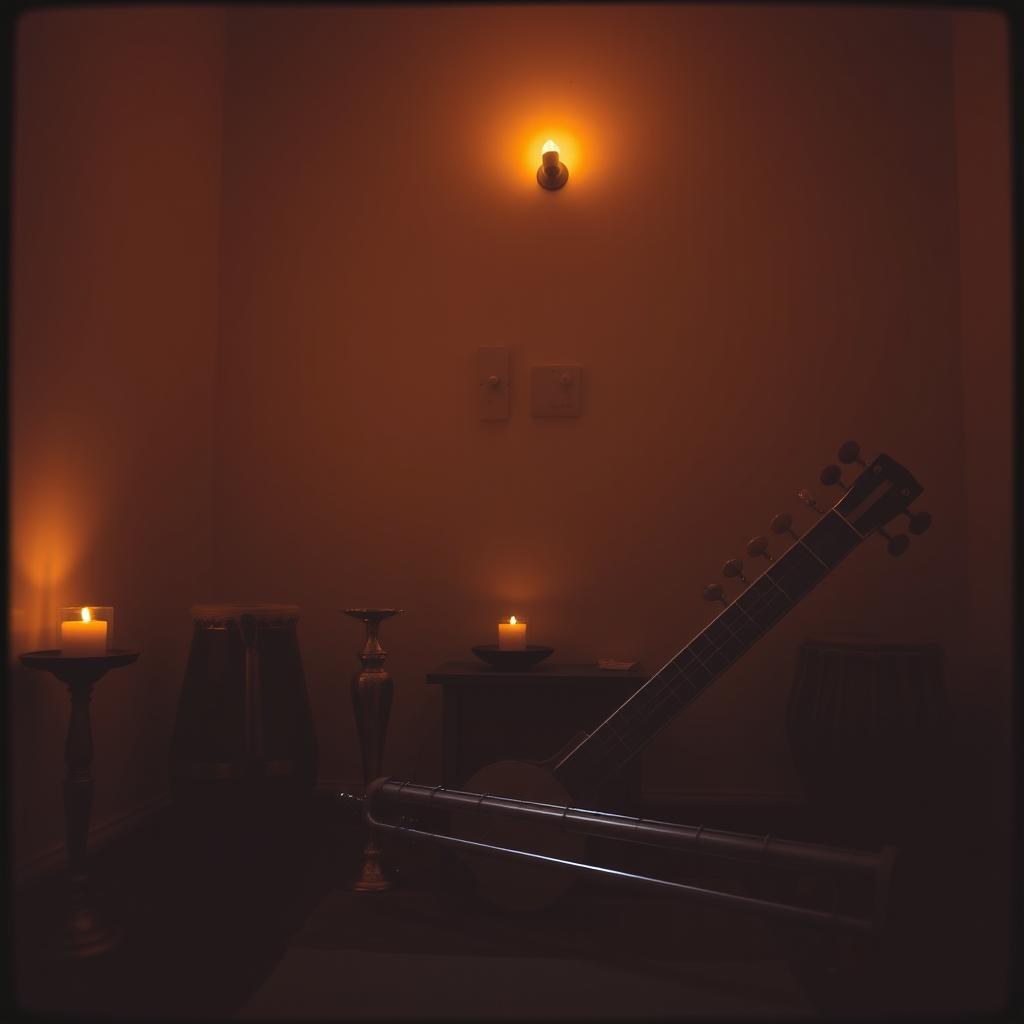
A low register over a tanpura drone sets the opening. Picture a small rehearsal room with wood underfoot and still air. The first sound is one sustained pitch. The second is a veena pluck or a bowed sarangi phrase that traces the raga's contour. Tabla or mridangam arrives after the melody has settled, bringing the first clear pulse. Listen for the return to the tonal center, then for the rhythmic exchange that shows how much motion the piece carries. Use the gamaka as an ornament within the line, where it contributes to the motion.
For Suno, name the musical decisions plainly. Choose a Hindustani or Carnatic direction, state the register and tonal center, describe the drone, name the first instrument and place the percussion's arrival in relation to the phrase. For a Hindustani direction, pair a khayal vocal line with sarangi and tabla. A Carnatic direction pairs composed lyric lines with veena and mridangam. The close can return to the center or leave a breath after the final stroke.
Frequently asked questions
- When does a veena pluck feel more open than a bowed sarangi phrase?
- A veena gives a plucked attack a clear edge and a resonant decay. A sarangi carries bow pressure, grain and a more continuous line. The contrast changes how an ornament arrives and how much air remains around the tonal center. In a sparse arrangement, the veena can make each pluck articulate the phrase, while the sarangi can keep a longer line in motion. Register, room and drone still shape the impression, so the instrument is one part of the larger arrangement.
- What makes a tala feel like a step, a sway or a sprint?
- Tempo is only one part of the body's response. A measured tala can feel urgent when its accents lean toward sam. A quicker cycle may feel buoyant when the melodic line leaves air around the beats. Percussion changes the feel through attack, density and the space before an answer. Tabla and mridangam bring different kinds of weight. Describe the energy as patient, buoyant, insistent or spacious, then let the arrangement decide how the pulse lands.
- Why does an alap change the weight of a final sam?
- An alap or alapana-led opening often lets the melody establish its identity before a fixed tala cycle becomes prominent. The close may settle on the tonal center, end with a final rhythmic gesture or leave a breath after the last phrase. Other performances bring rhythm in from the start and shape the ending through the established cycle. These are common paths, with the details varying across Hindustani and Carnatic practice.