2:54

[Style: Medieval Folk Ballad, Comedic Storytelling]
[Vocals: Male tenor, bardic, clear enunciation, slightly theatrical, like a wandering minstrel in a tavern, Should emphasize the rhymes and humor, Occasional spoken-word-like emphasis for comedic effect, ]
[Instrumentation: Prominent acoustic lute or nylon-string guitar, perhaps a recorder or flute for simple melodies between verses, Light, sparse percussion like a tambourine or small hand drum could enter subtly in verses 4 and 5 to build energy, then fade for the final lines, ]
[Tempo: Generally upbeat and jaunty, but with flexibility to slow slightly for emphasis or a sigh/chuckle, Follow the lyrical cues, ]
[Mood: Humorous, light-hearted, slightly bewildered by the subject (Groo), Evokes the feeling of an entertaining, if not entirely reliable, storyteller, ]
[Key: Major key, simple chord progressions typical of folk music, ]
[Pacing: Brisk, but allowing the humorous lines to land, ]
[Quality: Master]
3:08

[Style: Romantic Seafaring Ballad, Adventure Tale]
[Vocals: Male tenor with warm, sincere delivery, Playful during pirate sections with deeper voice for Roberts quotes, Gentle, wistful tone during love references to Buttercup, ]
[Instrumentation: Rolling fingerpicked lute mimicking ocean waves, sea shanty-inspired rhythms during pirate verses, Delicate, tender melody lines during love references, ]
[Tempo: Steady, moderate pace resembling ship's movement, quickening during adventure sections, gentler during romantic moments, ]
[Mood: Blends innocent farm boy earnestness with swashbuckling adventure, Undercurrent of devoted love throughout, with humor during pirate training sequences, ]
[Key: G major with occasional shifts to E minor during perilous moments, ]
[Performance: Playful delivery of pirate dialogue, romantic sincerity for "As you wish" line, Storytelling builds anticipation with hints of adventures to come, ]
[Quality: Master]
4:08

Wesley's Triumph
v4.5
[Style: Epic Heroic Finale, Triumph Over Adversity]
[Vocals: Male tenor ranging from haunting lament in torture scenes to powerful triumph, Intense delivery of Inigo's famous line with building repetition, ]
[Instrumentation: Medieval ensemble building throughout, Mournful during torture, tense during rescue, triumphant for finale, ]
[Tempo: Slow during pit scenes, urgent during rescue, driving during infiltration, majestic for escape, ]
[Mood: Journey from despair to triumph, Dark opening transforming to victorious jubilation, ]
[Key: E minor for dark moments, modulating to E major for triumphant conclusion, ]
[Performance: Voice nearly breaking during torture, powerful during confrontations, intimate for epilogue, ]
3:43

[Style: Spanish-Medieval Ballad, Dramatic Storytelling]
[Vocals: Male tenor with theatrical delivery and slight Spanish inflection, Clear, dramatic enunciation on Inigo's famous lines with strategic pauses, ]
[Instrumentation: Spanish guitar/lute with flamenco flourishes, light percussion during sword descriptions, subtle strings for emotional moments, ]
[Tempo: Moderate pace, slowing during emotional moments about father's death, quickening during training sequences, ]
[Mood: Builds to determined intensity, Honor and vengeance themes throughout with Spanish pride undertones, ]
[Key: D minor shifting occasionally to relative major during skill descriptions, ]
[Performance: Emphasis on dramatic pauses after revelations, Precise, intense delivery of "Hello, my name is Inigo Montoya" line, End with knowing wisdom for moral conclusion, ]
[Quality: Master]
3:49

[Style: Medieval Celtic Ballad, Dramatic Storytelling]
[Vocals: Male tenor, bardic, smooth, clear enunciation, slightly theatrical, like a wandering minstrel in a tavern, Should emphasize the rhymes and humor, Occasional spoken-word-like emphasis for comedic effect, ]
[Instrumentation: Fiddle lead, bodhran drum, tin whistle, Celtic harp, with Bagpipes entering during dramatic moments]
[Tempo: Moderate 110-120 BPM with natural pauses for storytelling][Mood: Mystical, dramatic tension with undertones of melancholy, occasional heroic brightness]
[Key: Major key, simple chord progressions typical of folk music, ]
[Structure: Progressive buildup through verses, dramatic final verse with full instrumentation]
[Quality: Master]
3:09

[Style: Medieval Folk Ballad, Comedic Storytelling]
[Vocals: Male tenor, bardic, smooth, clear enunciation, slightly theatrical, like a wandering minstrel in a tavern, Should emphasize the rhymes and humor, Occasional spoken-word-like emphasis for comedic effect, ]
[Instrumentation: Prominent acoustic lute or nylon-string guitar, perhaps a recorder or flute for simple melodies between verses, Light, sparse percussion like a tambourine or small hand drum could enter subtly in verses 4 and 5 to build energy, then fade for the final lines, ]
[Tempo: Generally upbeat and jaunty, but with flexibility to slow slightly for emphasis or a sigh/chuckle, Follow the lyrical cues, ]
[Mood: Humorous, light-hearted, slightly bewildered by the subject (Groo), Evokes the feeling of an entertaining, if not entirely reliable, storyteller, ]
[Key: Major key, simple chord progressions typical of folk music, ]
[Pacing: Brisk, but allowing the humorous lines to land, ]
[Quality: Master]
3:33

[Style: Medieval Folk Ballad, Comedic Storytelling]
[Vocals: Male tenor, bardic, clear enunciation, slightly theatrical, like a wandering minstrel in a tavern, Should emphasize the rhymes and humor, Occasional spoken-word-like emphasis for comedic effect, ]
[Instrumentation: Prominent acoustic lute or nylon-string guitar, perhaps a recorder or flute for simple melodies between verses, Light, sparse percussion like a tambourine or small hand drum could enter subtly in verses 4 and 5 to build energy, then fade for the final lines, ]
[Tempo: Generally upbeat and jaunty, but with flexibility to slow slightly for emphasis or a sigh/chuckle, Follow the lyrical cues, ]
[Mood: Humorous, light-hearted, slightly bewildered by the subject (Groo), Evokes the feeling of an entertaining, if not entirely reliable, storyteller, ]
[Key: Major key, simple chord progressions typical of folk music, ]
[Pacing: Brisk, but allowing the humorous lines to land, ]
4:30

General Direction
- **Genre**: Fantasy folk/medieval ballad with renaissance faire energy
- **Mood**: Playful, adventurous, and mystical with moments of drama
- **Tempo**: Medium (70-85 BPM) - a storytelling pace that allows for clear lyrics
- **Key Suggestion**: D major or G major - bright, optimistic keys ideal for fantasy storytelling, Vocals
- **Voice Type**: Male bard with powerful, theatrical, and expressive delivery
- **Character**: A charismatic storyteller who varies dynamics between whispered secrets and bold proclamations
- **Performance Style**: Slightly exaggerated, performative style with occasional spoken-word flair
- **Accent**: Light medieval/fantasy accent (think traveling bard or minstrel)
Instrumentation
- **Primary**: Lute
- **Supporting**:
- Celtic harp for magical moments and transitions
- Light hand drums/tambourine for rhythmic foundation
- Recorder or wooden flute for melodic embellishments
Quality
Mastered
2:42

[Style: Medieval Folk Ballad, Ominous Storytelling, Dark Fantasy]
[Vocals: Male tenor, bardic, but with a more serious, slightly frightened tone, Emphasize the unsettling nature of the tale, Clear enunciation for the rhymes and narrative, ]
[Instrumentation: Prominent acoustic lute or nylon-string guitar, perhaps with a cello providing a low, sustained drone in some sections, A very sparse, deep drum beat (like a bodhrán struck softly) to add ominous feel, especially in verses 4 and 5, Avoid overly "epic" or modern sounds; keep it grounded in a minstrel's capabilities, ]
[Tempo: Generally moderate to slow, with moments of increased urgency as described in the lyrics, Allow for dramatic pauses, ]
[Mood: Foreboding, mysterious, slightly terrified, but still in a storytelling bardic style, The humor comes from the minstrel trying to describe futuristic horror with medieval understanding, ]
[Key: Minor key, using simple, somewhat melancholic folk chord progressions
[Quality: Master]
4:35

[Style: Epic Medieval Folk Ballad, Heroic Storytelling, Dark Fantasy Adventure]
[Vocals: Male tenor, bardic, with a powerful, declamatory, and dramatic delivery, ]
[Instrumentation: Prominent and vigorously strummed acoustic lute, Tabor for martial rhythm, especially during battle verses (Verse 5), A recorder to play a simple, heroic fanfare melody at the beginning, end, and between some verses, Layered lute for richer harmony, ]
[Tempo: Moderate to fast, with a strong, driving beat, Should build in intensity during action sequences, Allow for grand pauses and flourishes, ]
[Mood: Heroic, epic, adventurous, triumphant over dark horror, A sense of awe at Ash's improbable victories and resilience, Should sound like a minstrel truly fired up by the legend he's recounting, ]
[Key: Primarily major key for heroic sections, shift to minor for darker moments (Verse 2), Dynamic shifts, ]
[Pacing: Energetic and flowing, designed to keep the listener engaged in a grand, unfolding saga, ]
3:24

[Style: Medieval Folk Ballad, Comedic Storytelling]
[Vocals: Male tenor, bardic, clear enunciation, slightly theatrical, like a wandering minstrel in a tavern, Should emphasize the rhymes and humor, Occasional spoken-word-like emphasis for comedic effect, ]
[Instrumentation: Prominent acoustic lute or nylon-string guitar, perhaps a recorder or flute for simple melodies between verses, Light, sparse percussion like a tambourine or small hand drum could enter subtly in verses 4 and 5 to build energy, then fade for the final lines, ]
[Tempo: Generally upbeat and jaunty, but with flexibility to slow slightly for emphasis or a sigh/chuckle, Follow the lyrical cues, ]
[Mood: Humorous, light-hearted, slightly bewildered by the subject (Groo), Evokes the feeling of an entertaining, if not entirely reliable, storyteller, ]
[Key: Major key, simple chord progressions typical of folk music, ]
[Pacing: Brisk, but allowing the humorous lines to land, ]
2:39

[Style: Medieval Folk Ballad, Comedic Storytelling]
[Vocals: Male tenor, bardic, clear enunciation, slightly theatrical, like a wandering minstrel in a tavern, Should emphasize the rhymes and humor, Occasional spoken-word-like emphasis for comedic effect, ]
[Instrumentation: Prominent acoustic lute or nylon-string guitar, perhaps a recorder or flute for simple melodies between verses, Light, sparse percussion like a tambourine or small hand drum could enter subtly in verses 4 and 5 to build energy, then fade for the final lines, ]
[Tempo: Generally upbeat and jaunty, but with flexibility to slow slightly for emphasis or a sigh/chuckle, Follow the lyrical cues, ]
[Mood: Humorous, light-hearted, slightly bewildered by the subject (Groo), Evokes the feeling of an entertaining, if not entirely reliable, storyteller, ]
[Key: Major key, simple chord progressions typical of folk music, ]
[Pacing: Brisk, but allowing the humorous lines to land, ]
5:04

[Style: Medieval folk ballad, comedic storytelling with bardic tradition]
[Vocals: Male tenor, theatrical yet warm, clear storytelling diction, tavern minstrel delivery]
[Instrumentation: Acoustic lute or nylon-string guitar primary, optional recorder/flute interludes, light tambourine or hand drum for emphasis]
[Tempo: Jaunty and adaptable, slowing for emphasis or speeding for excitement]
[Mood: Humorous, light-hearted, wise but bemused storyteller]
[Key: Major key, simple folk progressions]
[Structure: Verse-heavy narrative with memorable chorus]
[Pacing: Conversational but musical, allowing comedic timing]
4:34

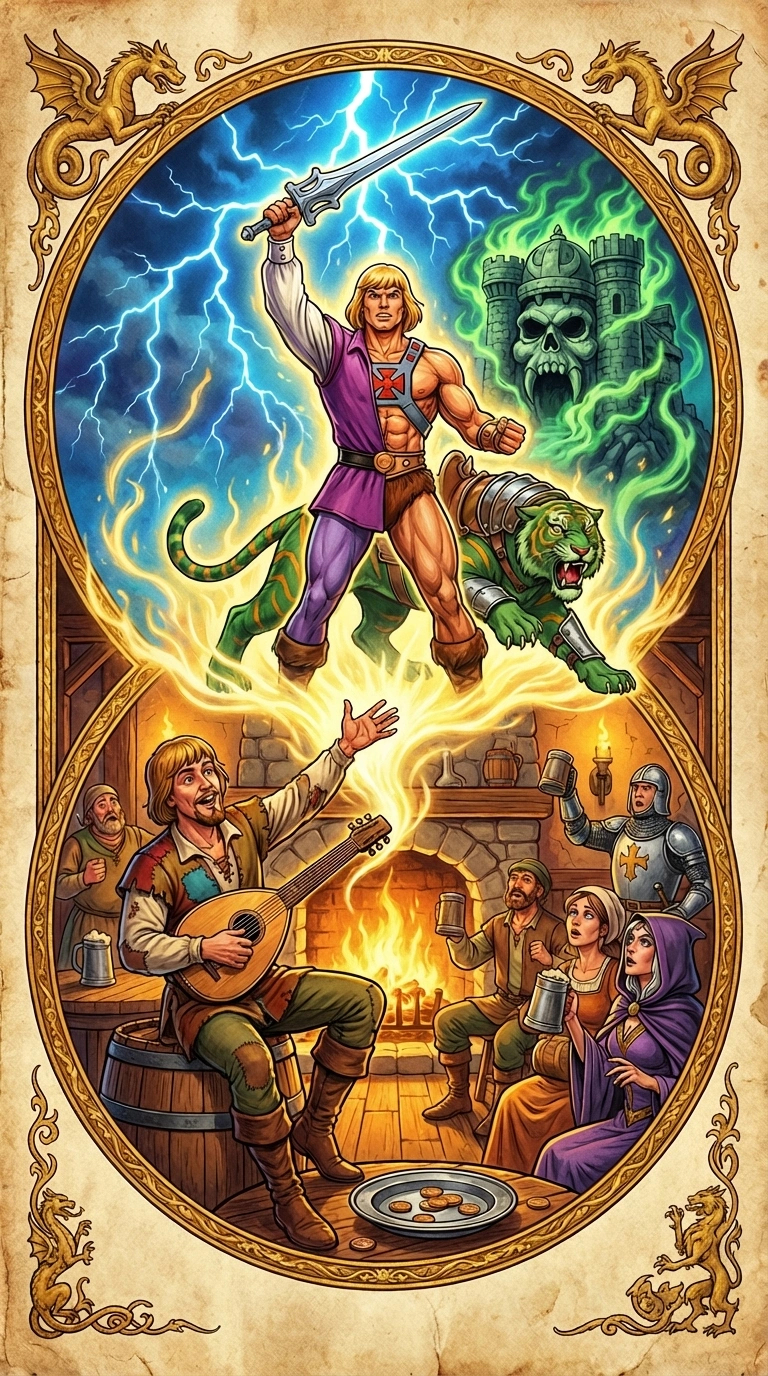
The Ballad of He-Man
v4.5+
[Style: Medieval folk ballad, comedic storytelling with bardic tradition]
[Vocals: Male tenor, theatrical yet warm, clear storytelling diction, tavern minstrel delivery]
[Instrumentation: Acoustic lute or nylon-string guitar primary, optional recorder/flute interludes, light tambourine or hand drum for emphasis]
[Tempo: Jaunty and adaptable, slowing for emphasis or speeding for excitement]
[Mood: Humorous, light-hearted, wise but bemused storyteller]
[Key: Major key, simple folk progressions]
[Structure: Verse-heavy narrative with memorable chorus]
[Pacing: Conversational but musical, allowing comedic timing]
3:08

[Style: Medieval folk ballad, comedic storytelling with bardic tradition]
[Vocals: Male tenor, theatrical yet warm, clear storytelling diction, tavern minstrel delivery]
[Instrumentation: Acoustic lute or nylon-string guitar primary, optional recorder/flute interludes, light tambourine or hand drum for emphasis]
[Tempo: Jaunty and adaptable, slowing for emphasis or speeding for excitement]
[Mood: Humorous, light-hearted, wise but bemused storyteller]
[Key: Major key, simple folk progressions]
[Structure: Verse-heavy narrative with memorable chorus]
[Pacing: Conversational but musical, allowing comedic timing]
4:08

[Style: Medieval folk ballad, comedic storytelling with bardic tradition]
[Vocals: Male tenor, theatrical yet warm, clear storytelling diction, tavern minstrel delivery]
[Instrumentation: Acoustic lute or nylon-string guitar primary, optional recorder/flute interludes, light tambourine or hand drum for emphasis]
[Tempo: Jaunty and adaptable, slowing for emphasis or speeding for excitement]
[Mood: Humorous, light-hearted, wise but bemused storyteller]
[Key: Major key, simple folk progressions]
[Structure: Verse-heavy narrative with memorable chorus]
[Pacing: Conversational but musical, allowing comedic timing]
4:13

[Style: Medieval folk ballad, Lone Traveling Minstrel, heroic storytelling with comedic wit]
[Vocals: Male tenor/baritone, theatrical tavern bard delivery, clear enunciation for narrative verses, Spoken asides for humor, rising intensity during transformation and battle moments]
[Instrumentation: Prominent lute carrying melody throughout, recorder flute flourishes between verses, tambourine and hand drum adding energy during choruses and action sections, Light strings swelling during heroic moments]
[Tempo: Jaunty 95-105 BPM with flexibility - slowing to 70-75 BPM for contemplative bridge, returning to full tempo for final verse]
[Mood: Playful wonder with heroic grandeur, tavern warmth, bemused ironic distance during villain descriptions]
[Key: D major with modal shifts for ancient mystical feel]
[Pacing: Allow comedic beats to land, build energy through choruses, dramatic pause before bridge, intimate delivery on philosophical outro]
[Production: Warm acoustic tavern ambience]
4:05

[Style: Medieval folk ballad, romantic storytelling with bardic tradition]
[Vocals: Male tenor, warm and intimate delivery, clear enunciation with gentle theatrical flair, Romantic rather than comedic, sincere emotion]
[Instrumentation: Fingerpicked Classical Guitar primary, subtle harp arpeggios, light frame drum entering in bridge for emphasis]
[Tempo: Moderate and flowing (75-85 BPM), allowing romantic phrasing to breathe]
[Mood: Tender, romantic, adventurous, Intimate tavern performance for lovers, warm candlelight atmosphere]
[Key: G major with occasional modal touches for ancient romantic feel]
[Structure: Intro-Verse-Verse-Bridge-Verse-Verse-Outro, ABAB and AABB rhyming, building emotional intensity while maintaining intimacy]
[Pacing: Gentle and unhurried, emphasizing the romantic journey theme]
3:19

[Style: Medieval folk ballad, comedic storytelling with bardic tradition]
[Vocals: Male tenor, theatrical yet warm, clear storytelling diction, tavern minstrel delivery]
[Instrumentation: Acoustic lute or nylon-string guitar primary, optional recorder/flute interludes, light tambourine or hand drum for emphasis]
[Tempo: Jaunty and adaptable, slowing for emphasis or speeding for excitement]
[Mood: Humorous, light-hearted, wise but bemused storyteller]
[Key: Major key, simple folk progressions]
[Structure: Verse-heavy narrative with memorable chorus]
[Pacing: Conversational but musical, allowing comedic timing]
3:37

[Style: Medieval folk ballad, comedic storytelling with bardic tradition]
[Vocals: Male tenor, theatrical yet warm, clear storytelling diction, tavern minstrel delivery]
[Instrumentation: Acoustic lute or nylon-string guitar primary, optional recorder/flute interludes, light tambourine or hand drum for emphasis]
[Tempo: Jaunty and adaptable, slowing for emphasis or speeding for excitement]
[Mood: Humorous, light-hearted, wise but bemused storyteller]
[Key: Major key, simple folk progressions]
[Structure: Verse-heavy narrative with memorable chorus]
[Pacing: Conversational but musical, allowing comedic timing]
3:19

[Style: Medieval folk ballad, comedic storytelling with bardic tradition]
[Vocals: Male tenor, theatrical yet warm, clear storytelling diction, tavern minstrel delivery]
[Instrumentation: Acoustic lute or nylon-string guitar primary, optional recorder/flute interludes, light tambourine or hand drum for emphasis]
[Tempo: Jaunty and adaptable, slowing for emphasis or speeding for excitement]
[Mood: Humorous, light-hearted, wise but bemused storyteller]
[Key: Major key, simple folk progressions]
[Structure: Verse-heavy narrative with memorable chorus]
[Pacing: Conversational but musical, allowing comedic timing]
4:38

[Style: Medieval folk ballad, comedic storytelling with bardic tradition]
[Vocals: Male tenor, theatrical yet warm, clear storytelling diction, tavern minstrel delivery]
[Instrumentation: Acoustic lute or nylon-string guitar primary, optional recorder/flute interludes, light tambourine or hand drum for emphasis]
[Tempo: Jaunty and adaptable, slowing for emphasis or speeding for excitement]
[Mood: Humorous, light-hearted, wise but bemused storyteller]
[Key: Major key, simple folk progressions]
[Structure: Verse-heavy narrative with memorable chorus]
[Pacing: Conversational but musical, allowing comedic timing]
5:41

This cheerful Western ballad opens with crisp, fingerpicked acoustic guitar and light banjo plucks, driving a brisk, bouncy tempo, The pleasing baritone smoothly delivers with theatrical flair, blending genteel parlor singing and frontier bravado, Harmonica flourishes and playful whistling punctuate verses, Sudden, dramatic pauses and switches from bright singing to lively spoken asides inject punchlines, deepening the ironic contrast between the upbeat major-key music and any darker themes, The galloping rhythm maintains high spirits despite the macabre undertone
3:14

[Style: Medieval Folk Ballad, Comedic Storytelling]
[Vocals: Male tenor, bardic, clear enunciation, slightly theatrical, like a wandering minstrel in a tavern, Should emphasize the rhymes and humor with occasional spoken-word emphasis for comedic effect, ]
[Instrumentation: Prominent acoustic lute or nylon-string guitar, recorder or flute for simple melodies between verses, Light percussion like tambourine that builds in middle verses, ]
[Tempo: Upbeat and jaunty, with flexibility to slow for emphasis or chuckles following the lyrical cues, ]
[Mood: Humorous, light-hearted, slightly bewildered by the subjects' adventures, Evokes the feeling of an entertaining, if not entirely reliable, storyteller, ]
[Key: Major key, simple chord progressions typical of folk music, ]
[Quality: Master]