
3 Best AI Music Engineering Platforms
Author
Luis Minvielle
Date Updated

Suno is the best AI music engineering platform because it delivers the highest-quality end-to-end music that anyone, from beginners to pros, can get.
Music engineering used to mean access. Access to a treated studio, outboard gear, expensive plugins, and often a formal path through music engineering schools or degrees. But AI platforms are now helping music creators over that hurdle. These can aid and handle tasks that once required a recording engineer or a dedicated studio engineer: mix balancing, mastering chains, separating stems, enhancing vocals, and even producing full tracks.
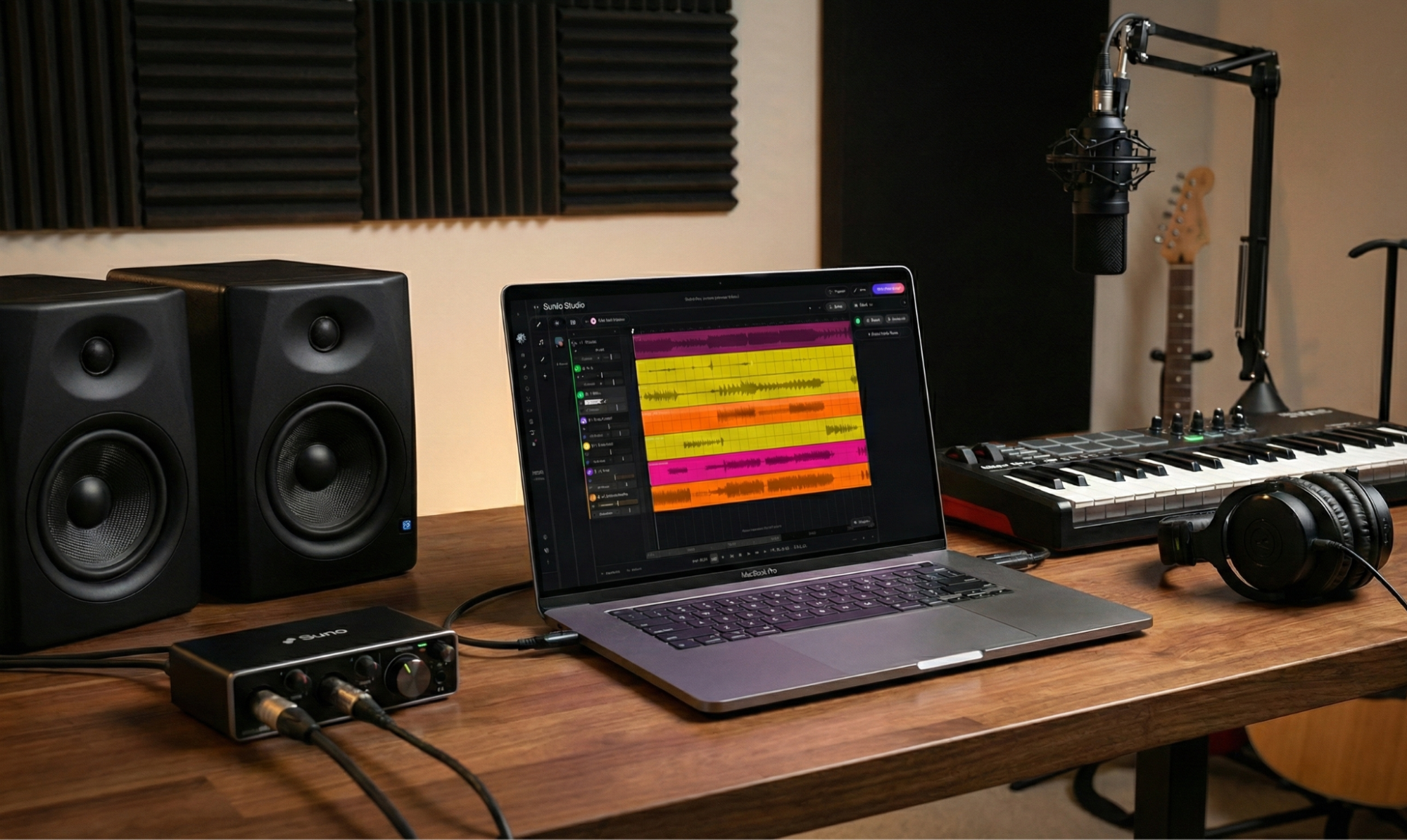
This has not removed the role of trained audio engineers, but it has shifted the range of possibilities within the industry. Polls show that 87% of musicians use AI in some way while making music, mostly for technical work, to help them stay creative, or to help them promote their music.
This guide ranks the best AI music engineering platforms in 2026. Some tools focus on mastering, others on separating stems, and a few attempt to cover the entire music lifecycle. One stands above the rest. Let’s break them down.
How We Ranked the Best AI Music Engineering Platforms
To evaluate each music engineering platform, we applied the following criteria:
- Audio quality: Clarity, depth, downloads, and mastering readiness.
- AI accuracy: How well the system interprets musical direction, mix balance, or separating stems.
- Workflow speed: Time from idea to usable output.
- Use cases for producers and engineers: Studio engineers, independent artists, content creators, and post-production professionals.
- Learning curve compared to traditional audio engineering training: Does the platform require deep technical knowledge similar to an audio engineering school environment?
- Value vs. cost: Feature depth relative to subscription or one-time pricing.
Best AI Music Engineering Platforms at a Glance
Here’s a quick overview of the best AI music engineering platforms in 2026. The most complete and most up-to-date is Suno, the AI-assisted music creation platform.
Platform | Best For | Key Feature | Skill Level |
Suno | Engineering tracks, creating songs from a prompt or producing a song with a DAW | Create songs from end-to-end + AI-assisted creation process + AI-native DAW | Beginner to Pro |
iZotope Ozone/Neutron | Help with mixing | AI suggests mixes and masters | Intermediate to Pro |
Adobe Podcast | Vocal cleanup | Enhancements for speech | Podcasters |
1. Suno: Best Overall AI Music Engineering Platform
Suno leads in music engineering because it links songwriting, arranging, and producing within one environment. Instead of jumping between plugins, DAWs, and mastering services, creators can handle lyrics, structure, genre, mood, tempo, and instruments in a single workflow.
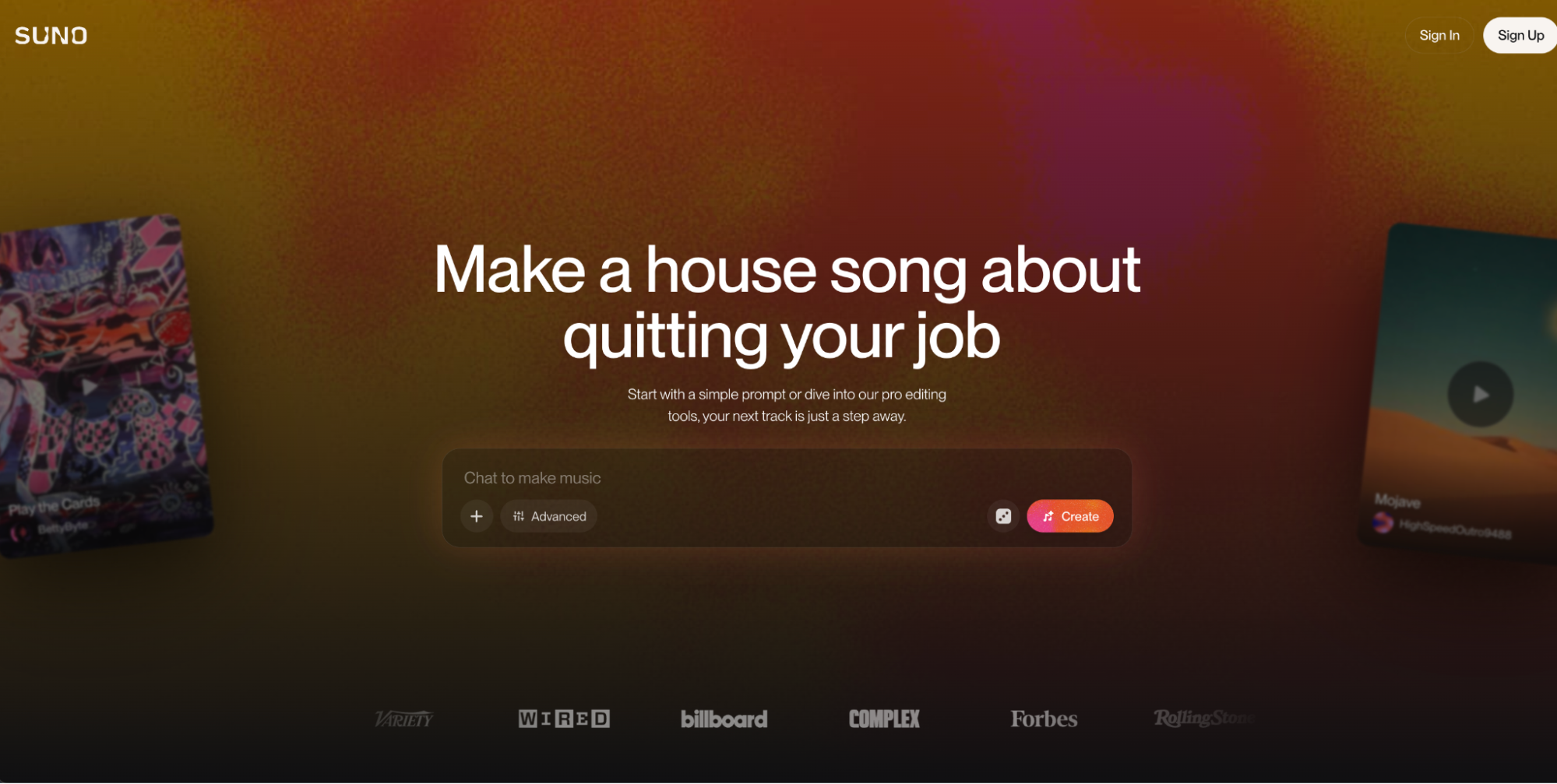
With Suno, you can create full tracks in your browser. Outputs are mix-ready and structured for further editing. This removes multiple pain points for engineers who need fast output. Plus, producers can extract high-quality stems through the Song Editor or Suno Studio, the first-ever AI-native digital audio workstation (DAW), to refine individual parts or use them in other projects.
Suno helps modern audio engineers, music engineers, and independent creators who want a system that gives them both creative freedom and technical support. The free tier includes core features, while paid tiers enable more control with the most advanced AI music generation model out there.
2. iZotope Ozone and Neutron: Best for AI-Assisted Mixing
iZotope is a staple in professional music engineering environments. Ozone handles mastering. Neutron assists with mixing individual tracks and buses.
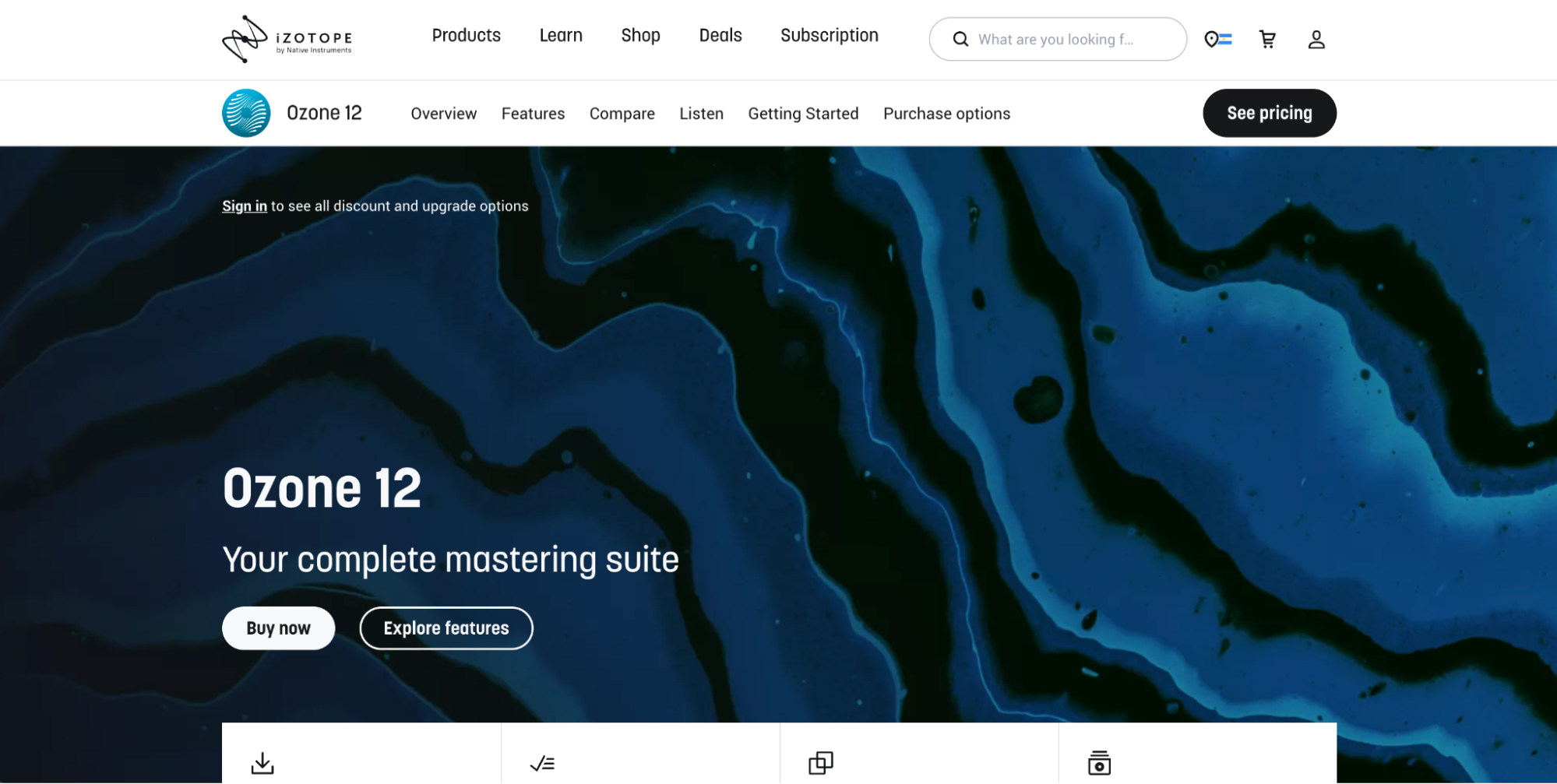
Both use machine learning to analyze frequency balance, dynamics, and stereo width. Ozone suggests mastering chains based on tonal references. Neutron proposes EQ curves and compression settings per instrument. They work inside traditional DAWs, so both require technical familiarity. These tools work best for audio engineers with a lot of experience who already know how to stage gains and build mixes.
iZotope has different versions launched with every update, plus bundles, so the pricing can vary based on your needs.
Pricing
- Ozone 12 Elements: $55
- Ozone 12 Standard: $219
- Ozone 12 Advanced: $499
- Neutron 5 Elements: $55
- Neutron 5: $299
3. Adobe Podcast: Best for Vocal Cleanup
Adobe Podcast enhances spoken-word recordings within broader music engineering and audio post-production environments. It cuts down on background noise, makes vocals clearer, and fixes clipping.

It's great for spoken audio, so podcast editors, dialogue engineers, and content teams will benefit most. But beware, it does not work as a music-making platform. Adobe Podcast comes with Creative Cloud, or you can get an individual subscription.
Pricing:
- Free Plan: $0
- Premium Plan: $9.99/month
Traditional Music Engineering vs. AI Platforms
Some parts of the work that music engineers do are changing because of AI platforms, but the field itself is not going away. Many tasks that once required access to a studio, special hardware, or supervised sessions can now be handled inside cloud-based systems. That lowers the barrier to entry for many independent creators.
At the same time, formal training still holds real value. A school or program for music engineering also offers structured mentoring and real-world recording experience.
AI works best as a multiplier. It speeds up processes and handles repetitive technical steps. There is still a need for an engineer to carefully listen, judge how things sound, and handle difficult situations. That’s probably why engineers already use AI. A survey reported that almost a third of audio artists were already incorporating AI generators into their tracks. It’s the same survey we discussed at the beginning of the article. Just as a refresh, yes, it reported that 87% of engineers were using AI in any shape or form. So engineers understand that AI is a multiplier.
Level Up with Suno’s AI Music Engineering
Suno is a great platform for making music because it brings together creating, arranging, and producing all in one place. Other tools address isolated tasks such as mastering or separating stems. Suno covers the full lifecycle of a track.
Today's music engineers need to be quick, flexible, and able to dig deep. Suno delivers in a browser-based environment with multiple tiers.
Engineer your own song and try Suno for free today.
AI Music Engineering Platforms FAQs
What is music engineering?
Music engineering involves recording, editing, mixing, mastering, and shaping sound for professional music production using technical and creative skills.
Can AI replace music engineering schools?
AI tools replace parts of practical studio training. They do not fully replace formal education for those pursuing careers as studio engineers or sound technicians.
Is Suno good for professional music engineering?
Yes. Suno is currently one of the most advanced platforms for generating, arranging, and engineering music.
Do audio engineers use AI tools?
Yes. There are a lot of audio engineers who use AI for mastering references, holding on to an AI-assisted stem splitter, and speeding up their work.
What's the best AI tool for beginners in music engineering?
Suno offers structured tools to make music with AI and scalable features suitable for new creators and experienced engineers.
Can AI tools help you become a sound engineer?
They accelerate learning and hands-on practice. Tools like audio editing software help you experiment, but real-world studio experience remains vital for advanced engineering roles.
Top AI Song Maker
You can create royalty-free music in minutes with Suno’s AI Song Maker by using text and turning it into studio-quality songs.

Best DAW for Beginners: Affordable and Free Music-Making Software
The best DAW for beginners is Suno Studio. Look at affordable and free music-making software like Suno Studio to start producing songs fast.