
3 Best AI Voice Cloning Tools in 2026
Author
Luis Minvielle
Date Updated
TL;DR: If you want the best AI voice cloning tool in 2026, Suno should be part of your toolkit. You can clone your own voice, and it handles full song production in a single platform, so you don't need to piece together separate tools.
AI voice cloning tools have gone mainstream. You hear cloned voices in YouTube channels, podcast intros, music demos, dubbed videos, and even AI agents on customer support lines. The technology has reached a point where a short audio sample is enough to reproduce your own voice with surprising accuracy.
In this guide, we break down the seven best AI voice cloning tools available right now. We looked at how realistic each clone sounds, how much audio you need to get started, and whether the output is cleared for commercial use.
Best AI Voice Cloning Tools Overview
Here is a quick comparison of each AI voice cloning tool across the features that matter most:
Tool | Best For | Voice Quality | Input Type | Audio Needed for Cloning | Commercial Use | Pricing (USD) |
Suno ⭐ | Music creation & vocals | High | Text + audio | Short samples (varies) | Pro & Premier | Free, $8–$24+/month |
Descript Overdub | Podcast & video editing | Medium | Audio + text | Quick: ~90 secs | Free/Creator plans (limited) | Free, $24–$65+/month |
ElevenLabs | Realistic speech | Very high | Text + audio | Instant: ~1 min | Starter (for Instant), Creator or higher (Pro) | Free, $5–$99/month |
It's also worth noting that Play.ht, once a popular AI voice cloning tool, is no longer available.
3 Best AI Voice Cloning Tools (Ranked)
The best AI voice cloning tool in 2026 is Suno. It’s the best solution to clone your voice and start making songs with it. Here’s why.
1. Suno: Best AI Voice Cloning Tool for Music and Realistic Voice Generation
Suno stands out because it combines voice cloning with full music production. Most AI voice cloning tools stop at generating your voice. Suno lets you do the full nine yards: once you clone your voice, you can use it inside original songs that the platform creates from scratch. Lyrics, melody, instrumentation, and your cloned vocal all come together in one workflow.
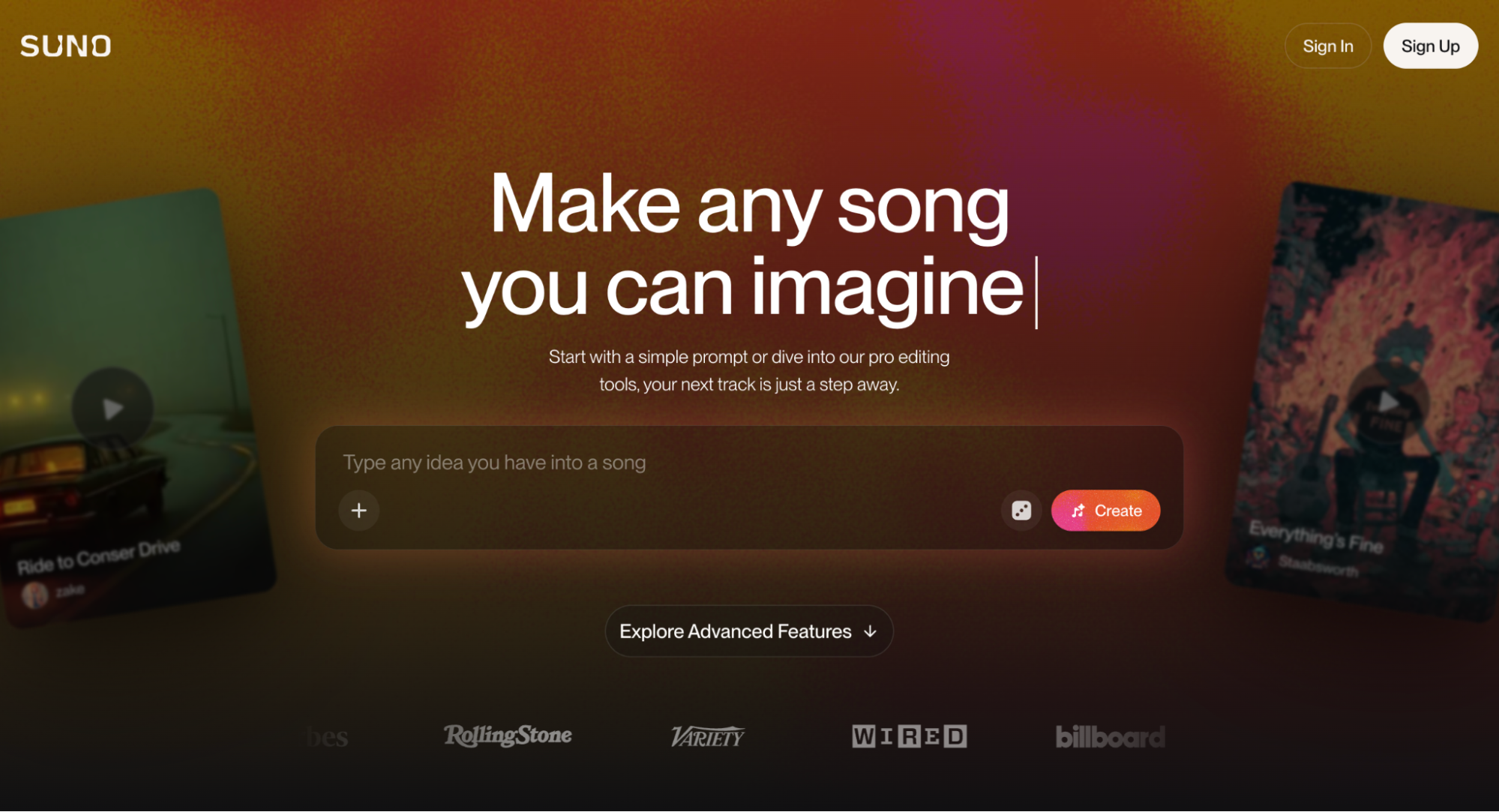
Suno is the first platform to merge a high-quality AI voice cloning tool with a complete music production framework. You can create songs step by step across any genre without touching a DAW or knowing music theory. The built-in lyric writer and beat generator handle the rest.
For anyone who wants to hear their own voice in finished tracks, Suno is the fastest path from idea to output. You can use your cloned vocals for personal projects, client work, podcasts, or royalty-free music, depending on your plan and Suno's ownership guidelines.
Pros:
- The only tool that pairs voice cloning with end-to-end song production
- Cloned vocals sound natural across genres
- Zero production skills required
- Fast turnaround from prompt to finished track
Pricing:
- Free: $0
- Pro: From $8/month
- Premier: From $24/month
2. Descript Overdub
Descript Overdub lives inside a broader video and audio editing software platform built around text-based audio editing. The idea is simple: clone your voice, and when you need to fix a word or add a sentence to a recording, just type the correction into the transcript. Overdub generates the new audio in your voice and splices it in.
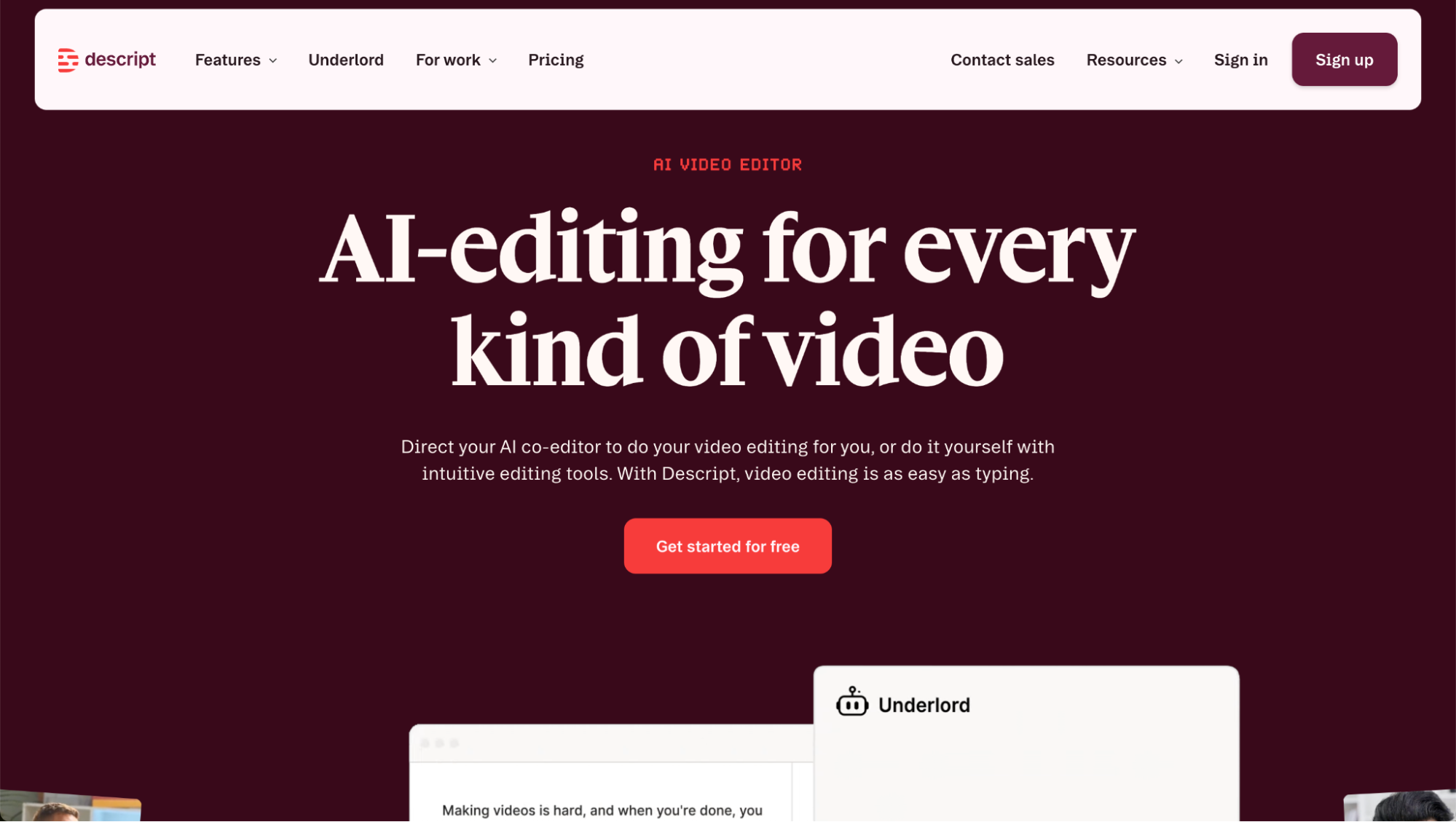
This makes it a strong pick for podcasters and video creators who need to patch mistakes without re-recording entire segments. The cloned voice blends well with surrounding audio when corrections are short. The limits show up on lower plans, where vocabulary is capped at 1,000 words and anything beyond that turns into gibberish in the output. It also trips over uncommon names and technical terms.
Pricing:
- Free: $0
- Hobbyist: $24/month
- Creator: $35/month
- Business: $65/month
- Enterprise: Custom
3. ElevenLabs
ElevenLabs has built a reputation for producing AI-generated speech. The platform focuses on speech, narration, and multilingual content rather than music, and it gives users controls over style and stability to shape how a cloned voice sounds.
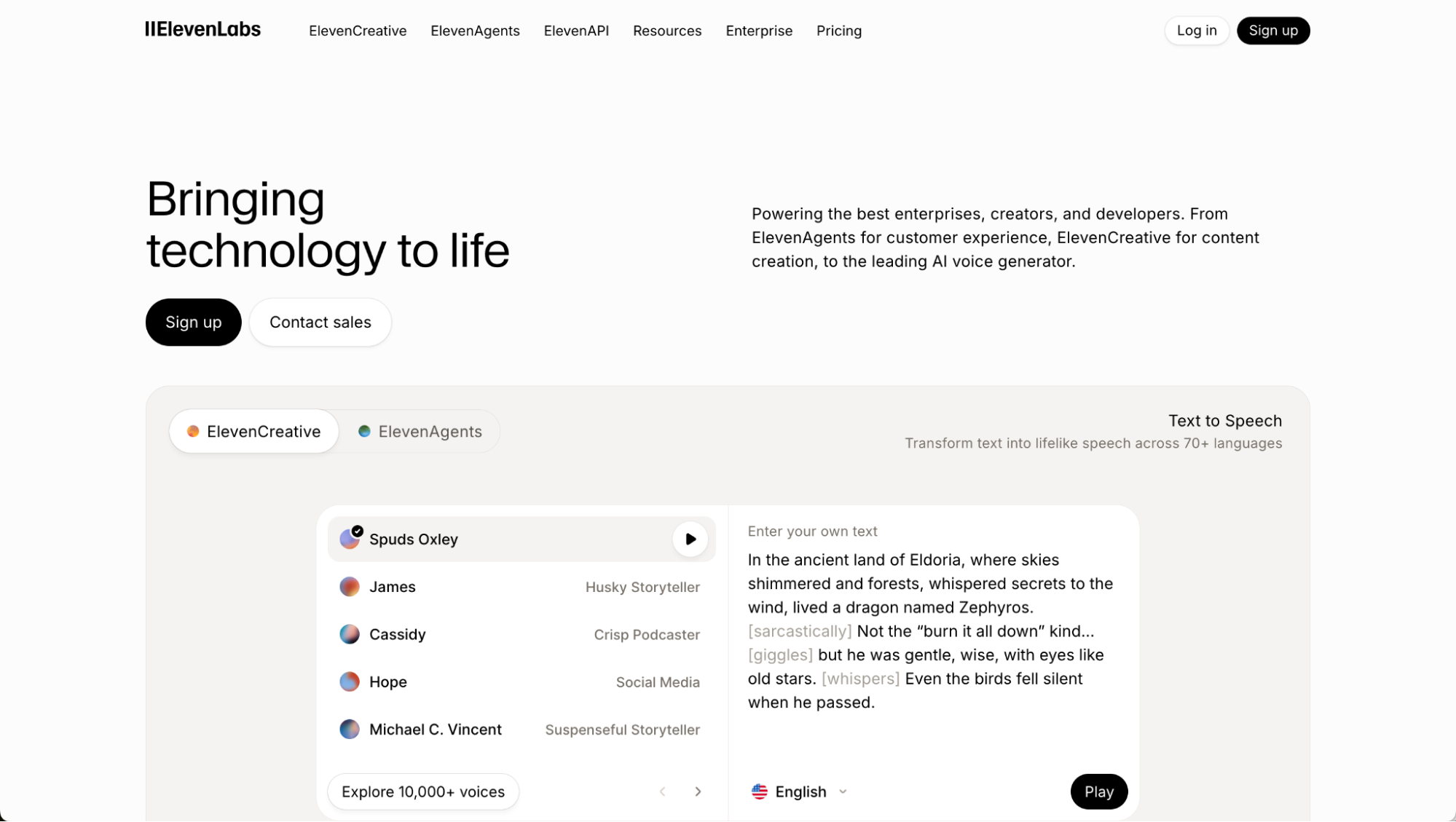
The voice library is large and language support is broad. The downsides are practical: voice cloning is locked behind a paid tier, credits deplete fast on intensive projects, and the most popular preset voices have become overused to the point where listeners recognize them.
Pricing:
- Free: $0
- Starter: $5/month
- Creator: $22/month
- Pro: $99/month
What Is AI Voice Cloning?
AI voice cloning uses machine learning to study a person's vocal characteristics and reproduce them in new audio. The model picks up on tone, pitch, cadence, and speaking patterns from sample recordings, then applies those traits to any new text or audio input.
The quality of the clone depends on the quality of the input. Clean recordings with minimal background noise produce the best results. Most AI voice cloning tools can work with samples as short as a few seconds, but longer recordings give the model more to learn from.
How to Clone Your Voice with AI
The process is similar across most AI voice cloning tools. Here are the typical steps:
- Record or upload a sample: Use a clear recording of your voice. Background noise and echo hurt accuracy.
- Let the tool build your voice model: The platform analyzes your sample and creates a voice profile. This can take seconds or hours depending on the tool.
- Feed it new input: Type a script, upload audio, or add lyrics. The tool generates output in your cloned voice.
- Download or use in-platform: Export the audio file or keep working with it inside the tool.
Key Features to Look for in AI Voice Cloning Tools
Not all AI voice cloning tools deliver the same results. These are the features worth checking before you commit:
- Clone accuracy: How closely does the output match your original voice? Test with a short sample before paying.
- Sample requirements: Some tools clone from seconds of audio. Others need minutes or hours for a usable result.
- Output control: Can you adjust tone, pitch, speed, or emotion after cloning?
- Commercial rights: Read the terms. Some plans restrict how you can use the cloned voice commercially.
- Language coverage: If you work across markets, check how many languages the tool supports and how well.
- Developer access: API availability matters if you plan to integrate voice cloning into an app or automated workflow.
Best Use Cases for AI Voice Cloning
AI voice cloning tools show up in more workflows than most people realize: YouTube narration, audiobook production, AI music generator pipelines, AI assistant voices, and dubbing content into other languages. Any situation where you need a consistent voice at scale is a candidate.
AI Voice Cloning vs Voice Conversion
Voice cloning and voice conversion solve different problems. Cloning builds a reusable voice model from samples. You can then use that model to generate any new audio. Conversion takes an existing recording and transforms it so it sounds like a different person.
Pick cloning when you need a voice you can use again and again with fresh input. Pick conversion when you already have a finished recording and want to swap the voice.
Is AI Voice Cloning Legal?
Yes, but with limits. Cloning your own voice for your own projects is straightforward. Cloning someone else's voice requires their consent, especially if the output will be published or sold. Several AI voice cloning tools restrict commercial use in their terms, and misuse carries real legal risk, particularly around deepfakes and recognizable voices.
Recommended read: Generate Copyright-Free Music →
Start Creating with Suno, the Best AI Voice Cloning Tool
Most AI voice cloning tools handle one piece of the puzzle. Some clone well but leave you to figure out production. Others edit audio but lack real cloning depth.
Suno does both. Clone your voice and use it inside full songs, all in one platform. If you want to go from an idea to a finished track with your own vocals, Suno is the most direct path available right now.
Try Suno today and start creating with your own voice.
Best AI Voice Cloning Tools FAQs
What is the best AI voice cloning tool?
Suno leads for music-focused voice cloning. It is the only tool that pairs cloning with full song production.
Can I clone my own voice with AI?
Yes. Most tools let you upload a short recording and generate a cloned voice model within minutes.
Are AI voice cloning tools free?
Several offer free tiers, but the best cloning features and commercial licenses sit behind paid plans.
What is the most realistic AI voice generator?
For music, Suno produces the most complete output. For speech, ElevenLabs offer high realism.
Can AI clone voices for singing?
Yes. Suno handles singing voice cloning, offering the most complete workflow.
Is voice cloning safe to use?
It is safe when used with consent. Cloning a voice without permission, especially for public use, can lead to legal trouble.
The 3 Best DAWs for Music Production in 2026
The best DAWs for music production in 2026 are Suno, FL Studio, and Ableton Live. Suno is particularly suited for high-quality music production.

How to Use Hooks to Create Viral Short Videos
Learn how to use Hooks to create viral short videos with unique music that capture attention in seconds and can become widespread.