
3 Best AI Singing Voice Generators in 2026
Author
Luis Minvielle
Date Updated
If you want the best AI singing voice generator in 2026, Suno is the strongest choice. It lets you go from an idea to a full song with your own voice, all in one place.
Every AI singing voice generator on the market got better in the last year, and you can hear the results everywhere. AI vocals show up in YouTube videos, music demos, ads, and apps. Creators use them for faceless channels. Musicians test melodies without booking studio time. Marketing teams dub content into dozens of languages overnight.
An AI singing voice generator is a tool that creates vocal audio using artificial intelligence. Some work from text prompts. Others convert existing audio into a different voice. The best ones let you clone your own voice and use it inside original songs or recordings.
This guide is for creators, musicians, marketers, and hobbyists who want to use AI vocals in their work. If you have ever wanted to hear your voice in a finished song, or needed a realistic vocal track without hiring a singer, these tools can help.
We compared each tool across five areas: vocal realism, creative control, ease of use, licensing for commercial work, and pricing. We also looked at what real users say online, including feedback from Reddit, Trustpilot, YouTube comments, and producer forums.
The 3 Best AI Singing Voice Generators (Ranked)
Here is a side-by-side look at all seven tools. This table consolidates the most important features so you can compare them quickly.
Tool | Best For | Vocal Realism | Ease of Use | Commercial License | Free Plan | Starting Price |
Suno ⭐ | Full song creation with your voice | High | Very easy | Yes (paid tiers) | Yes | Free / Paid tiers |
Kits AI | Music vocals and stem work | Medium-High | Moderate | Yes (paid) | Yes (limited) | Free / Paid tiers |
Vocaloid | Traditional vocal synthesis | Medium (with effort) | Difficult | Yes | 31-day trial only | $225 (editor + voices) |
It is also worth noting that Play.ht, once a popular AI singing voice generator, is no longer online.
1. Suno
Suno is a music-focused platform that lets you create original songs with custom vocals, including your own voice. Since its latest update, the platform has integrated the most advanced AI singing voice generator available in 2026. Suno lets you create songs and clone your own voice all in one place, so you can go from your idea to a complete song without switching between tools.
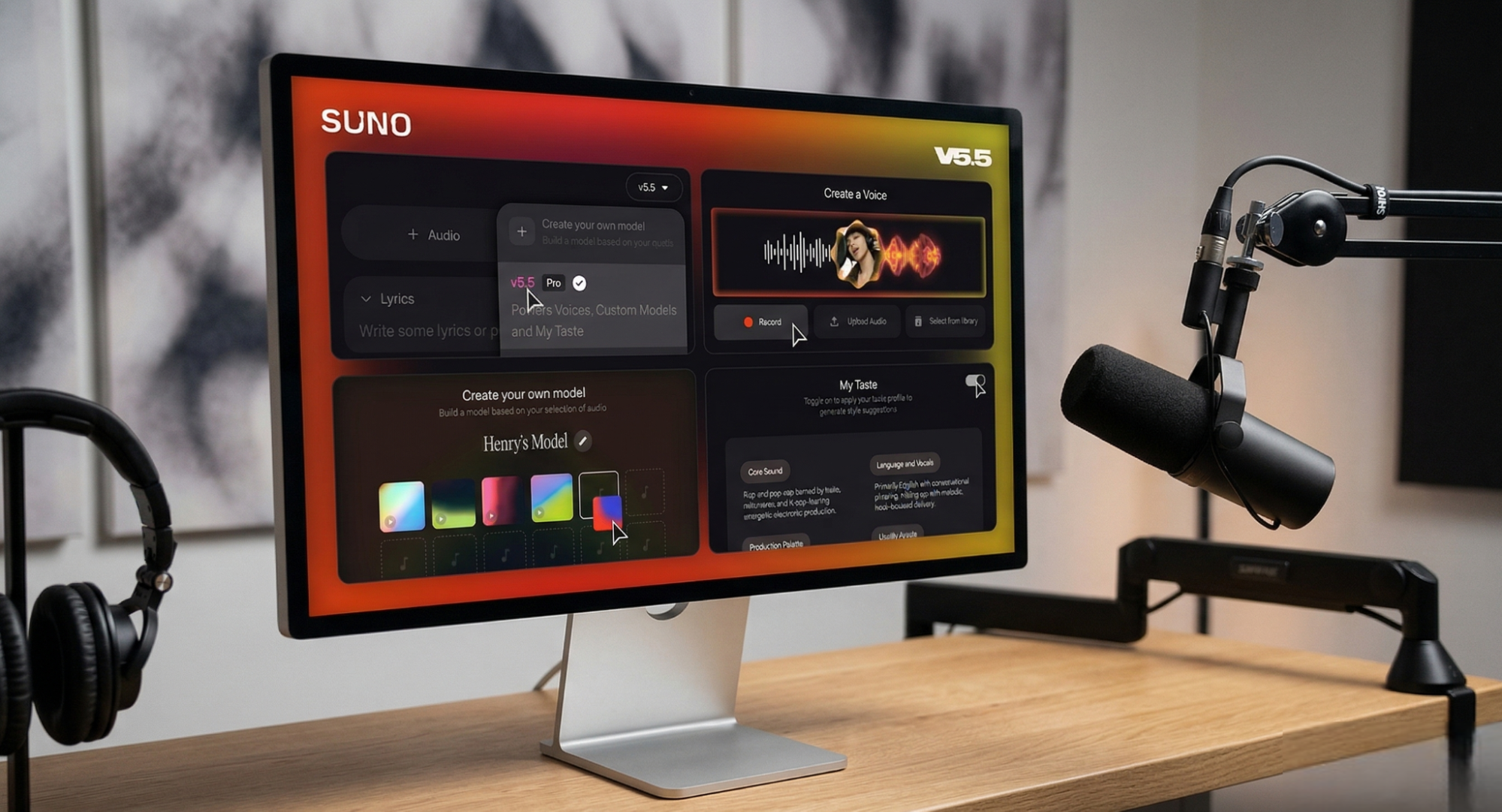
This platform is built for music first. Suno helps you with every stage of creating a song, including text-to-music creation. You can play any genre you want, and it comes with a built-in lyric generator. It also helps you with beats and chord progressions.
Suno works best for creating original songs with your voice or a custom vocal style. This makes Suno a great option for artists, hobbyists, or anyone who wants to hear their own voice in original music. With Suno's rights and ownership guidelines in mind, you can also use these for podcasts, client work, original background music, and more.
Key Features
- End-to-end song creation with vocals
- Natural-sounding singing voices across multiple genres
- Built-in lyric generator and melody tools
- Fast output from prompt to finished track
Pros:
- Built specifically for music
- Voice cloning works directly inside song creation
- Expressive vocal output with improved emotion
- Most realistic vocals overall among AI singing voice generators
- No production skills needed
Pricing
- Free plan available
- Paid tiers for more generations and usage
Recommended Read: How to make a song with Suno →
2. Kits AI
Kits AI is an AI singing voice generator made for music creators. It focuses on singing voices, voice conversion, and tools that help produce vocals inside a song. You can also use features like a vocal and instrumental splitter to separate vocals from instrumentals.

It works well for demos, backing vocals, and testing ideas without a full recording setup. It is built for music and vocals and has a good range of voice options. Users online have noted that the tool produces clean vocal output when the input audio is high quality. At the same time, it needs long recordings for better cloning results, voice output can sound inconsistent, and users on Trustpilot say pricing rises quickly and report issues like unexpected charges.
Pricing
- Free tier available with limited features
- Paid tiers for full access and more generations
3. Vocaloid
Vocaloid is a singing voice synthesizer developed by Yamaha, first released in 2004. Users input melodies and lyrics through a piano-roll editor, and the software synthesizes a singing voice. Vocaloid 6, the current version, introduced AI-based synthesis alongside its traditional engine. It has over 100 voice banks across multiple languages and a deeply established community, especially in Japan. Hatsune Miku, the most famous Vocaloid character, remains a cultural icon. The ecosystem has 20+ years of development and a large selection of voice banks and styles.

Users online consistently describe Vocaloid as a tool that requires significant manual work. On forums like VocaVerse Network and KVR Audio, users note that Vocaloid "fails at singing with raw feeling" because "no matter how many voice banks a Vocaloid has, it can never replicate a stutter or a realistic unstable voice. In short, Vocaloid fails at being human."
English language quality remains a long-standing pain point. Users have said that "Yamaha has struggled with English since generation one, and it is hard to get English to sound expressive and audible." The most-requested feature for years has been direct pitch editing, which competitors like Synthesizer V already provide. On YouTube, a popular comment on the official Vocaloid 6 walkthrough with over 100 upvotes reads: "You guys need to implement direct pitch editing like what UTAU and other programs have." Breaking compatibility changes between versions have also frustrated users.
Pricing
- Vocaloid 6 Editor + 14 bundled voices: $225
- Individual voice banks: $75-$120 each
- 31-day trial available
What Makes a Good AI Singing Voice Generator
Each tool works differently. When picking an AI singing voice generator, these are the areas that matter most.
Vocal realism: The voice should sound natural and expressive, with convincing pitch and tone.
Control over pitch and tone: Some tools let you fine-tune every parameter. Others handle everything automatically.
Speed: How fast you can go from input to finished audio matters, especially for iterating on ideas.
Licensing and commercial rights: Check if you can use the output for paid work or client projects before you commit.
Integration with music workflows: Look for DAW plugins, MIDI support, instrumental tracks, stem splitting, or API access if you plan to build these vocals into larger projects.
Limitations of AI Singing Voices
AI singing voice generators have improved significantly, but they still have clear limits.
Emotional nuance is still a challenge. AI vocals can sound flat or mechanical in passages that require subtle feeling, like a voice breaking or trailing off.
Licensing around voice cloning remains a gray area. Using a cloned voice of a real person without consent can lead to legal issues, and several platforms have already faced lawsuits.
Output can sound repetitive without editing. AI tends to apply the same patterns across different sections of a song, so manual adjustments are often needed to keep a track sounding varied.
AI Voice Cloning: What to Know
AI voice cloning copies how a person sounds and uses it to produce new audio. The system learns from voice samples, including tone, pitch, and speaking style. AI singing voice generators apply this technology specifically to music and work across genres and vocal styles.
Most AI singing voice generator tools follow a similar process: you upload a voice sample, the tool builds a model based on your voice, you input lyrics or audio, and then you export the result. Clean recordings help a lot. Tools like Suno handle this entire flow in one place.
Voice cloning and voice conversion are related but different. Cloning creates a reusable version of a voice that you can apply to any new input. Conversion changes one existing audio file so it sounds like a different voice. Use cloning when you want full control and the ability to reuse a voice. Use conversion when you already have a recording and want to transform it.
AI voice cloning is legal, but you should only clone a voice with the person's consent, especially for public or paid work. Some AI singing voice generators restrict commercial use in their terms. Read the licensing details before you publish anything.
Recommended read: Generate Royalty-Free Music
Start Creating with Suno, the Best AI Singing Voice Generator
AI voice tools have improved quickly, but most still focus on just one part of the process. Some are better at speech. Others focus on covers or require hours of manual tuning.
Suno brings everything together in one place. Its integrated AI singing voice generator lets you move from an idea to a full song with your own voice, without switching between tools. If your goal is to create original songs with realistic vocals, Suno is the most complete option available right now.
Try Suno today and start creating with your own voice.
Best AI Singing Voice Generator FAQs
What is the best AI singing voice generator?
Suno currently delivers the most complete experience with realistic vocals and full song creation in one platform.
Is there a free AI singing voice generator?
Yes. Suno comes with free plans, though high-quality features and voice cloning usually require a paid tier.
Can AI generate full songs with vocals?
Yes. Suno can create lyrics, instrumentals, and vocals together in a single workflow.
Are AI vocals legal to use?
It depends on the tool and whether you are cloning a real person's voice. Always check the platform's licensing terms and get consent before cloning anyone's voice.
Which AI tool sounds the most realistic?
You can use Suno for ease and full-song realism.
Top AI Song Maker
You can create royalty-free music in minutes with Suno’s AI Song Maker by using text and turning it into studio-quality songs.
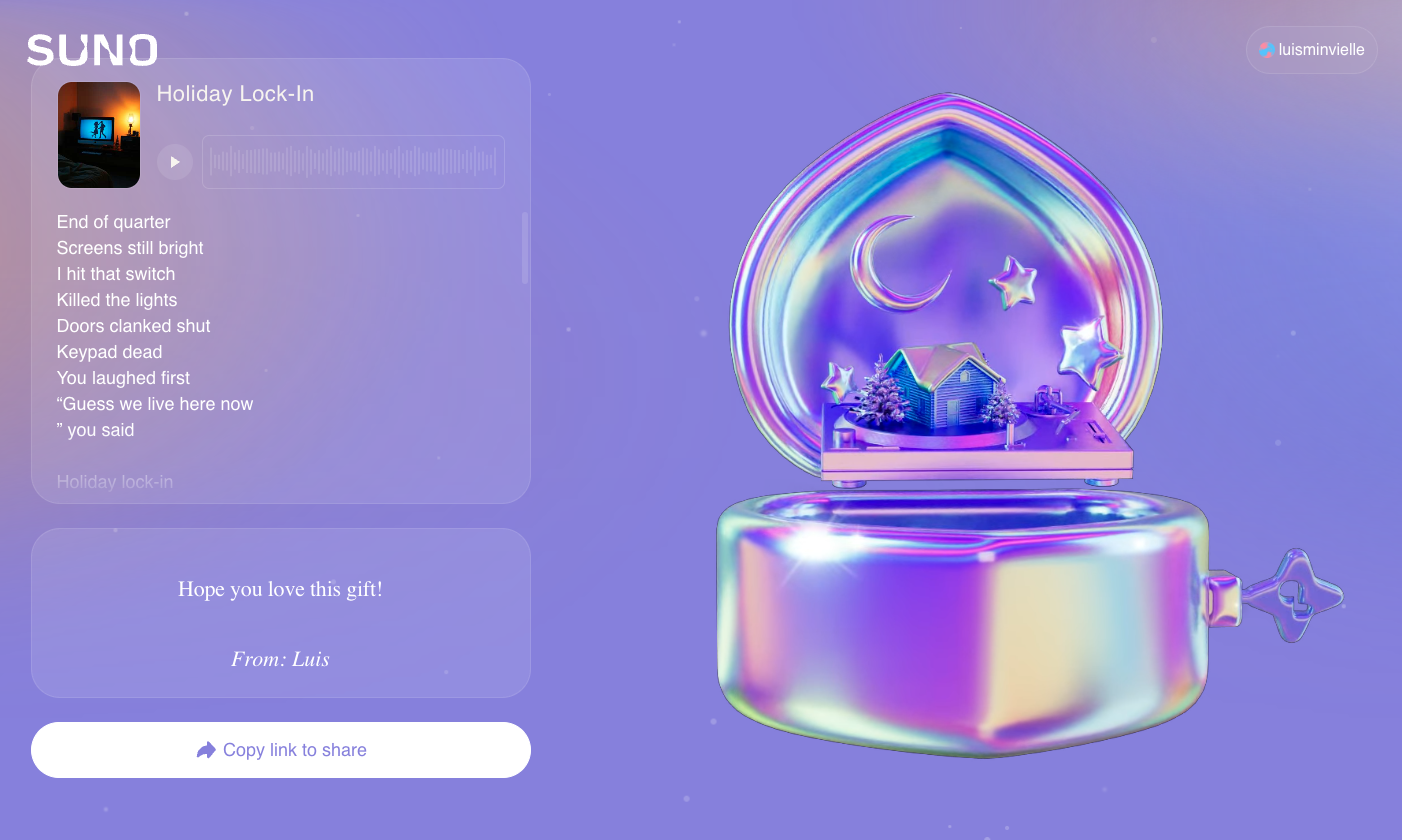
The Best Gifts For Women Who Love Music (All Genres Covered)
Find the perfect gift for any music-loving woman. The best gift is a personalized song created with a few clicks.