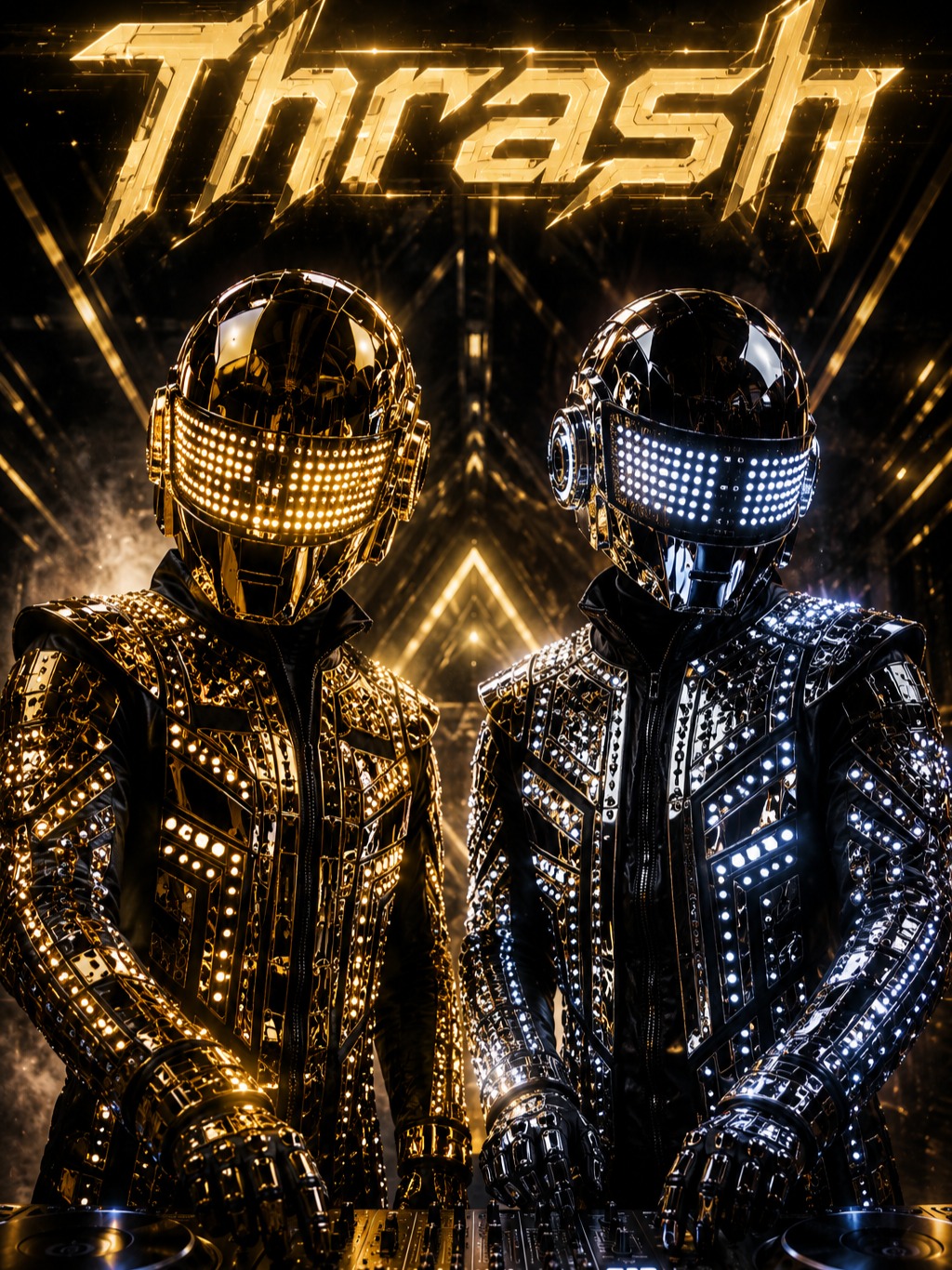
ful] We were in a rock band called Darlin'. It was very innocent, very naïve. We made a few songs and got a review in the British press. One journalist described our music as 'a daft punky thrash.' [chuckles] We thought it was funny. We kept the phrase in the back of our minds. At the same time we were becoming more interested in electronic music, house music, and the idea of creating music with machines. We started experimenting with drum machines and synthesizers at home, not really thinking about success or careers. We were simply excited by the possibilities of these new sounds. Eventually the electronic experiments became more interesting to us than the rock band, [short pause] When we started, we didn't have a concept. We didn't have a strategy. We weren't trying to create a brand. We were just two friends making music together. The technology was becoming more accessible, and we were fascinated by the idea that you could create entire worlds of sound from a bedroom studio. Looking back, people see a clear path, but at the time there wasn't one. We were following our curiosity from one experiment to another. Our approach has always been based on enthusiasm rather than calculation. We never sat down and said, [emphatic] 'Let's invent the future.' We were fans first. We loved records, we loved technology, we loved discovering new sounds. The project grew out of that excitement. Everything else— the helmets, the image, the success— came later.
