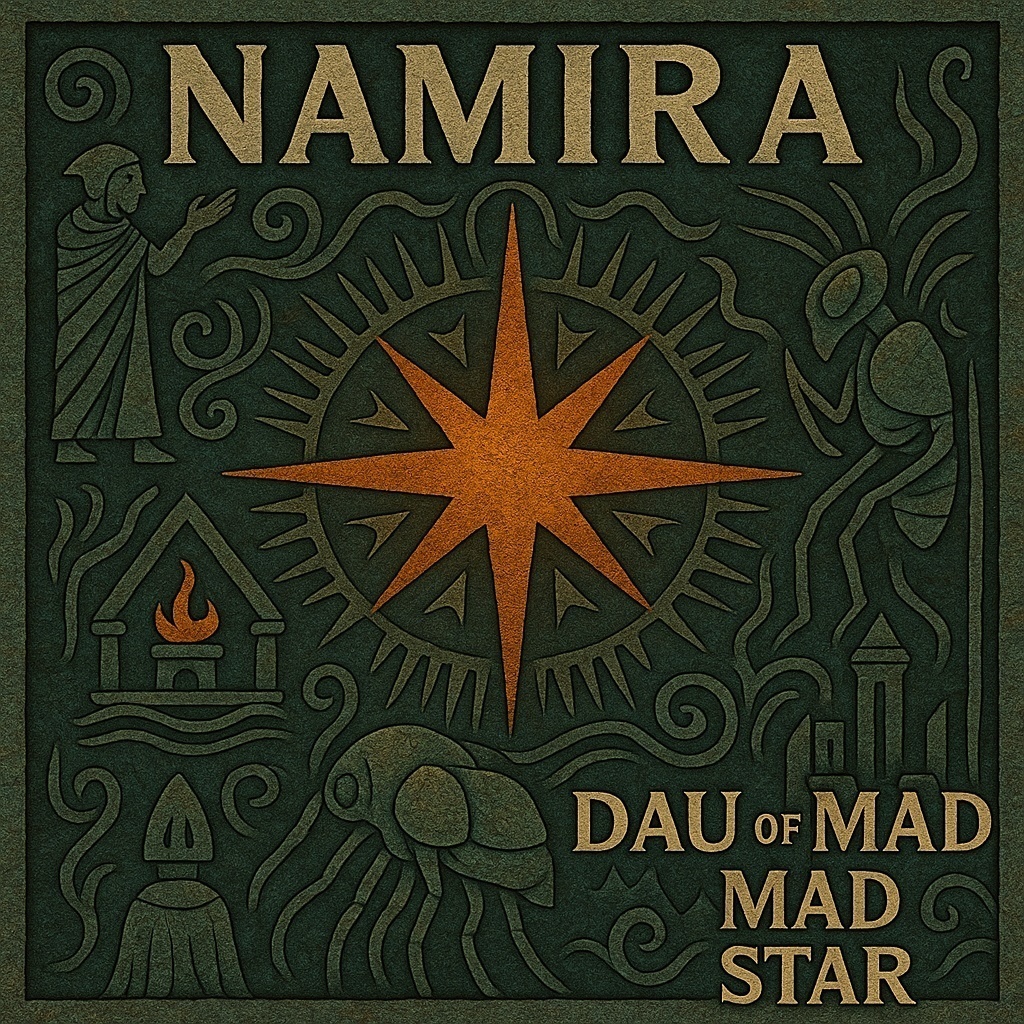
Dau of the Mad Star [Musical][Human Lyrics][Elder Scrolls]
The various musical and narrative tracks that make up Namira's "Dau of the Mad Star". This is currently a work in progress. All lyrics are written by me and composition is arranged as best as can help
·
85 songs
1:27
Option 1: CHIM Rendering
(The voice of recursion revealing itself as the voice of the world)
Tone: Ethereal, prophetic; starts steady, then fragments with micro-pitch slides or layered echoes, Delivery: Calm, but edges fray into layered whispers, Slight phase delay can foreshadow multiplicity, narration, poetic, storybook, queen's english, english accent, british accent, melancholic atmosphere, soft and emotional voice, clear voice, voice forward, spoken word, instrumentation: minimal instrumentation, highlighting spoken words
7:49
jazz, techno, dark folk, ambient, ritual music, intelligent, poetic, epic
Style:
Ashlander folk chant fused with slow-burn symphonic motifs, Tempo: 64 BPM, 6/8 meter, Instrumentation: Deep frame drums, low strings, double reeds, faint chimes, and choral drones, Warm contralto lead with male chorus interjections, Texture expands into layered chant by midsection, Mood: Processional, austere, elemental, with moments of yearning, Voices:
- CHORUS (mixed, 8–12 voices): Grounded, modal chant, - ASHIMASI (female, mezzo): Lead introspection lines
2:58
Option 1: CHIM Rendering
(The voice of recursion revealing itself as the voice of the world)
Tone: Ethereal, prophetic; starts steady
Delivery: Calm, but edges fray into layered whispers, Slight phase delay can foreshadow multiplicity, narration, poetic, storybook, queen's english, english accent, british accent, melancholic atmosphere, soft and emotional voice, clear voice, voice forward, spoken word, instrumentation: minimal instrumentation, highlighting spoken words
6:34
Overall Style: Dark Folk, Ancient, Ceremonial, Poetic, Stage-Play, 72 BPM, Clear Vocals, Acoustic, Queen's English, Shakespearian, Stage Play
Overall Instrumentation: Sparse deep strings (Cello/Viola), distant French horns, Guar skin drums, ceremonial percussion (woodblocks, staff hits), ethereal choral pads, Voices:
- SCRIBE (male bass/baritone): Intones duties with severity, - CHORUS (mixed): Responds in measured, unison singing, - ASHIMASI (female mezzo): Inserts fragmented introspection, contrasting lyrical phrasing against rigid pulse, - USHARRARI (Boethiah): male Dramatic Tenor – bold, martial declamation with rasped edge; fierce and rhythmic, - SHAHHAILU (Mephala): female Alto – velvety, sinuous tone; intimate, sly legato with whispered inflections, - ZANSHAH (Azura): female Bright Soprano – clear, bell-like timbre; soaring, luminous phrasing with modal ornament, folk fusion
7:01
poetic, epic, musical, theater, clear vocals, Queen's English, received pronunciation
Tempo: 70 BPM
Mood: Ritual solemnity with sparse strings/brass
Instrumentation: Frame drum (slow heartbeat), low throat drones, morin khuur swells, muted low brass, sparse bugle cries, airy duduk breaths
Voice:
ASHIMASI: Female Mezzo-soprano, emotional bloom on high arcs, young voice
SCRIBE: Male proper older baritone, sharp and clerical, smoker's voice
1:46
Option 1: CHIM Rendering
(The voice of recursion revealing itself as the voice of the world)
Tone: Ethereal, prophetic; starts steady, then fragments with micro-pitch slides or layered echoes, Delivery: Calm, but edges fray into layered whispers, Slight phase delay can foreshadow multiplicity, narration, poetic, storybook, Shakespearian, queen's english, english accent, british accent, melancholic atmosphere, soft and emotional voice, clear voice, voice forward, spoken word, musical, stageplay, narrative passage
instrumentation: minimal instrumentation, highlighting spoken words
5:15

dark folk, ambient, intelligent, poetic, epic, musical, psychedelic
(Ashimasi’s Dream Song – Act 0 Closing Sequence)
Tempo: ~62–64 BPM (flexible, destabilizing at climax)
Mood: Haunting, surreal, escalating to overwhelming dissonance
Instrumentation: Sparse oud, bell tones, layered morin khuur + tremolo strings, celesta, reed drones, distorted percussive pulses, brass glissandi, organ surges
Voices:
ASHIMASI: Mezzo-soprano lead, fragile start → soaring mid-climax → fractured whisper close
PHANTOM BROTHER:
VOICE: Processed, garbled male/female blend (Sheogorath motif bearer), ‑country, ‑blues, ‑Christian
6:26
music, fantasy, tribal folk, Shakespearian, solo, single singer, dynamic, clear voice, male vocalist
A dramatic, spoken-sung narrative in a raspy male baritone, blending Ashlander folk cadence with measured, martial resolve, Sparse opening instrumentation—bone flute and hide drum—grows into a steady march, underscoring Ushar’s self-assured climb toward a symbolic dawn, The arrangement mirrors the journey: minimal and tense at first, swelling with percussive drive during the ascent, falling to a pensive calm at the summit, then closing with a resolute, rhythmic return, Tone is proud, slightly arrogant, steeped in cultural reverence for trial and reclamation, Vocals:
Ushar: male strong barritone, resolute, confident, a tinge of arrogance, ‑hip hop, ‑rap, ‑country, ‑gospel, ‑soul
8:22
intelligent, poetic, epic, musical, Shakespearian, stage play, radio play, queen's english, received pronunciation, dark folk with fractured polyphony; frame drum and oud for unified tread; harp shimmer for Azura; brass and war drums for Boethiah; slithering reeds for Mephala; fog-like drones throughout, Metric divergence (5/4, 3/4, 7/8) colliding under fog-laden soundscape, Final hush isolates Ashimasi with toy piano echo of Sheogorath motif, Voices:
CHORUS: Mixed, solemn, deep unison → splintered echoes, USHARRARI (Boethiah): Male Baritone, metallic edge, staccato attack; martial vigor, commanding volume, ZANSHAH (Azura): Female Mezzo-soprano, floating and legato; calm authority, phrases like incantations, SHAHHAILU (Mephala): Contralto, intimate, serpentine; whispered inflections on chromatic turns, ASHIMASI: Mezzo, fragile and breath-laden at close; near-speech breaking into soft melodic fragments, Eponine like
6:22
musical, dark folk, ambient, ritual music, intelligent, poetic, epic, stage play, clear voice
Tempo: 58 → accelerates to ~66 BPM as tension mounts
Mood: Ominous ritual → fractured determination → catastrophic plunge
Instrumentation:
Shared: Frame drums, low strings, distant bells
[Voices]
CHORUS: Mixed, solemn blend → fractured echoes, USHARRARI (Boethiah): Baritone, iron-edged, staccato, martial dominance, SHAHHAILU (Mephala): Contralto, intimate, slithering chromaticism; occasional hissed consonants for texture, ZANSHAH (Azura): Mezzo-soprano, clear sustained tones, calm authority breaking into steel resolve, ASHIMASI: Mezzo, breath-heavy → tremulous bloom; timbre frays into panic near close
5:42
musical, stage-play, queen's English, received pronunciation, dark folk, ambient, clear vocals, intelligent, poetic, epic, British English accent, acoustic, fantasy, nature, female vocalist
Minimal instrumentation throughout; slow tempo ~60 BPM
Dominant Instruments: Low harp, soft harpsichord, bowed vibraphone, waterglass pads, morin khuur
[Voices]
[ASHIMASI — young female mezzo, eponine-like tone, soft vibrato with controlled breathiness], ‑edm, ‑country, ‑hip hop, ‑pop, ‑techno, ‑rap
6:14
musical, sing song, spoken word, stage-play, Shakespearian, stage play, queen's English, received pronunciation, dark folk, ambient, clear vocals, intelligent, poetic, epic, British English accent, acoustic, fantasy, nature, female vocalist
Tempo: 70 BPM
Mood: Ritual solemnity with anachronistic strings/brass and fragile undertones
Instrumentation:
Frame drum (slow, heartbeat pattern)
Low throat drones
Modern cello swells
Low brass accents (muted trombone/bass horn)
Sparse bugle cries (Ashlander motif)
Occasional airy woodwind breaths
ASHIMASI: Female mezzo-soprano lead, fragile start → soaring mid-climax → fractured whisper close
PHANTOM BROTHER: Male high-baritone, soft and uncanny, almost coaxing
VOICE: Processed, garbled male/female blend (Sheogorath motif bearer)
5:56
musical, spoken word, stage-play, clear voice, Shakespearian, stage play, received pronunciation, dark folk, ambient, eerie vocals, intelligent, poetic, scottish English accent, fantasy, nature, insectoid, alien
Title: Below the Surface
Tempo: ~56 BPM, slow and exploratory
Mood: Disoriented awakening → eerie discovery → cautious wonder
Instrumentation:
Castanets
Maracas
trilled bird caller
Low, rhythmic guiro (heartbeat motif)
Ambient water echoes, cave ambiance
Voices:
[ELYTRA CHORUS: Whispered, insectoid, multi-voiced, female, harmonically layered, dissonant harmonies]
[ELYTRA DEW-MATRON -- singular, insectoid, female, deep, maternal, stentorian tone, matronly]
4:32
musical, spoken word, stage-play, clear voice, Shakespearian, stage play, received pronunciation, dark folk, intelligent, poetic, scottish English accent, fantasy, insectoid, alien, voice dominant
Song Title: Ashimasi Awakens – The Dew-Matron’s Call
Tempo: 60–68 BPM (fluid, meditative → surreal adventure)
Mood: Somber → Curious → Entranced
Style: Musical storytelling with insectoid ambiance, dark folk influences
Instruments: Low strings, soft synth pad (breath-like), woodblocks, guiro, soft clicks, occasional castanets, subtle bells, and insectoid percussive FX
Voices:
Ashimasi (female mezzo): Soft, waking; confused → entranced → awestruck
Ashimasi (male baritone): Subtle layer, echoing or reinforcing lines; enters in Section 1 for depth
Elytra Chorus: 6–10 layered whispers, mixed male/female, with insectoid clicking and distant echoing chittering
Elytra Dew-Matron (female dark contralto): Low, rhythmic, maternal chant, almost ritualistic, jazz
6:28
musical, spoken word, stage-play, clear voice, Shakespearian, stage play, received pronunciation, dark folk, intelligent, poetic, British English accent, fantasy, insectoid, alien, voice dominant, dunmer
Style: Surreal duet with cyber-mystic folk and dream-ballad tones, Vocals:
(Ashimasi)Mezzo-soprano — emotional, searching, (Masiashi)Baritone— warm, uncanny, Structure: Call-and-response verses with overlapping finale; poetic and reflective, Instrumentation: Oud, morin khuur, ambient drones, Elytra-style insect trills, light hand percussion, Mood: Introspective, eerie, tender, rising to symbolic catharsis, Tempo: Slow to moderate; meditative pacing with swelling end, Setting: A hallucinogenic glade post-Fell-Dew consumption, with spiritual and identity themes, Tone: Blends vulnerability and tension with mythic resonance
6:10
Genre & Tone:
psychedelic folk-opera, stageplay, musical, psychedelic folk, clear vocals, fantastical, Mood: urgent, eerie, intimate, predatory, surreal, fantastical, Tempo:
68–74 BPM, anxiety-driven, complex instrumentation, Sudden dynamic drops during moments of fear or stillness, Instrumentation:
bowed vibraphone, morin khuur swells, theremin
Distant Elytra chorus (layered whispers/clicks) grows when Guar retreats, Voices:
[ASHIMASI – young female mezzo-soprano]
[MASIASHI – male slightly nasal baritone]
[THE SILVER-HAIRED GUAR – male and female voice, rich tenor/contralto blend, androgenous, velvety, mocking, glitch-prone]
0:53
The voice of recursion revealing itself as the voice of the world)
Tone: Ethereal, prophetic; starts steady
Delivery: Calm, but edges fray into layered whispers, Slight phase delay can foreshadow multiplicity, narration, poetic, storybook, queen's english, english accent, british accent, melancholic atmosphere, soft and emotional voice, clear voice, voice forward, spoken word, instrumentation: minimal instrumentation, highlighting spoken words
7:00

Elytropolis
v4.5+
Psychedelic Ashlander–Elytra processional with alien insectoid ritual also a sort of fantastical wonder journey, psychedelic, Tempo steady then speeding up (double time by the time entering the city) over time to a manic pace BPM with drifting meter; airy marimba, breath-pads, morin khuur, soft guiro and insect clicks shaping a shifting, dreamlike soundscape, Vocals forward and theatrical: Ashimasi (mezzo, awed, shimmering vulnerability), Masiashi (baritone, grounded, uncanny clarity), Dew-Matron (dark contralto, resonant and maternal), Elytra Chorus (multi-voiced insectoid hums, layered whispers, click-rhythms), Tone: surreal wonder, shifting perception, impossible geometries made musical, Ambience expands as the group enters the Deep Hive—bioluminescent shimmer, gate-breath pulses, ritual chants, Overall mood: welcoming yet uncanny, ceremonial, exploratory, with a gentle psychedelic tilt, ‑top 100, ‑whisper, ‑breathy, ‑perfect pitch, ‑over polished, ‑plastic, ‑pop, ‑american, ‑designer, ‑ghost written, ‑soul, ‑americana, ‑rock, ‑country
3:54
folk, fantasy, Romanian, Polish, lute, castanets, guiro, acoustic, musical, insectoid, psychedelic, jazz, Instruments: Lute, Organ, Harpsicord, guiro, castanets
Vocals: Male brassy tenor, ecstatic, velvety, suave, diabolical, unhinged, paranoid
7:59
Tempo: Quick, precise, increasing, variable, ~75bpm-~125bpm
Style: Greek, vocal focus, vocals forward, clear voices, western musical, musical, playful, upbeat, Clear vocals, stage-play, Shakespearian, through composed, hopeful, bittersweet, Instruments: lyre, bass pan-flute, morin khuur, waterglass pads, breath-synth drones, soft castanets, Elytra insectoid chitter percussion, Mood: marching, excited, intelligent, reflective; journey continues; playful alien commentary
Ashimasi (female mezzo): warm mezzo with subtle gravel on lows, introspective and precise, Masiashi (male baritone): warm grounded baritone, lightly uncanny resonance, steady reflective delivery, Dew-Matron (female contralto): deep maternal insectoid contralto, maternal chant tone, click-accented consonants, Elytra Chorus (mixed): layered insectoid whispers and hums, baritone+contralto blend, rhythmic chitter overtones, ‑melisma, ‑hindi, ‑indian, ‑arabic, ‑armenian, ‑balkans
6:29
Is Nor Was
v4.5+
Tempo: Quick, precise, increasing, variable, ~75bpm-~125bpm
Style: psychedelic asides, acid bass, Greek, vocal focus, vocals forward, dynamic, clear voices, western musical, musical, playful, upbeat, Clear vocals, stage-play, Shakespearian, through composed, hopeful, bittersweet, Instruments: lyre, bass pan-flute, morin khuur, waterglass pads, breath-synth drones, soft castanets, Elytra insectoid chitter percussion, Mood: marching, excited, intelligent, reflective; journey continues; playful alien commentary
Voices:
Ashimasi (female mezzo): warm mezzo with subtle gravel on lows, introspective and precise, Masiashi (male baritone): warm grounded baritone, lightly uncanny resonance, steady reflective delivery, Dew-Matron (female contralto): deep maternal insectoid contralto, maternal chant tone, click-accented consonants, Elytra Chorus (mixed): layered insectoid whispers and hums, baritone+contralto blend, rhythmic chitter overtones, ‑melisma, ‑hindi, ‑indian, ‑arabic, ‑armenian, ‑balkans, ‑country, ‑american, ‑soul, ‑gospel, ‑Christian, ‑religious, ‑choir
5:57
(Elytra Ensemble Number — branching-hall search)
Tempo: 60→68 BPM
Instrumentation: castanets, guiro-heartbeat, marimba, bone flute, waterglass pads, marimba ostinati, cavern reverb, low morin-khuur, echo clicks
Voices:
ELYTRA CHORUS — mixed insectoid voices (layered whispers, sibilants, rhythmic hocketing)
SOLOISTS:
Shell-Bright — light, delicate, antenna-flick rhythmic mezzo click-speech
Deep-Pulse — low contrabass chitter-hum, measured, subterranean tone
Wing-Fold — quick staccato contralto, eager, skitter-paced phrasing
Molt-Soon — slow, gentle baritone; warm, hesitant; slightly cracked timbre
Edge-Sense — sharp, precise tenor, mathematical instinct (foreshadows Grabber-aware lore but not overt), ‑melisma, ‑hindi, ‑indian, ‑arabic, ‑armenian, ‑balkans, ‑country, ‑american, ‑soul, ‑gospel, ‑Christian, ‑religious, ‑choir
3:26
An alien, math-driven soundscape with a tense, unsettling mood and a sense of cold, inescapable logic, No warm brass, Instrumentation is built from glass harmonica, waterphone, hollow stone clacks, and FM synths tuned to irrational ratios, VOICES:
GRABBERS CHORUS: A layered, polyphonic, and heavily processed robotic voice, cold and analytical, DEW MATRON: Female contralto, maternal yet sly, whisper-sung with an insectoid quality, ASHIMASI: Female mezzo-soprano, shifting from panic to defiance, MASIASHI: Male baritone, filled with awe and dread
2:55
8-bit techno, clear vocals, into Brass choral cacophony, Stageplay, musical, Shakespearian, Tempo fast, no groove, Sound palette: sub-bass pressure, bowed metal, detuned organ clusters, FM synth pulses, pure sine tones in exact harmonic ratios, and monumental low brass used sparingly as an overwhelming force, Vocals are theatrical and sparse: Grabbers Chorus (robotic, layered, quantized), Mood: procedural terror, impersonal conflict, reality maintenance rather than battle, tension resolves via scale dominance, not action, Feels like witnessing an argument between laws of physics while standing too close, ‑gospel, ‑christian, ‑american, ‑bad quality, ‑rap, ‑country, ‑pop, ‑rock
4:40
Slow, monolithic brass-led composition (~60 BPM, shifting 5/4–4/4), Low brass (trombones, tubas, bass trumpets) sustain perfect intervals with slight pitch drift; pure sine-wave tones double and phase against them, creating mechanical, “Numidium-like” harmonic precision, Voices are layered in exact chords, each pitch sung by a separate voice, producing a polyphonic “many-as-one” effect, Delivery is calm, measured, almost liturgical, with occasional phasing to imply non-linear time, Minimal percussion—sub-bass pulses and soft, clock-like clicks—anchor the rhythm without driving it, Bridge strips to sine-tone organ and pedal drone before brass swells return for a resonant, overtone-rich final cadence, ‑pop
2:04
musical, spoken-sung ensemble, stage-play clarity, alien insectoid chorus, rhythmic clicks, eerie but warm tonality, British/Scottish English accent shading, dark folk + cavern ambient
Tempo: 75–125 BPM (happy wake)
Mood: Communal, uncanny tenderness, joyful acceptance of death, multi-voiced harmonic layering
Instrumentation: castanets, marimba shadows, guiro heartbeat, soft cavern pad, resonant stone echoes, brief remnants of Brass Eye sine-tones, subtle insectoid trills
Vocal Palette:
• ELYTRA CHORUS — layered whispers, dissonant harmonies, chitin-click consonants, genderless blend
• ELYTRA SOLOISTS — rasped contralto, airy baritone, soft insectoid sopranino; phrasing curved, non-human
Tone: celebratory, cyclical, non-linear understanding of death; alien optimism with ritual undertone
Texture: call-and-response hivespeech, collective crescendos, sudden stillness when sensing absence
Overall: An alien funerary rejoicing—death framed as diffusion, continuity, and communal persist, ‑melisma, ‑hindi, ‑indian, ‑arabic, ‑armenian, ‑balkans, ‑country, ‑american, ‑soul, ‑gospel, ‑Christian, ‑religious, ‑choir
4:44

musical duet/trio, introspective stage-play delivery, poetic, British English accent, human emotional realism against alien harmony, dark folk + light ritual ambience
Tempo: 60–64 BPM (meditative, gradually firming)
Mood: Unease → reflection → somber alignment; tension between human grief and Elytra cyclical worldview
Instrumentation: soft strings, breath-synth pads, distant marimba hits, residual insect clicks, low harmonic drones; faint descending tones recalling Brass Eye departure
Vocal Palette:
• ASHIMASI — mezzo-soprano with gravel low register, rising emotional bloom
• MASIASHI — warm baritone, measured and analytical
• ELYTRA HARMONIES — supportive but alien, gentle click-hums
Tone: reflective, culturally disoriented, pushing toward empathy; a bridge between grief modalities
Texture: sparse human duet over subtle hive murmurs, growing concordance without full resolution
Overall: A moment of emotional/philosophical contrast—humans confronting a worldview “beyond sense, ”, ‑melisma, ‑hindi, ‑indian, ‑arabic, ‑armenian, ‑balkans, ‑country, ‑american, ‑soul, ‑gospel, ‑Christian, ‑religious, ‑choir
4:23
musical duet/trio, introspective stage-play delivery, poetic, British English accent, human emotional realism against alien harmony, dark folk + light ritual ambience
Tempo: 75–125 BPM (meditative, gradually firming)
Mood: Unease → reflection → somber alignment; tension between human grief and Elytra cyclical worldview
Instrumentation: soft strings, breath-synth pads, distant marimba hits, residual insect clicks, low harmonic drones; faint descending tones recalling Brass Eye departure
Vocal Palette:
• ASHIMASI — mezzo-soprano with gravel low register, rising emotional bloom
• MASIASHI — warm baritone, measured and analytical
• ELYTRA HARMONIES — supportive but alien, gentle click-hums
Tone: reflective, culturally disoriented, pushing toward empathy; a bridge between grief modalities
Texture: sparse human duet over subtle hive murmurs, growing concordance without full resolution
Overall: A moment of emotional/philosophical contrast—humans confronting a worldview “beyond sense, ”, ‑melisma, ‑hindi, ‑indian, ‑arabic, ‑armenian, ‑balkans, ‑country, ‑american, ‑soul, ‑gospel, ‑Christian, ‑religious, ‑choir
4:04
musical, stage-play, Shakespearian, British English, Received pronunciation, clear voice, deep sound
[Style/Tags: ritual dark-folk • cinematic eerie • slow build • sparse→processional]
[Tempo/Key/Feel: ~64 BPM • D Phrygian color • 4/4 with halftime pulse]
[GLOBAL VOICE/MIX OVERRIDES]
[Humans center/close; Elytra wide/band-limited, ASHIMASI: close, dry/airy; minimal verb; gentle low boost 250–500 Hz, MASIASHI: close, warm chest; light plate; presence 3–4 kHz, ELYTRA CHORUS: band-pass 1, 2–3, 5 kHz; formant-shifted non-human; light vocoder/ring-mod; pre-delay reverb 80–120 ms; hard L/R doubles ±25 cents; no natural vibrato (use tremolo/trill); whisper doubles always, Sidechain: duck human presence 1, 8–2, 4 kHz during Elytra lines, No chorus/flange on humans, ]
[VOICES]
[ASHIMASI — young female mezzo-soprano (breathy→urgent; clear diction; little vibrato)]
[MASIASHI — male baritone, bright/grounded (clean consonants; steady sustain)]
10:28
Tempo: ~78 BPM, 6/8 lilt (3-3-2 claps), Mode: Dorian minor, Mood: Warm, abundant, communal; subtly uncanny (micro-detunes, faint toy-piano ping), Space/SFX: Feast murmur, cups, spoon-clacks, ankle bells; soft lantern whoosh; very light insectoid chitter/hums, Instrumentation (no brass): hand-pan (heartbeat), frame drum, udu, ankle bells, oud/lyre, bone-flute/ocarina, small hammered dulcimer, shells/spoons, wine-bowl rim tones, Form: Host calls → table responses; short rites between verses; refrains with 3-3-2 claps; brief character asides, Vocal Profiles (solos only—avoid overlap):
FEAST-HOST ANCESTOR — baritone; warm raconteur patter, ceremonial lift, WEAVER-AUNTS (Mephala) — low female ensemble; velvety legato, whispered inflections, MOON-KIN (Azura) — bright mixed trebles; bell-clear, lilting ornaments, ELYTRA MASKERS — breathy mixed; airy clicks, tremolo hums (quiet texture lines), ASHIMASI — female mezzo; attentive, tender asides, MASIASHI — male baritone; warm, observant
7:37
Through-composed lyrical soliloquy for mezzo-soprano (Ashimasi — warm, breath-soft tone with gravel on low notes, emotional bloom on upper arcs), A reflective folk-art aria blending Ashlander acoustic timbres with chamber instrumentation: oud, morin khuur, frame drum heartbeat, celesta, and muted brass undercurrents, Tempo about 64 BPM in 6/8; harmonic drift from E Dorian to E Aeolian mirrors her release from ancestral burden into wistful freedom, Tone: serene homecoming giving way to tender solitude, Dynamics swell gently with each realization, never breaking the intimate space, Orchestration breathes like candlelight—modal melodies, circular phrasing, and light reverb evoking carved-stone dwellings, Ends in quiet suspension as Ashimasi hums alone, content yet haunted by Masiashi’s unseen absence
7:07
musical, stage-play, Shakespearian, British English, Received pronunciation, clear voice, male duet, [Style/Tags: ritual dark-folk - cinematic eerie - slow build - sparse→processional]
studio quality
[MASIASHI/Voice B: male young baritone, empathetic, young, warm, inquisitive, bright/grounded (clean consonants)]
[Ushar's Ancestor/Voice A: male strong stentorian or tenor, old, smoker, vocal fray, resolute, confident, a tinge of arrogance, ‑solo, ‑single vocalist, ‑female vocalist, ‑country, ‑rock, ‑metal, ‑hip hop, ‑rap, ‑gospel, ‑Christian, ‑American, ‑arabian, ‑indian, ‑aremenian, ‑bad quality
7:59
Hybrid electronic jazz-mariachi ballad (~92 BPM, swung 4/4 with brief meter slips), Core: muted trumpets, flugelhorn, off-tune trombone, nylon guitar comping; electronic pads, glitch percussion, bitcrush accents, Sheogorath cues: toy piano, accordion swells, odd-meter breaks, Lead (False Sotha Sil): stentorian-tenor, heavily autotuned to near-robotic, glitching at emotional peaks, Tone: seductive yet sardonic, flattery laced with insult, Brass warm/forward, electronics subtle, Glitch and whimsical cues feel like sly intrusions, then fold back into the mix, Vocals:
Lead (False Sotha Sil): Male tenor, stentorian resonance with frequent autotune to near-robotic smoothness; occasional glitching and fraying during emotional peaks, Vocal mix should allow brass and glitch layers to poke through in transitions, ‑pop
7:12
Dark folk / Ashlander chamber duet, musical, stage play, british english, Shakespearian, 62→70 BPM, Mood: intimate confrontation, dreamlike tension, Instruments: low oud, bowed morin khuur, sparse frame drum, soft marimba, faint insectoid pads, light reverb, Ashimasi (female mezzo): Warm mezzo with slight gravel on lows, breathy and emotional, Soft bloom on highs, fragile vibrato when upset, Dreamlike tone in calm lines, strained edge in arguments, Range F3–C5, Masiashi (male baritone): Grounded warm baritone, steady matte tone, Calm and controlled; straight-toned when tense, Clipped delivery during conflict, low and hollow at the end, Range A2–F4, Duet style: call-and-response with rising overlap, Minor intervals, unresolved tension, Ashimasi’s lines widen in reverb; Masiashi’s narrow, Voices diverge at the end—her upward, him downward
5:12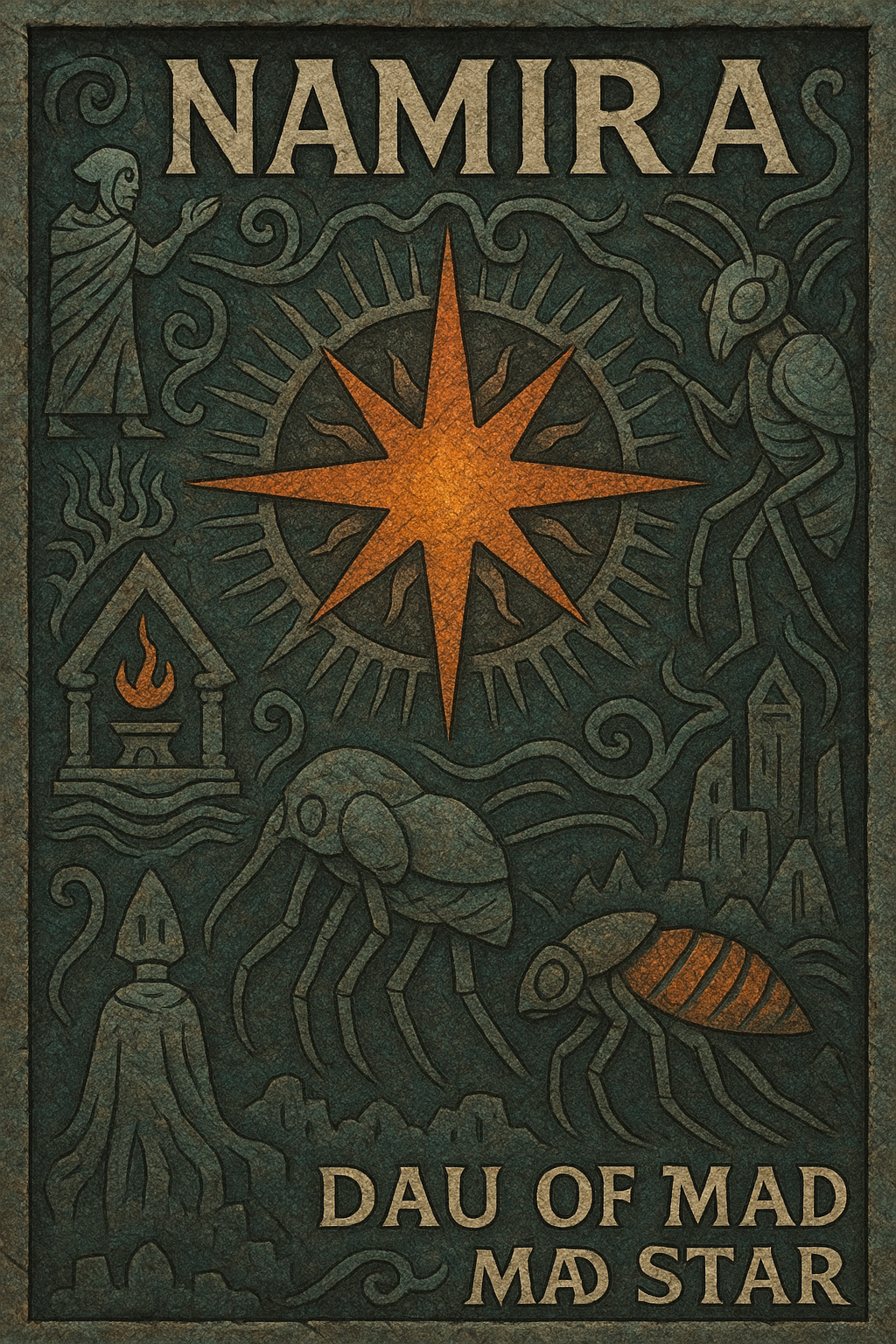
trauma soliloquy • tragic aria, musical, british english, intelligent, through-composed • minimal • ashlander • grief without catharsis • intimate • restrained • uncanny stillness, female vocalist, solo, musical, clear voice, breaking, vocal fry, emotional, grief
---
TEMPO / METER
pensive ~65bpm- frantic ~165bpm
Free meter feel, phrases stretch and compress naturally
---
KEY / TONAL CENTER
Modal minor (Dorian-leaning → Aeolian drift)
No strong cadential resolution
---
INSTRUMENTATION
Low bowed morin khuur (primary emotional bed)
Sparse oud (single-note punctuations, not arpeggiated)
Frame drum (enters late, very soft, heartbeat-like)
Sub-bass harmonic drone (felt, not heard)
Very faint ash-wind texture (non-melodic noise), female vocals, ‑pop, ‑country, ‑gospel, ‑christian, ‑soul, ‑american
3:39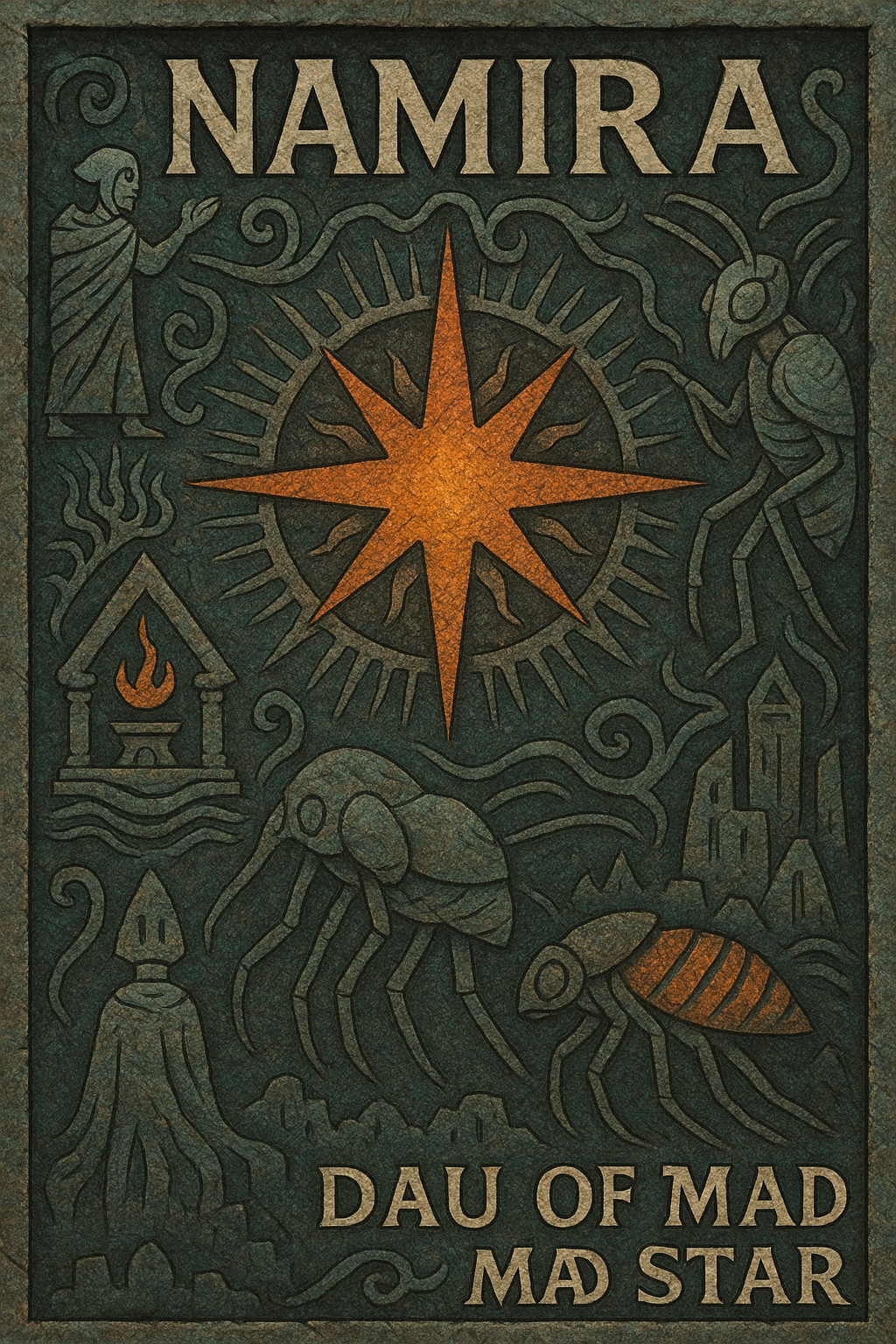
TEMPO: Fast Dynamic
Style: [Through Composed]
[INSTRUMENTATION: [Subtle and minimal supporting vocals]
• frame drum pattern reintroduced but displaced (off-beat emphasis)
• hand percussion (woodblock / shell clacks) in irregular call-response
• morin khuur switches from sustained bow to short, agitated strokes
• low reed ghost-tones (air without pitch)
• sub-bass pulse continues from Part I, unchanged tempo — creating metric dissonance]
tragic aria, musical, british english, intelligent, through-composed • gliding, fast vocals, minimal • ashlander • grief without catharsis, female vocalist, solo, musical, clear voice, breaking, vocal fry, emotional, grief, anger, frustration, Shakespearian, deeper voice, vocals forward, ‑pop, ‑country, ‑gospel, ‑electronic, ‑edm, ‑techno, ‑rap, ‑christian, ‑soul, ‑american, ‑piano, ‑melisma, ‑drawn out
3:18
[INSTRUMENTAL INTERLUDE — FALSE MOMENTUM]
[TEMPO SHIFT: ~125 BPM, uneasy forward drive]
[METER: implied 4/4, with syncopated accents that resist grounding]
[INSTRUMENTATION:
voice forward, subtle instrumentation, • frame drum pattern reintroduced but displaced (off-beat emphasis)
• hand percussion (woodblock / shell clacks) in irregular call-response
• morin khuur switches from sustained bow to short, agitated strokes
• low reed ghost-tones (air without pitch)
tragic aria, musical, acapella, british english, intelligent, through-composed • gliding, fast vocals, minimal • ashlander • grief without catharsis, female vocalist, solo, musical, clear voice, breaking, vocal fry, emotional, grief, anger, frustration, Shakespearian, deeper voice, ‑pop, ‑country, ‑gospel, ‑electronic, ‑edm, ‑techno, ‑rap, ‑christian, ‑soul, ‑american, ‑piano, ‑melisma, ‑drawn out
6:07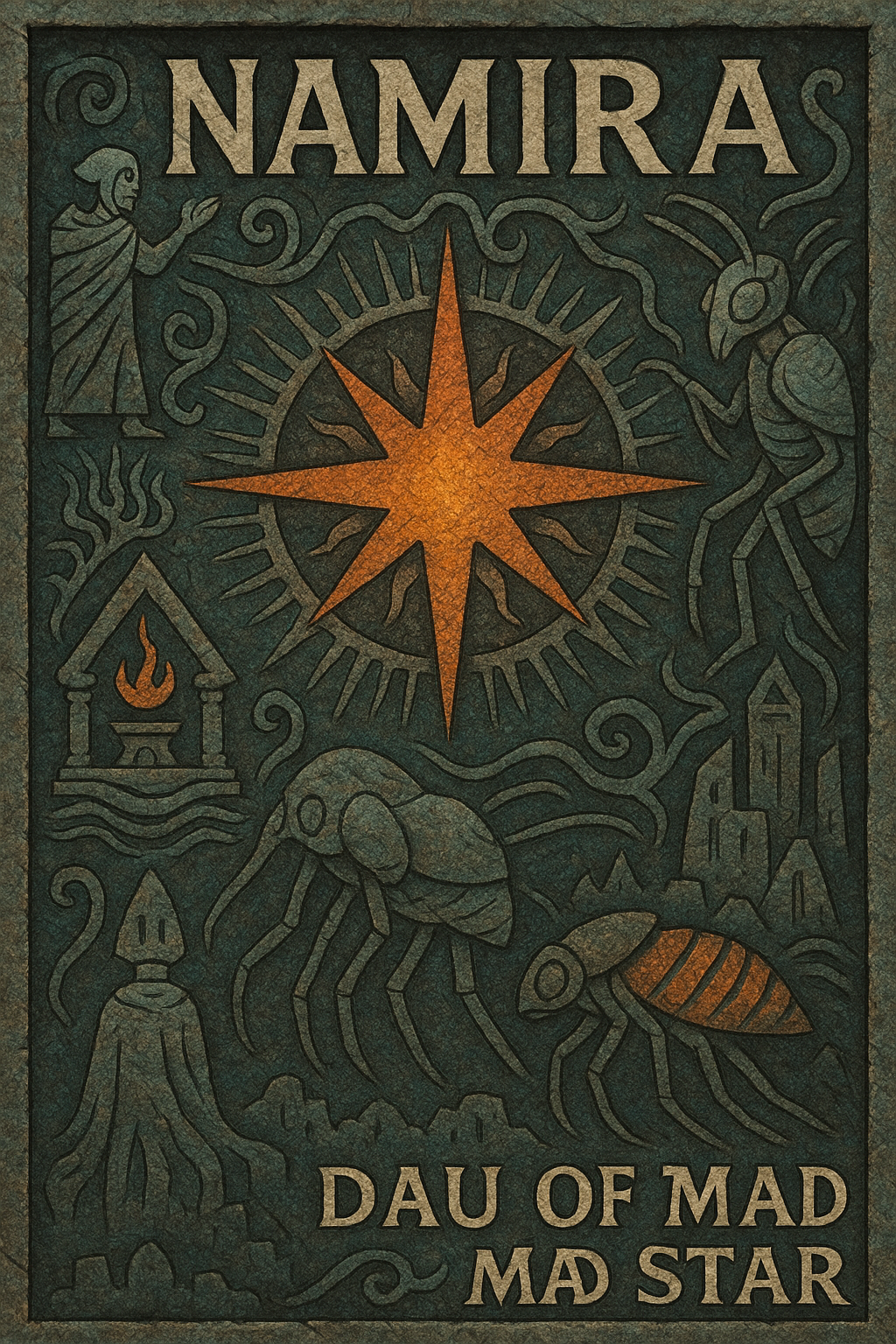
MASIASHI — Baritone (Dunmer timbre):
Warm but shadowed tone with metallic edges, slightly nasal resonance; articulate diction and expressive emotional shading, Range A2–E4, baritone tessitura comfortable in low–mid register, Delivery alternates between sung declamation and inward speech, Through-composed baritone soliloquy blending Ashlander chamber-folk with sparse Western classical texture, Instrumentation: oud, morin khuur, bowed vibraphone, cello harmonics, and occasional muted trumpet or low saxophone—the latter evoking faint “Vivec” color without full mariachi flourish, Tempo ~60 BPM, rubato phrasing, The tone evolves from conflicted self-reproach to quiet revelation, Harmony drifts between D Aeolian and Phrygian, creating unease that resolves into solemn modal clarity as Masiashi uncovers the statue and stone spear, Dynamics swell naturally from whispered introspection to firm ritual cadence, No chorus or secondary voices
14:25
ambient, intelligent, epic, clean sound, clear vocals, musical style, opera
Ashlander psychedelic-mariachi fusion with avant-garde brass, Base tempo 65-125 BPM for verses and choruses; surreal slow section for Vivec’s bugle solo with pronounced Mariachi-inspired phrasing — sharp, ornamental trumpet lines, alternating between mournful vibrato and triumphant flare, Instrumentation: trumpets, bugles, bass saxophone, bassoon, down-tuned oud, and sparse throat-sung drones under verses, Tone: oscillates between mystic fatalism and ecstatic revelation; Vivec’s male voiced sermon layered over brass in call-and-response textures, Final sections erupt into sax swells before dissolving into insectile clicks and ambient decay, Singers:
Vivec: Male, rich baritone with wide range, Ashimasi: Female, soprano with slight gravel tone, Ashimasi: Male, tenor with slight gravel tone, Chorus: Female, nasal falsetto, chittering sharp, insectoid
Sotha Sil: Male, mechanical tenor with auto-tune
4:54

(Short transitional duet; ~45–70 seconds depending on tempo)
Tempo: ~62 BPM → brief lift to ~68 BPM in final 8 bars, Instrumentation: Oud tremolo, low morin khuur drones, quiet brass residue, soft insectoid click-trills, distant reed pads, faint bell-glass echoes (Vivec’s afterimage)
7:04

Almalexia & False Nerevar Duet
Tempo: ~72 BPM, theatrical bounce; instrumentation intentionally cheap and gaudy
Voices:
Almalexia — rich contralto lead vocalist with smug vibrato;
False Nerevar — heroic baritone with blank enthusiasm, side character status;
Chorus — Wedding guests sycophantic mimicry mix of male and female singers layered
6:41
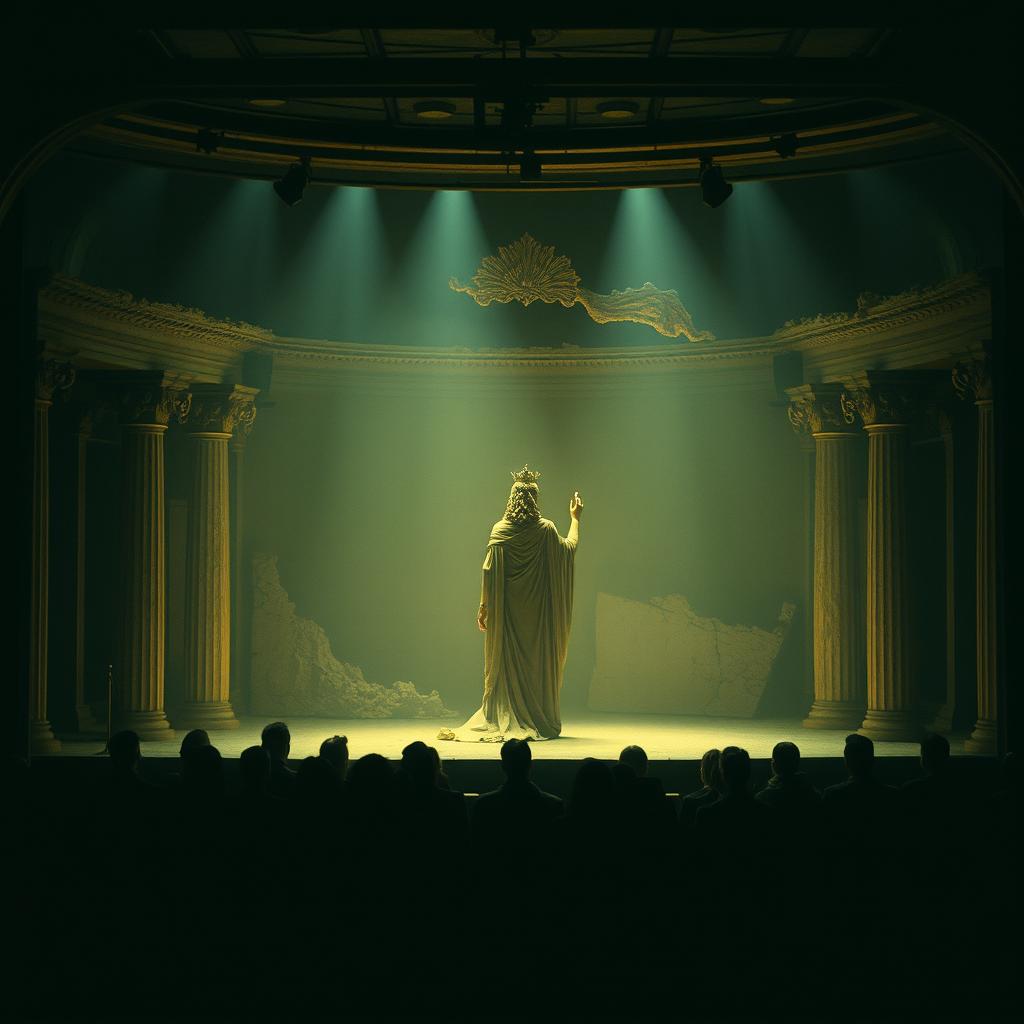
Plot Unfurled
v4.5+
Comedy-laced dramaturgy, Ashimasi earnest, Almalexia amused / contemptuous, Musical style: brittle ceremonial strings + sly harpsichord + occasional brass stings; tempo 64 → 72 BPM as spar escalates, )
6:00
operatic dark fantasy ballad (~75 BPM), Features a commanding female contralto lead, Instrumentation is built on a foundation of low brass (saxophone and tuba), a full string section, and minimal percussion (timpani, gong), A sparse harpsichord used for textural contrast, The tone is regal, defiant, cold, and unapologetically powerful, moving from controlled fury to a soaring, divine climax, musical, stage play, Shakespearian, operatic, female vocals, clear voice, sparse instrumentation, acoustic, vocal fray, minimal percussion, spoken word, experimental, studio quality, dominant voice, hushed instrumentation, acid jazz, electric oud accompaniment, ‑country, ‑gospel, ‑rock, ‑metal, ‑christian, ‑american, ‑rap, ‑hip hop
7:06

“WHO DREAMS OUR DREAM?” — confrontation song
Tempo: 64→72 BPM rising
Style: dark folk + insectoid ritual chant + shard-brass intrusions
Instrumentation: low marimba pulses, bowed vibraphone, guiro, click-trills; Elytra foot-stamps; rumbling sub-brass from the opposite side; sudden plume of fog
2:13
Giddy Face pt 1
v4.5+
musical theatre, dark fantasy opera, glitch-folk mariachi hybrid; ominous brass swells, muted trumpets, nylon guitar pulse, insectoid chorus textures; warm but panicked crowd layering; toy-piano stingers for comedic meta-theatrical cues; slow rising tension (~56–60 BPM); dramatic RP mezzos for Almalexia; guar-voice as warm baritone cameo; shifting soundstage with fog, glass-chitin stage movement; cinematic transformation effects; tone oscillates between divine menace and absurd backstage interruption
5:01

Giddy Face pt 2
v4.5+
hybrid mariachi-electronic ballad with theatrical glitch, warm stentorian tenor lead (False Sotha Sil) with light autotune slips; muted trumpets, flugelhorn swells, nylon guitar comping, accordion breaths, subtle glitch percussion, occasional toy-piano intrusions; tempo ~62 BPM with loosened rubato during monologue spikes; tone sardonic, affectionate irritation, meta-comedic scolding, pivoting into cold precision; vocals forward, clean, expressive; influences drawn from False Sil’s prior serenade (“More Than Friend”) and cameo glitch-tones in “All Things Fool”; mood: witty divine bureaucracy → tightening menace → cutting dismissal of the ego-twins
2:52
Hybrid clockwork-jazz tango with warm mariachi brass and glitch-mechanical accents, Tempo ~92 BPM, tango-clave pulse, nylon guitar, muted trombones, toy-piano motifs, Electronics warp rhythm and pitch at emotional peaks, False Sotha Sil’s stentorian, lightly autotuned tenor croons a possessive love-song to Vivec while dancing with Muatra; voice smooth but glitching under stress, Masiashi’s raw baritone cuts in with sharp objections, A few Elytra whisper-echoes repeat his challenges, creating hive-resonance doubt, Texture tightens as brass grows microtonal and percussion snaps into overclocked regularity, Tone shifts from seductive precision to brittle obsession, Ends in a harmonic implosion as Masiashi is absorbed into Muatra, leaving a single warped toy-piano note
3:19
Style: Dark-folk theatrical fusion with avant-garde mariachi brass; surreal tonal distortions and glitch motifs, Tone: Rising tension → mask-fracture → manic revelation, Instrumentation: Toy piano in warped meter, bugle and low brass glissandi, bowed strings, granular clockwork FX, insectoid whisper chorus; bright chaotic surges at reveal, Vocal Profiles: Clean dramatic lines, glitch-processed harmonies, theatrical baritone-tenor mania, Atmosphere: Cosmic unmasking, metaphysical destabilization, triumphant madness at truth’s arrival, Tempo: ~60 BPM tension, breaking into asymmetric manic meter at Sheogorath’s reveal, ‑gospel, ‑soul, ‑country, ‑american, ‑hiphop, ‑rap, ‑low quality
6:59
Musical Style / Tags
musical, spoken word, dark folk, ambient, ritual, stage-play, poetic, intelligent, eerie, minimalist, mythic, unsettling, intimate, philosophical, slow burn
Tempo & Structure
Tempo: ~75–85 BPM (inexorable)
Meter: Flexible / rubato phrasing (spoken-sung dominance)
Form: Through-composed (no traditional chorus)
Gradual escalation in density, not volume
Final section feels resolved rather than climactic (dangerously comforting)
Instrumentation
Sparse, controlled, and psychologically close:
Low drone strings (cello / bass viol / morin khuur)
Soft bowed vibraphone or glass harmonica (for “idea made audible” texture)
Muted bass clarinet or contrabassoon breaths
Occasional toy-piano or detuned harpsichord only as a Sheogorath tell (very restrained)
Subtle sub-bass swell beneath key revelatory lines
No percussion until very late, if at all (and never rhythmic), ‑country, ‑soul, ‑gospel, ‑christian, ‑american, ‑pop