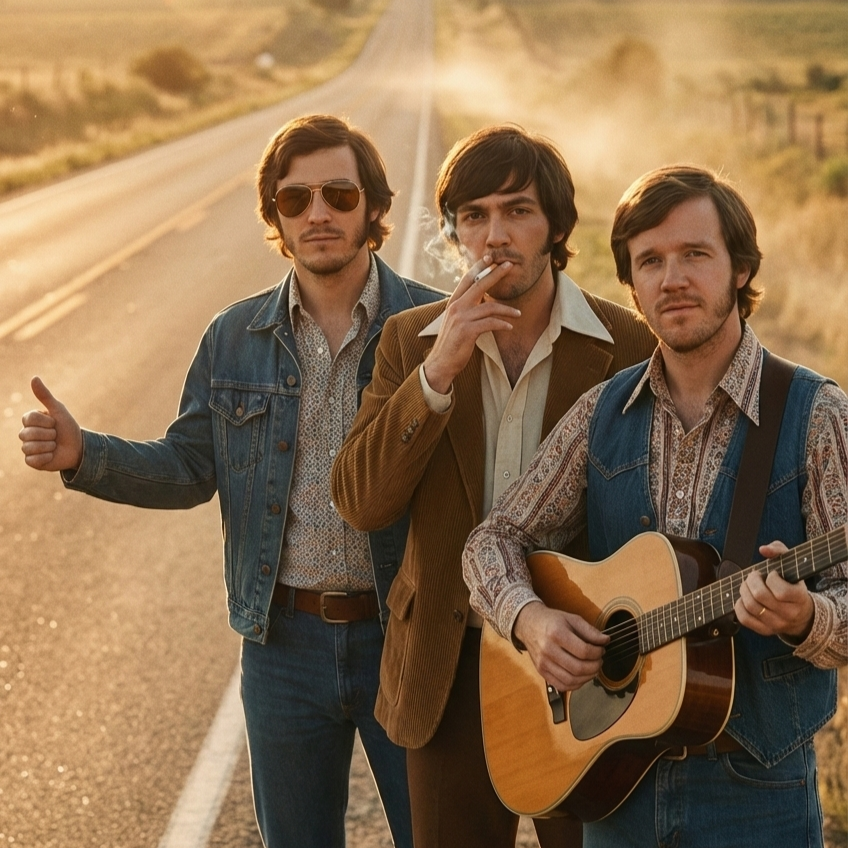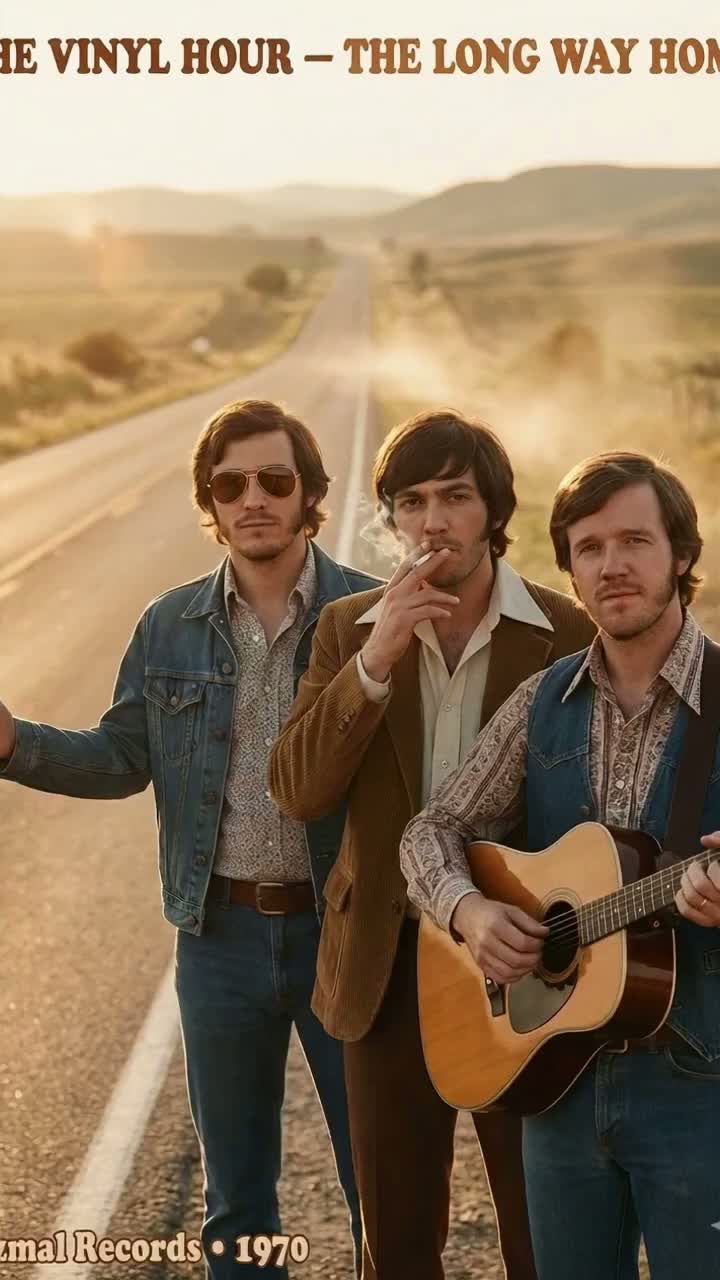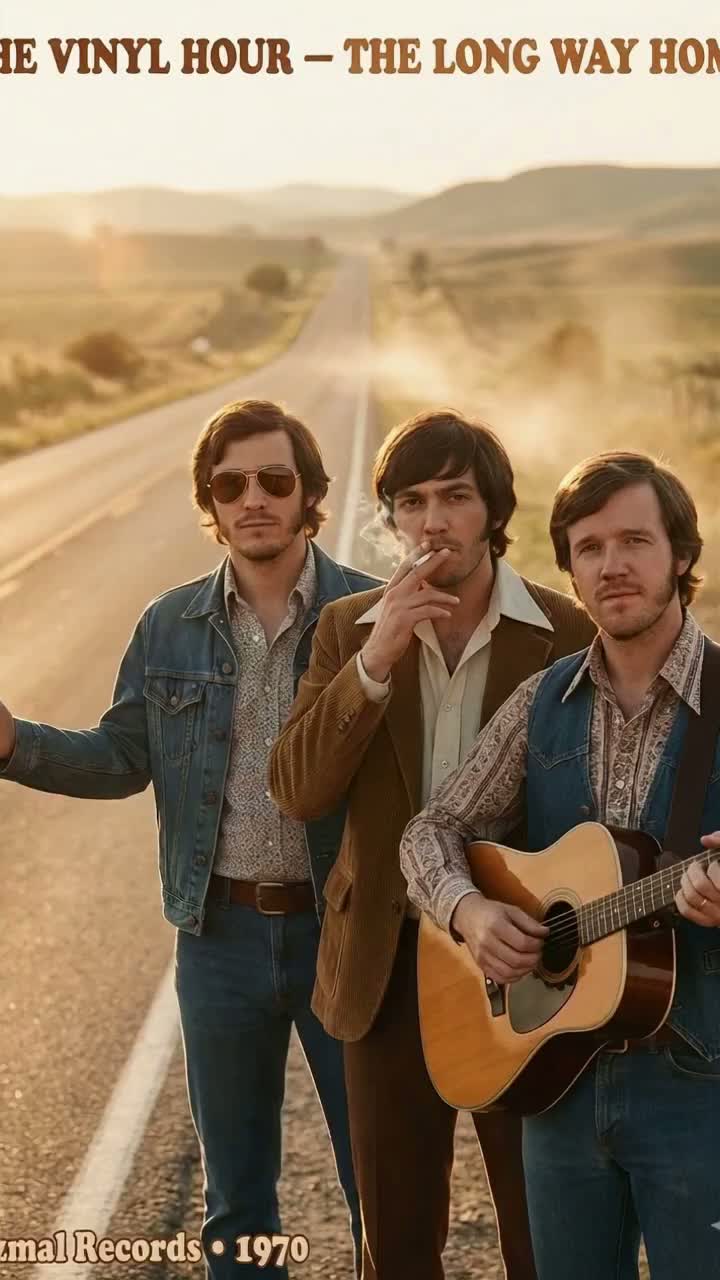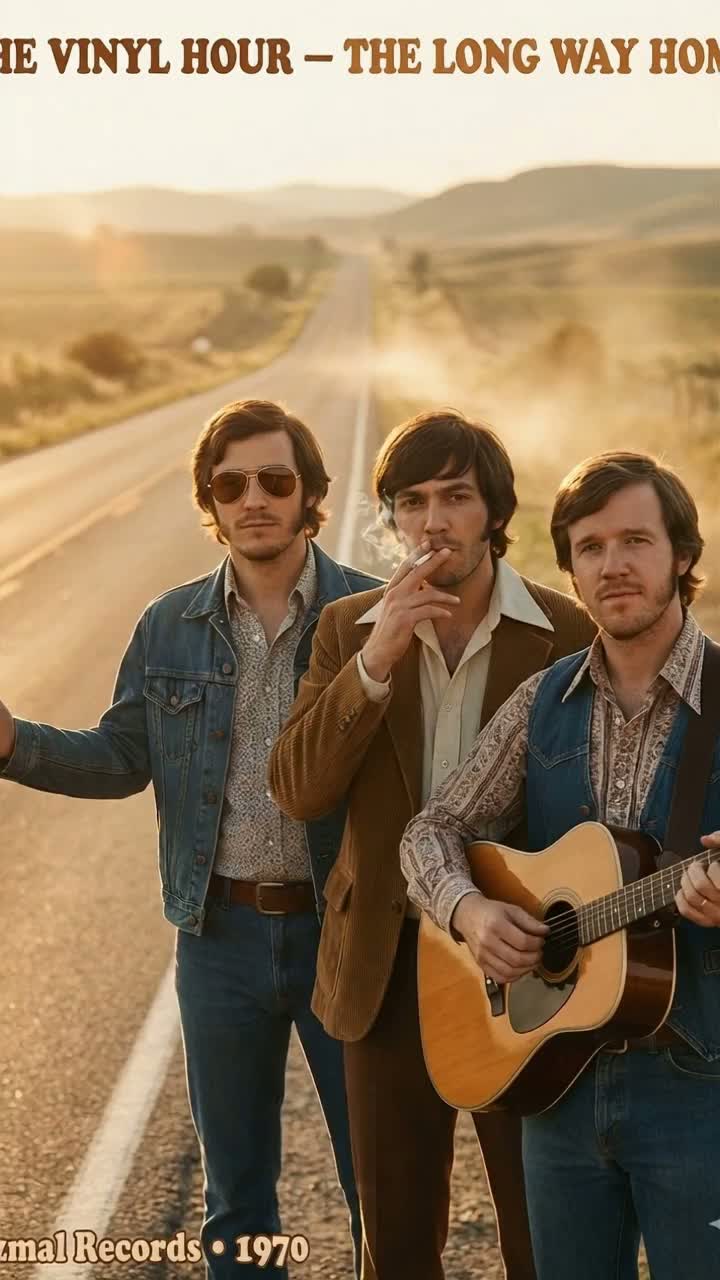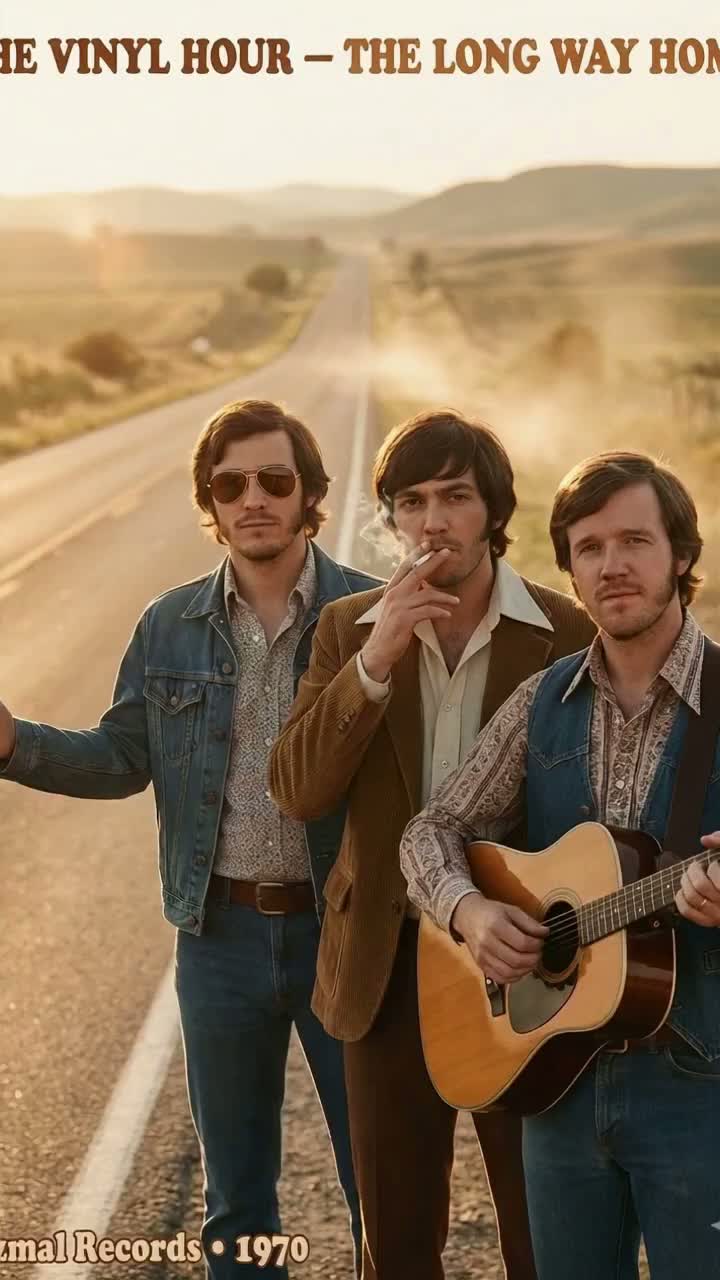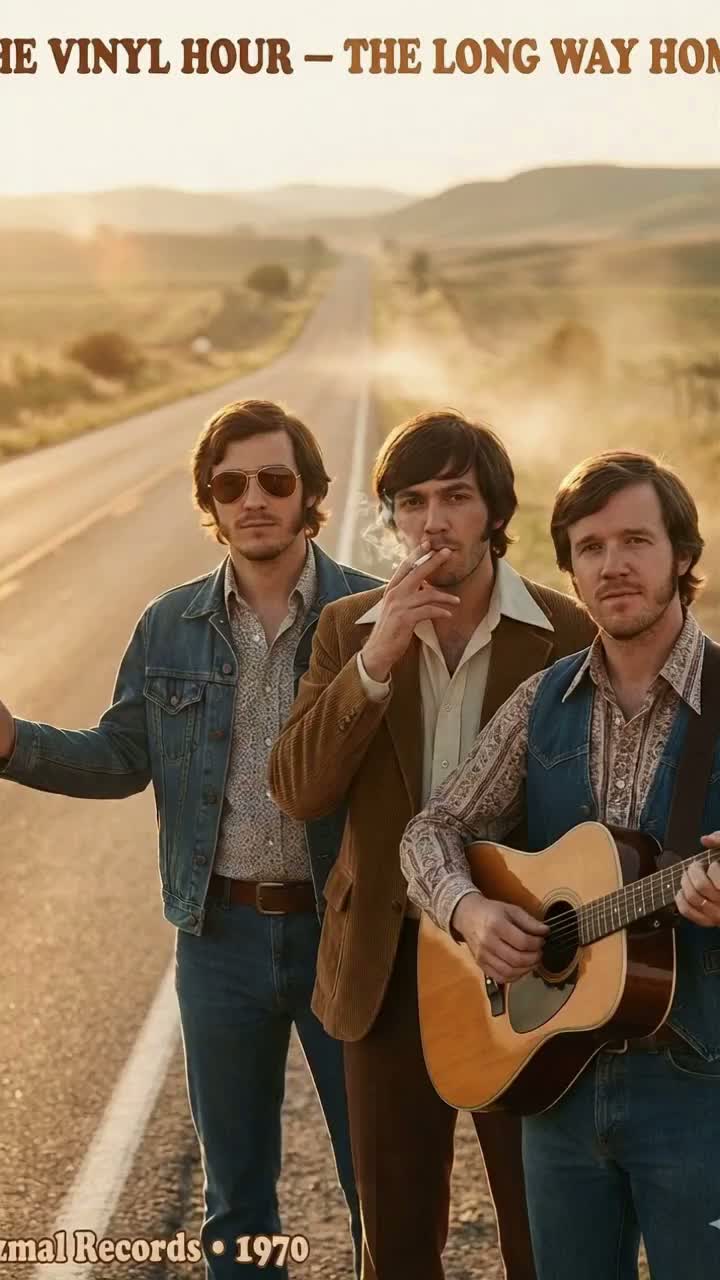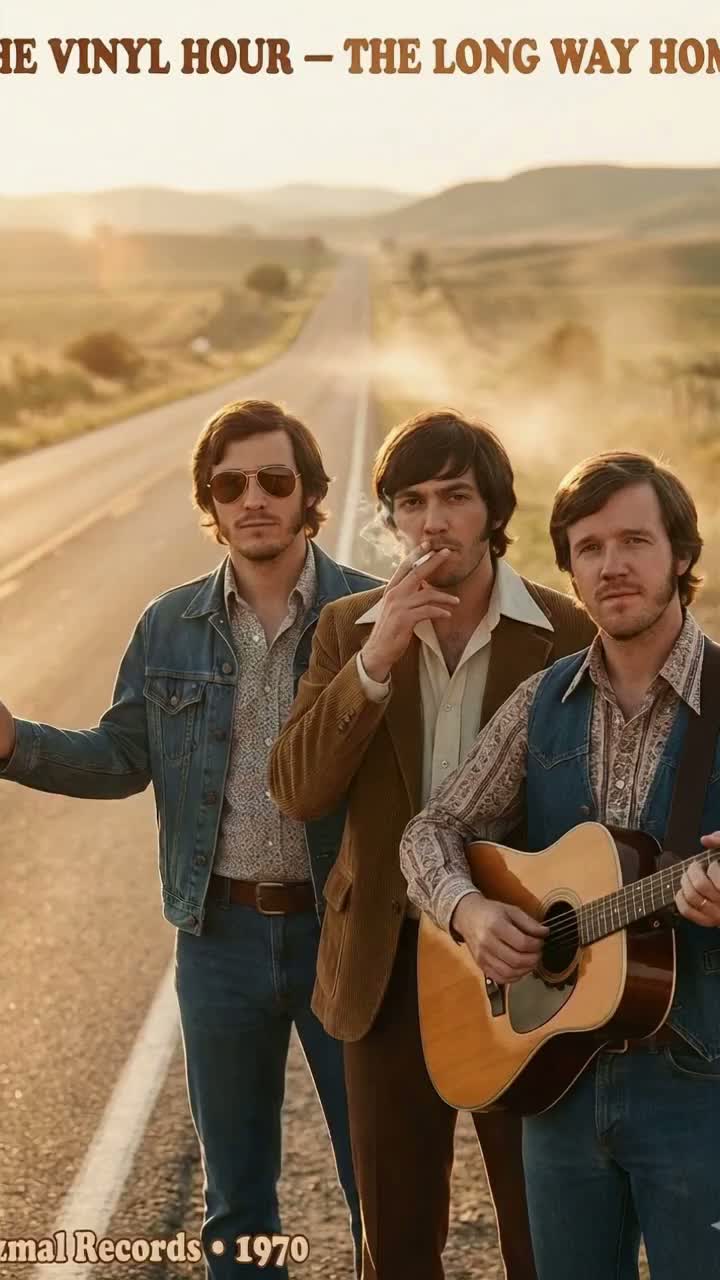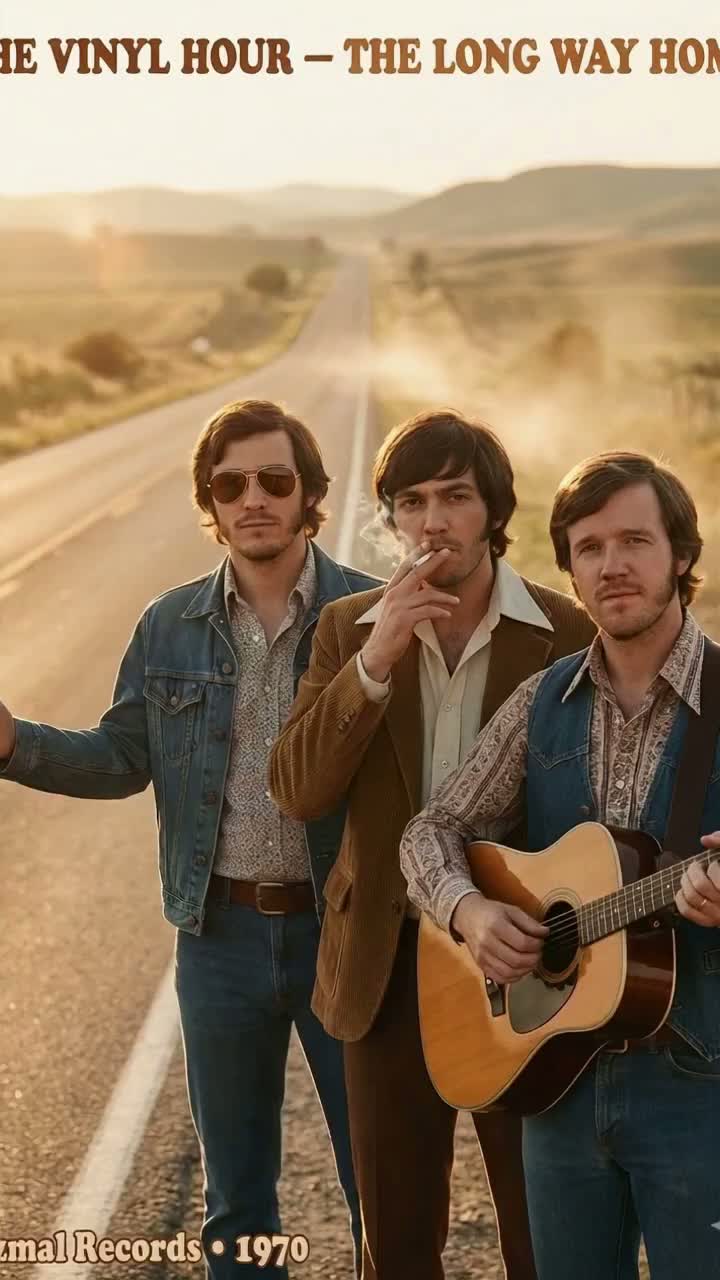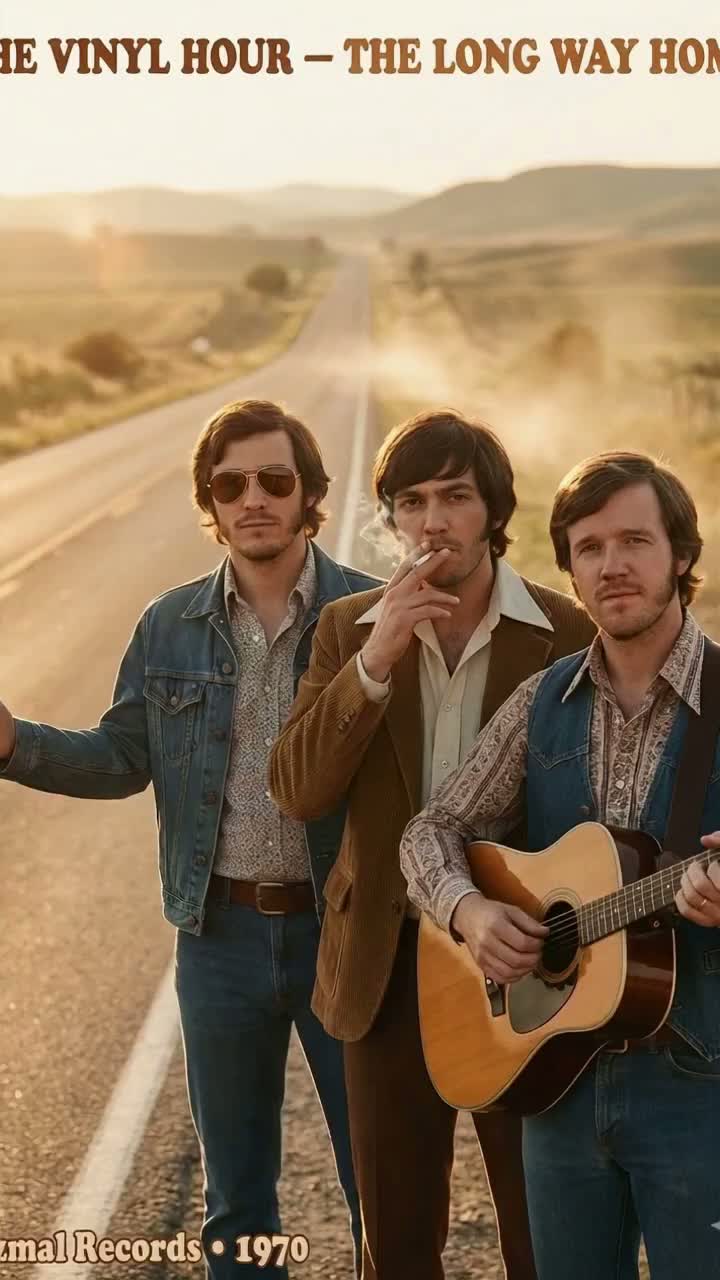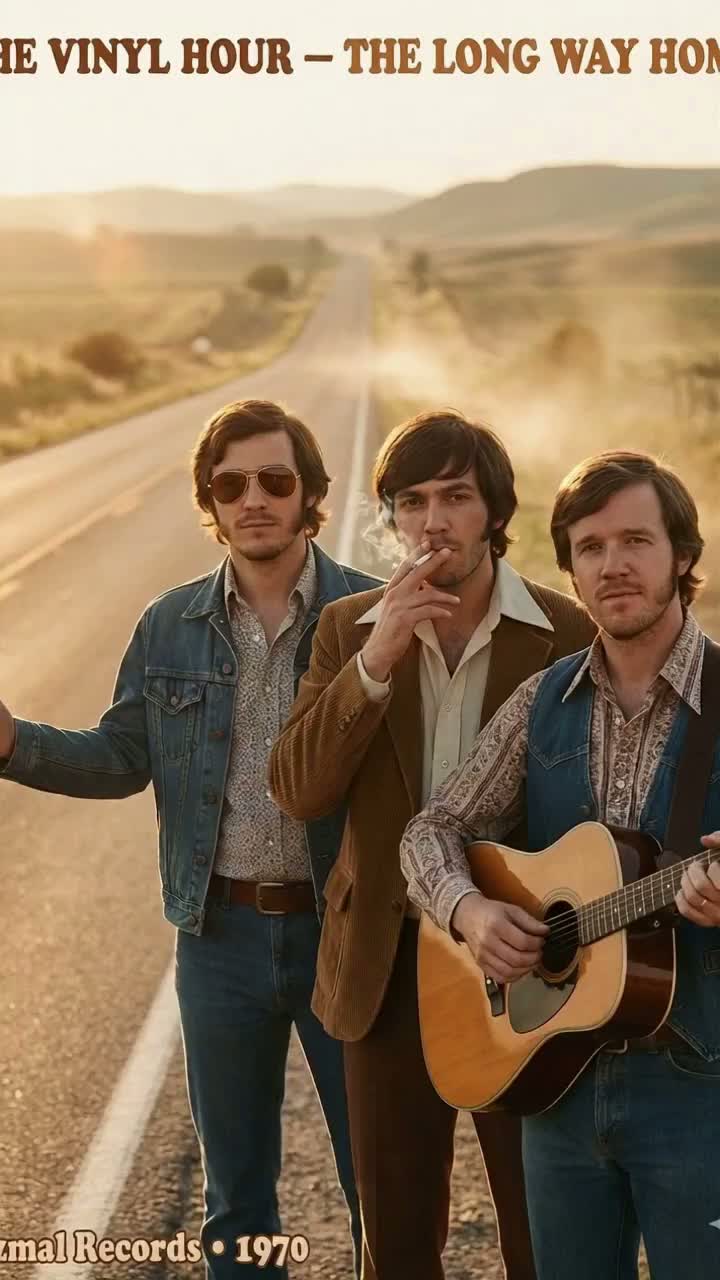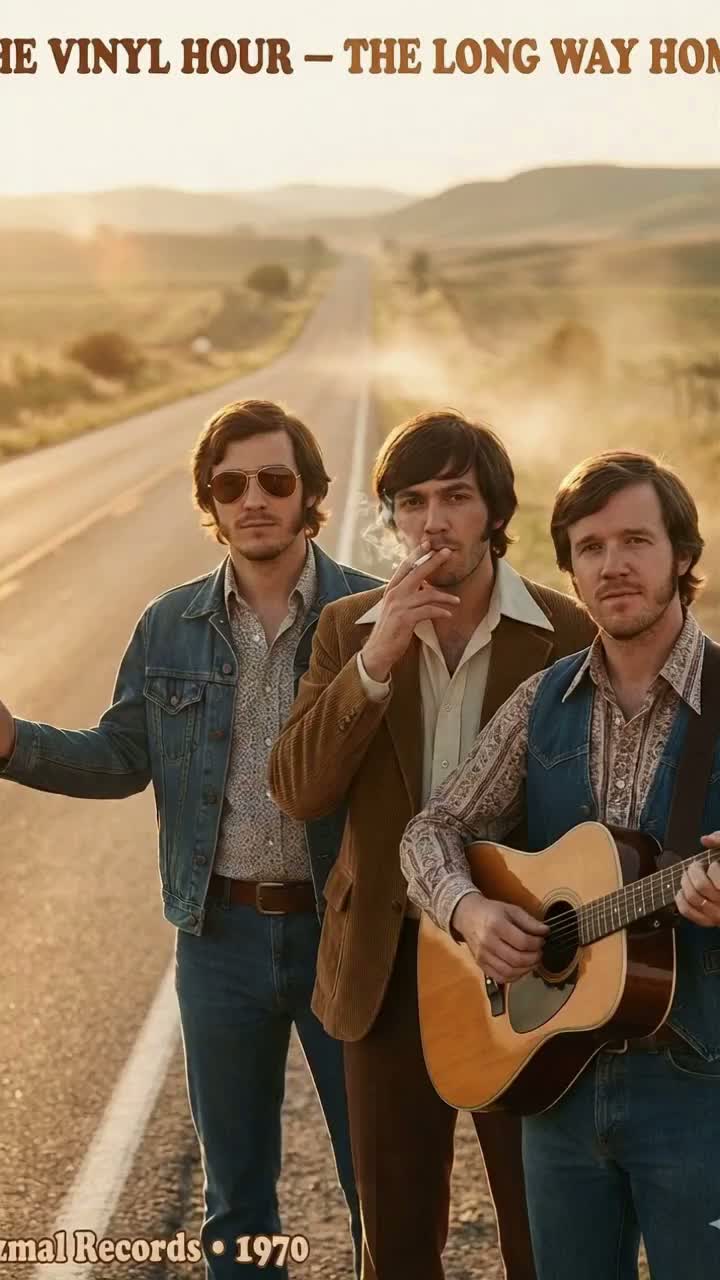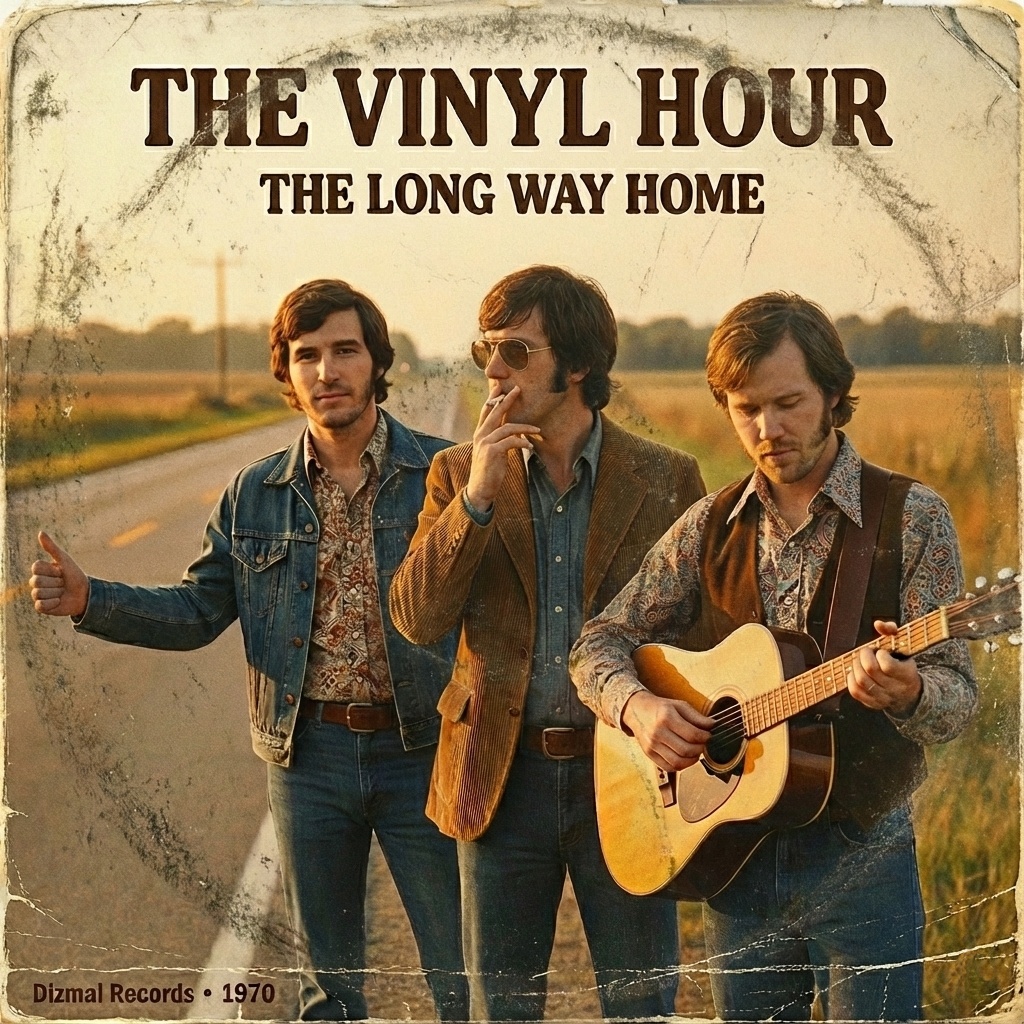
The Vinyl Hour | The Long Way Home | 1970
The Vinyl Hour’s third album (1970). A reflective journey about getting lost, nearly breaking, and finding your way back. Warm, human, and meant to be heard front to back. #Dizmal Records.

·
14 songs
4:37

Warm 1970 soft-rock feel with acoustic guitar strums, Wurlitzer electric piano, analog tape saturation, and a gentle, steady drum groove with natural room ambience, Soft Fender-style bass, light tambourine, and clean vintage production — inspired by early 1970 British pop and folk-rock, Lead vocals should have a young British/English accent with smooth double-tracking on the choruses, Emotional but confident opening-track energy; organic, intimate, and tape-warm, Abbey Road–style clarity paired with subtle Laurel Canyon influence, No psychedelia — just clean, mature, analog warmth
3:32

Soft, warm 1970 acoustic pop with British/English lead vocals, Finger-picked acoustic guitar, gentle Wurlitzer electric piano, light tape hiss, soft tambourine, mellow Fender bass, and intimate close-mic’d vocals, Slow to medium tempo with emotional depth; early 1970 Abbey Road–style warmth, Touch of Mellotron strings in the chorus, Overall: nostalgic, autumn-colored, reflective, heartfelt
3:48

Early-70s upbeat British rock with jangly electric guitars, punchy drums, warm analog tape texture, and driving Fender bass, British/English lead vocals with energetic grit, Rhythm guitar slightly overdriven, tambourine on choruses, double-tracked vocals for the hook, Bright, confident, Badfinger/early-McCartney-style energy with 1970 Abbey Road clarity, No psychedelia — clean, powerful, melodic rock
3:59

Experimental 1970 British art-pop with soft Mellotron strings, delicate fingerpicked acoustic guitar, gentle brushed drums, warm tape hiss, and intimate British/English vocals, Slightly surreal arrangement with floating harmony layers, occasional tempo rubato, and a dreamy, atmospheric mix, Emotional, fragile, poetic — reminiscent of early 70s deep cuts from McCartney, Nick Draake, and Beatles late-era experiments, No psychedelia; instead, soft experimental folk-rock with analog warmth and subtle Mellotron textures, ‑country
2:48

Tight, clean 1970 British pop with melodic electric guitars, warm Fender bass, steady mid-tempo drums, and bright acoustic strums, British/English lead vocals with stacked harmonies on the chorus, Light tambourine, crisp tape-saturated production, subtle Wurlitzer piano doubling the chords, Energetic, uplifting, and radio-friendly — early 70s Badfinger/McCartney-style pop with warm analog color, No psychedelia; keep it clean, catchy, and confident, ‑country
5:04

Atmospheric 1970 British soft-rock in a minor key with foggy, dreamlike textures, Warm Wurlitzer electric piano, soft fingerpicked acoustic guitar, Mellotron flute/strings drifting in and out, gentle brushed drums, and deep, warm bass, British/English lead vocals, intimate and airy, Slow, hypnotic tempo with analog tape hiss and soft reverb, Cinematic and reflective — somewhere between “Sun King” and early-70s folk-rock ambience, ‑country
3:34

Early-1970s British whisper-vocal acoustic ballad recorded as a late-night studio take, Lead vocal is extremely intimate, hushed, and close-mic’d, almost whispered — emotional but restrained, Instrumentation strictly limited to:
• single acoustic guitar
• extremely soft finger taps or brushed rhythm on guitar body (optional)
• no bass, no drums, no keys, no strings
Explicit instructions:
no piano, no Mellotron, no strings, no synths, no orchestration, no modern effects, Production style:
• audible breathing
• soft room sound
• very light analog tape noise
• dry mix, no reverb bloom
• imperfect, human, intimate
Mood: fragile, confessional, vulnerable — as if the singer is alone in the studio after everyone has left, ‑country
3:13

1965 British experimental pop, Slow tempo (~88 BPM), Starts minimal with ambient organ and hi-hat, gradually builds into full band with layered guitars and bass, Use reversed guitar textures and analog tape hiss for atmosphere, Emotionally detached but cinematic — builds tension without release, Inspired by “A Day in the Life” intro, “Julia, ” and early ambient experiments
2:46

1970 folk rock, jangle pop, 12-string acoustic guitar, breezy electric guitar, Lead vocals: bright clear tenor, distinct British accent, high range, optimistic and melodic, Backing vocals: lush three-part block harmonies on choruses, falsetto "aah" flourishes, sunny west coast vibe, mid-tempo, light drums, groovy melodic bassline
5:22

Early-1970s British soft-rock acoustic ballad, slow emotional pace, intimate male vocal, gentle tape hiss, warm acoustic guitars, soft piano, subtle Mellotron or string swell, restrained drums entering only later, deeply reflective melancholy mood, Cinematic but quiet, emotionally devastating without yelling, storytelling lyrics about a house going silent after a breakup, Tone references: early Eltton John ballad energy meets Nick Draake warmth with a hint of Beattles ‘Abbey Road’ emotional gravity, Keep it vulnerable, honest, human, ”
4:33

1968 British garage-rock trio, Only electric guitar, bass, and drums, Fast tempo (~150 BPM), Raw live-room sound — no overdubs, no polish, Overdriven Rickenbacker guitar, punchy Hofner/Fender bass, tight Ludwig drums, Male lead with raspy, shouted British accent vocals; call-and-response backing shouts, Hot analog compression, slight tape distortion, minimal reverb, Feels like “Twist and Shout” meets “Helter Skelter, ”
3:46

1968 British garage-rock trio, Only electric guitar, bass, and drums, Fast tempo (~150 BPM), Raw live-room sound — no overdubs, no polish, Overdriven Rickenbacker guitar, punchy Hofner/Fender bass, tight Ludwig drums, Male lead with raspy, shouted British accent vocals; call-and-response backing shouts, Hot analog compression, slight tape distortion, minimal reverb, Feels like “Twist and Shout” meets “Helter Skelter, ”
3:14

“Catchy 1970s British pop-rock song in the style of early Beatles energy, Simple band arrangement: tambourine, acoustic guitar, bright electric guitar, melodic bass, tight live drums, tambourine, warm analog tone, Male lead vocal with stacked 3-man harmonies from band members only, no female vocals, no choir, Upbeat, bouncy, optimistic, catchy chorus, simple feel-good songwriting, Short bridge, strong hook repetition, feels like ‘We Can Work It Out’ era Beeatles — charming, human, singable, Include a tambourine providing a rhythmic shake and accent beats, similar to the Beeatles’ ‘We Can Work It Out, ’”, ‑country