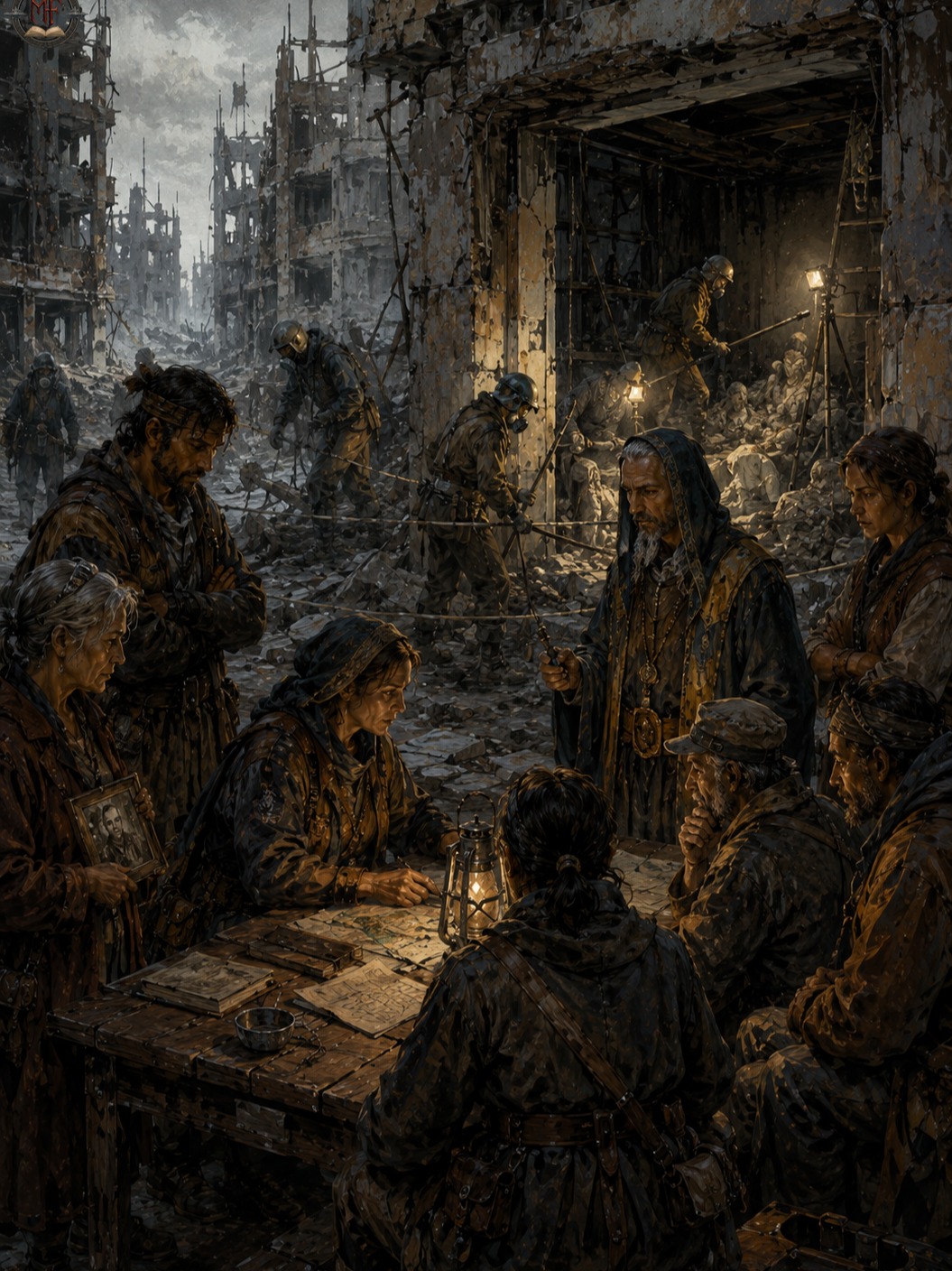

(Verse 1) They faced the sealed district where the Paled remained in place, While failing pumps below the town began to lose their pace. The needed seals and bearings waited underneath the dead, And every hour of argument left fewer people fed. (Verse 2) The relatives brought photographs and named each silent room, The priests declared the threshold both a covenant and tomb. The salvagers brought lanterns, rope, and tools to clear the way, While witnesses recorded every claim the living made that day. (Chorus) Ash rights held the doorway where the future met the past, And grief became a court of law beneath the water mast. The living asked for mercy while the dead retained their claim, And every part recovered had to answer to a name. (Verse 3) The custodians showed failure charts and water turning brown, And warned the broken intake soon would empty half the town. The mourners answered survival did not cancel what was owed, For every sealed apartment was a grave beside the road. (Verse 4) They opened one marked passage under witness, bell, and light, And moved the fragile Paled with the relatives in sight. Each salvaged piece was entered in the ledger of the hall, While every name disturbed was read before the evening call. (Chorus) Ash rights held the doorway where the future met the past, And grief became a court of law beneath the water mast. The living asked for mercy while the dead retained their claim, And every part recovered had to answer to a name. (Bridge) They knew the dead could own a place without possessing all, And knew the living needed more than reverence at the wall. So law became the measure where no answer could be clean, Between the thirst of those alive and everything once seen. (Outro) Now clean water fills the cisterns through the parts they brought away, Yet bells still mark the district at the closing of the day. The town survived by entering what grief had sealed before, And learned the dead may hold the past, but not the future’s door.
