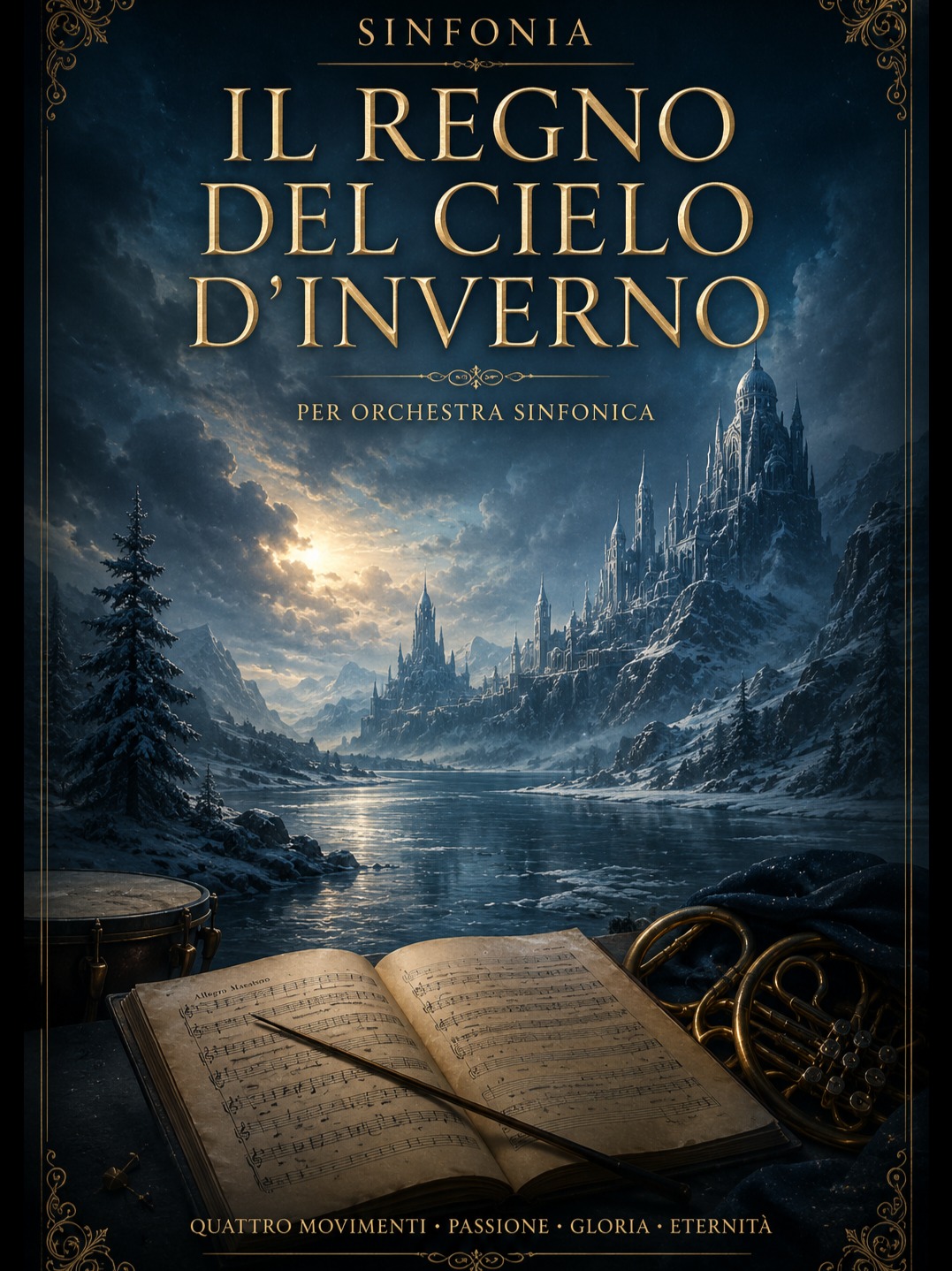
Il regno del cielo d'inverno

[ORCHESTRATION: Full symphony orchestra: First and second violins, Violas, Cellos, Double basses, Flutes and piccolo, Oboes and English horn, Clarinets, Bassoons, Four French horns, Trumpets, trombones, tuba, Timpani, Concert bass drum, cymbals, triangle, Optional concert grand piano used sparingly as orchestral color] [OVERALL CHARACTER: Noble, dramatic, passionate, deeply emotional and majestic. Rich late-Romantic harmonies, broad melodic writing, expressive modulations, contrapuntal development, powerful dynamic contrasts, recurring thematic material and organic orchestral growth.] [MOVEMENT I – ALLEGRO MAESTOSO (0:00–2:00) Begin with a solemn orchestral introduction. Low strings and brass establish a heroic principal motif. Gradually expand into full orchestral sonority. Broad Russian-style melody in the strings. Trumpets present triumphant thematic statements. Timpani reinforce harmonic pillars. Flowing string figurations create momentum beneath the main theme. Frequent crescendos and dramatic dynamic swells. Strong cadential brass passages. Sense of grandeur, destiny and nobility] [MOVEMENT II – ADAGIO CANTABILE (2:00–3:30) Transition naturally into a lyrical and melancholic slow section. Solo oboe or clarinet introduces a deeply expressive melody. Strings answer with warm legato phrasing. Flexible rubato feeling. Suspended harmonies and yearning modulations. Rich inner voices in violas and cellos. Occasional horn countermelodies. Intimate chamber-like orchestration alternating with emotional orchestral climaxes. Atmosphere of nostalgia, longing and bittersweet beauty] [MOVEMENT III – SCHERZO, ALLEGRO VIVACE (3:30–5:00) Sudden increase in motion and energy. Light staccato strings. Woodwind interplay and lively orchestral dialogue. Contrapuntal passages and rhythmic exchanges between sections. Dance-like elegance without folk clichés. Brilliant orchestral textures. Playful but sophisticated character. Short fugato-inspired passages. Sharp orchestral accents and energetic momentum] [MOVEMENT IV – FINALE, ALLEGRO CON FUOCO (5:00–8:00) Powerful return of the heroic opening theme. Progressive thematic transformation. Full orchestral development and expanding harmonic tension. Brass chorales and sweeping string passages. Large-scale crescendos. Recurring motifs from previous sections unified into a grand conclusion. Massive orchestral climax with synchronized timpani and brass. Triumphant major-key resolution. Extended coda featuring noble horn calls, soaring strings and monumental final orchestral chords] [COMPOSITIONAL DETAILS: Long, memorable melodies typical of the Russian Romantic tradition. Rich chromatic harmony and expressive modulations . Balanced use of counterpoint and homophonic textures. Frequent dynamic contrasts from pianissimo to fortissimo. Detailed articulation: legato, marcato, staccato, tenuto. Natural tempo fluctuations and expressive phrasing. Symphonic development rather than repetitive loops. Continuous musical narrative with thematic recurrence and transformation. Authentic concert-hall acoustic character] [TARGET RESULT: A compact but fully developed late-Romantic symphonic work that feels like a lost Russian orchestral masterpiece from the early twentieth century, emotionally powerful, structurally coherent, elegant, dramatic and timeless]
