
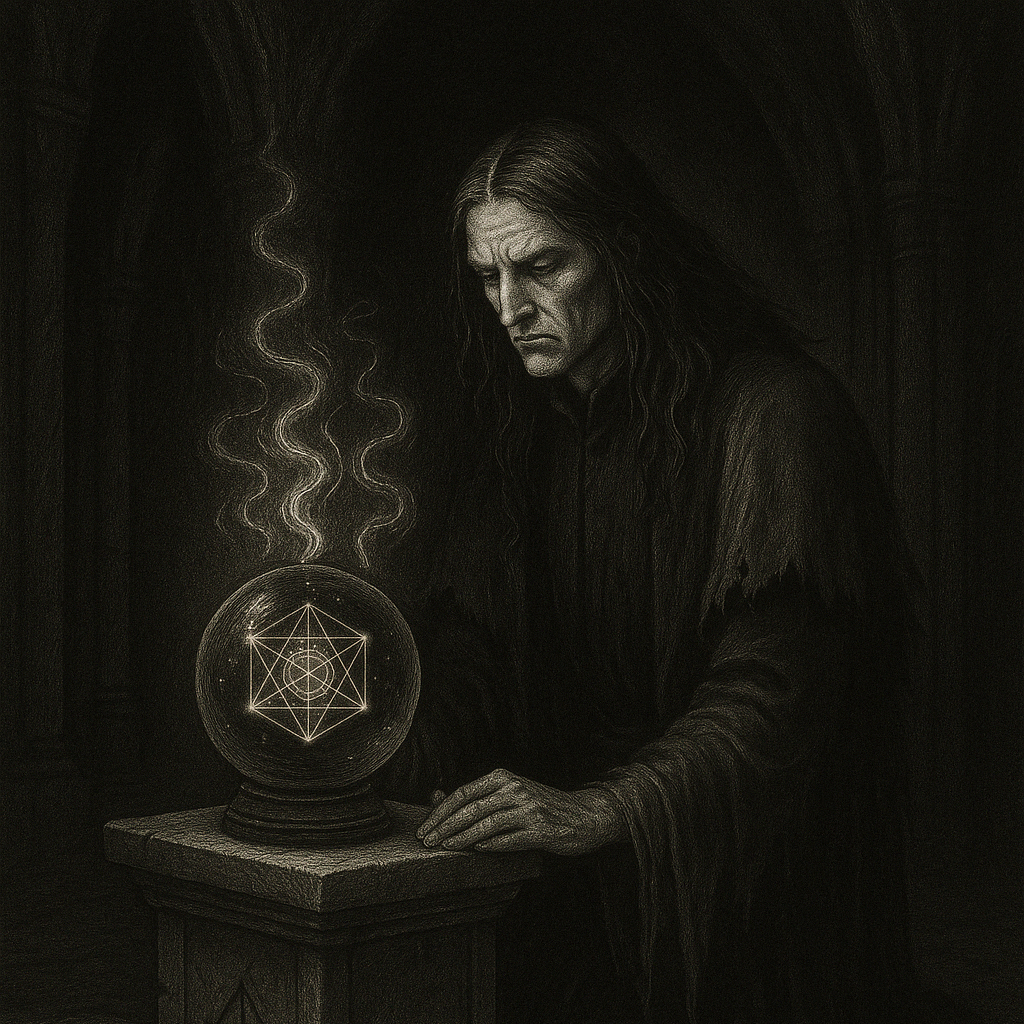
The facility was called St. Mirren’s— though there were no saints in its halls, only silence and antiseptic. A repurposed seminary now dressed as a psychiatric center, it bore its past like a stained collar. Nomolos arrived without fanfare, without file. They labeled him “John Doe” and watched him sleep with his eyes open. The room they led him to was pale and windowless. Tile underfoot. Fluorescent lights humming above. A circle of chairs arranged like teeth around a shared silence. The counselor entered last. Soft-voiced, unassuming, dressed in neutral layers like a deliberate absence of personality. “Welcome back, everyone,” she said. “You know the rhythm. No pressure to speak. Just listen. Share if you’re ready.” She looked around the circle, her gaze pausing on each face, then landing on Nomolos. “And if you’re new here, that’s okay too. Just being present is enough.” The silence became ritual—an opening more sacred than words. During his time above, Nomolos had heard a million confessions—recorded, categorized, archived. But not until this moment, this circle of damaged, defiant, fragile humans, did he truly listen. And in that small, trembling space between voices, something sacred stirred. A woman with trembling fingers and ink-smudged nails was the first to speak. “I lit the church pamphlets on fire during the youth retreat. They kept smiling while they told us we were broken. Said it with songs. Said it with verses. They were preaching hate. I didn’t have words, so I gave them fire.” The counselor gave a soft nod. No praise, no judgment—just enough presence to keep the silence from collapsing. Nomolos sat still. Some truths, he thought, burn fast when no one asks why they were lit. She wasn’t defying belief—just trying to escape its shadow. A woman in her thirties stared at the floor. “I said yes a lot—when I didn’t want to. Thought it meant I mattered. I don’t know. Afterward... I’d lie there and— It wasn’t about them. It was me. I hated that I kept saying yes.” Her hands trembled only after the words were gone. She offered herself like an apology, he thought—but what she wanted was to feel real. An older man, hollow-eyed, clutched two plastic bags beside him. “I’ve got receipts. Birthday cards. Toothpaste boxes. It’s all important. Or was. Some days I don’t even know what’s in the bags. But throwing things out feels like deleting myself.” He wasn’t preserving a life, Nomolos thought. He was burying himself in it. A younger woman with perfect posture spoke next, voice taut. “I make lists. Always have. Color-coded. Backup plans for bad days. People call it organized. I think it’s panic with better branding.” The counselor closed her notebook without writing. She wasn’t keeping the world in order, Nomolos thought—she was keeping it from falling apart. A man in a faded hoodie murmured, “It’s not the kind of tired sleep fixes. I used to get up. Make coffee. Try. Now... I just sit there. Can’t think of a reason to do otherwise.” He hadn’t given up, Nomolos thought. He just couldn’t remember what life had promised. Another man spoke, jaw tight. “I’m not mad all the time. That’s just what they say. I hold it in until I can’t. Then something small snaps and... they act like it came from nowhere.” He wasn’t violent, Nomolos thought. He was trying not to explode in a world that never asked why he was burning. A woman dressed like a business card made flesh crossed her legs. “I thought if I worked harder, looked better, I’d be enough. But the bar kept moving. Every mistake felt like a moral failure. And when I stopped running, I didn’t know who I was without the chase.” She wasn’t reaching for greatness, he thought. She was trying to outrun her own reflection. A man in a clerical shirt with no collar sat upright. “I used to preach about love—mercy, forgiveness. Then I’d go home, drink, scream. But the sermons were good. People said they felt seen. Sometimes I think the words meant more coming from a hypocrite.” He hadn’t lost faith, Nomolos thought. He just forgot it was meant to be lived. A young man near the edge of the circle whispered, “I don’t belong here. I say what they want to hear. I don’t lie—just rearrange. If you fake being fine long enough, maybe you are.” He wore truth like a mask, Nomolos thought—not to hide, but to make the lie comfortable. The silence circled back again. Nomolos shifted. “I watched,” he said softly. “That was my purpose. To watch. To record. I saw pain—small cruelties, great horrors. I was not permitted to act. But one day, I did. I intervened. And the heavens cast me down for it.” He looked at his hands. “Now I am here. Between silence and judgment. Not sure what I am. Only that I could not remain what they made me.” The group was quiet a long time. No nods. No platitudes. Just the shared weight of something unspoken, hanging like incense. The counselor finally said, “Thank you for sharing.” She closed her notebook with quiet finality—a soft benediction. Chairs scraped. Voices murmured. No one looked directly at Nomolos, but a few lingered near the door before leaving, as if uncertain whether to say more. Weeks passed, though Nomolos did not mark them. He no longer stood apart at mealtimes. He spoke rarely, but when he did, he asked questions. He found rhythm in the quiet—folding laundry, sitting in the sun, listening without surveillance. He began to feel something unfamiliar. Not purpose. Not redemption. Something smaller. Something heavier. Something like being human.
