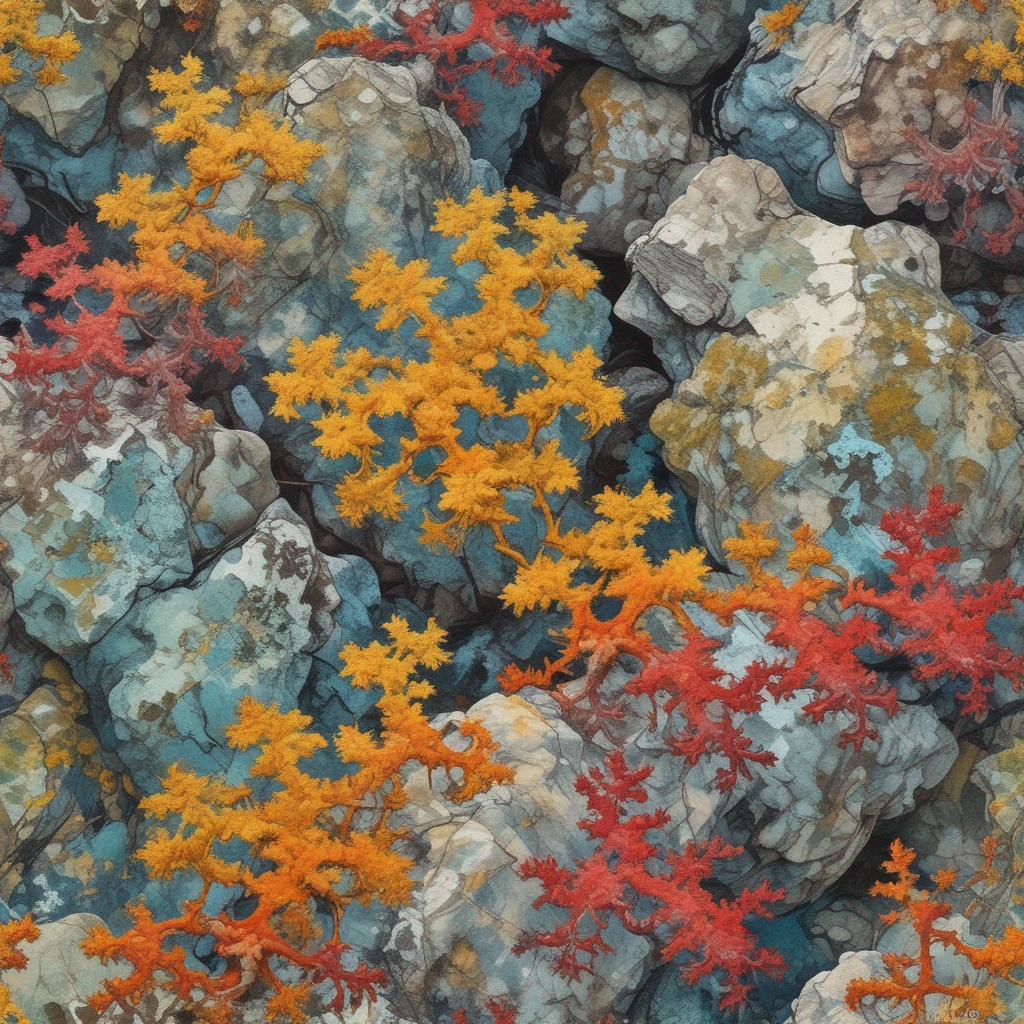

Lichens come in many colors. [yeh] Color is used in identification. [yah] The color of a lichen changes depending on whether the lichen is wet or dry. [wet or dry] Color descriptions used for identification are based on the color that shows when the lichen is dry. [when it's dry!] In the absence of special pigments, lichens are usually bright green to olive gray when wet, gray or grayish-green to brown when dry. [when dry] moisture causes the surface skin or 'cortex' to become more transparent, exposing the green photobiont layer [photosynthetic] lichens with a cyanobacterium as the photosynthetic partner tend to be dark grey, brown, or black when dry [cyanobacterium] Coloration is usually determined by the photosynthetic component but Special pigments, such as yellow usnic acid, give lichens a variety of other colors, including reds, oranges, yellows, and browns, especially in exposed, dry habitats. [photosynthetic photobiont] [break to soft story rap] Different colored lichens may inhabit different adjacent sections of a rock face, depending on the angle of exposure to light. they can create vast visual landscapes like the vertical "paint" all over Yosemite
