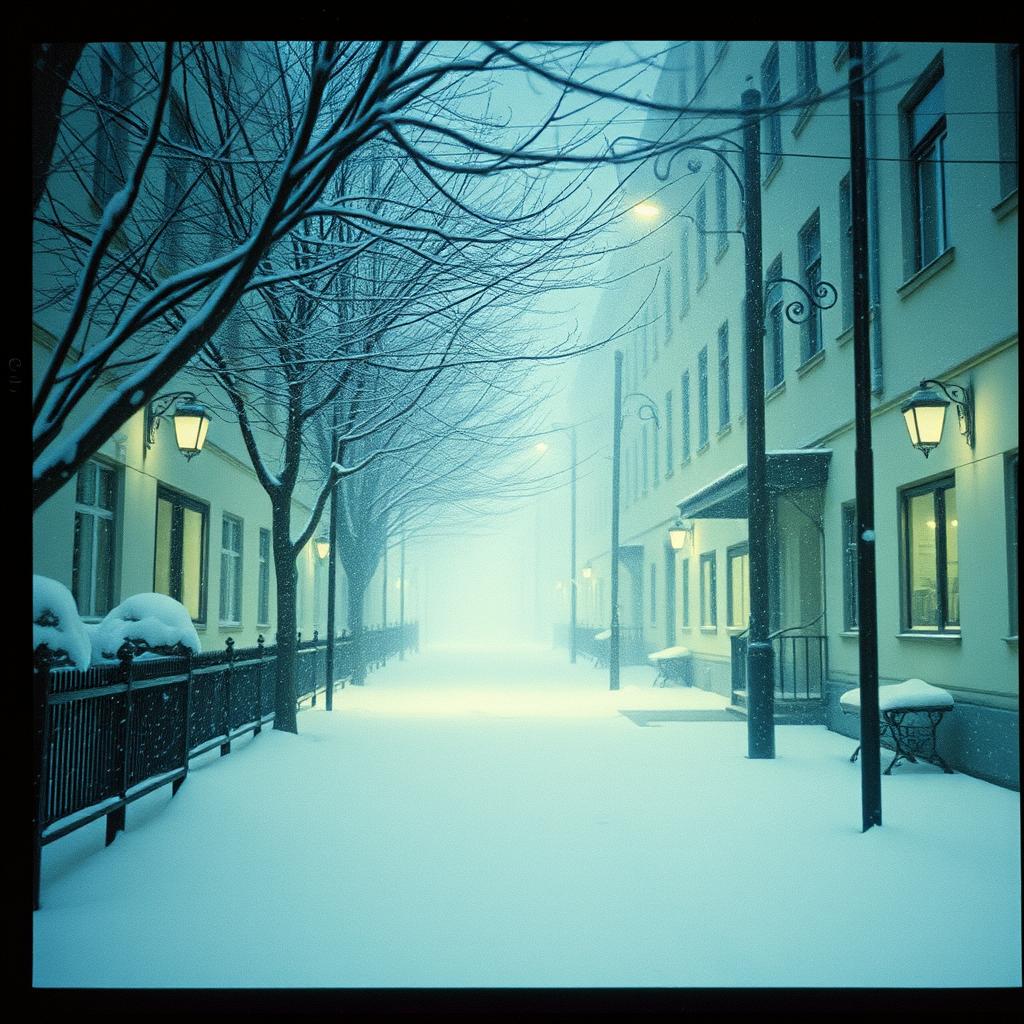
The First Snow
Two A.M. It’s only two o’clock, and I wake suddenly from a dream where I am composing a song on my computer. That’s why I get up. I get up, and I think of my two children whom I have finished raising. Outside, the snow hasn’t yet begun to fall. It is a beautiful parental calling, this act of allowing two little ones to be raised. And it’s true — they are better raised, more awake, more developed than I. And, as adults, they have managed well. We come out of adolescence a little muddled, and that’s why we must find our way — emerging from the brambles of well-trodden paths to trace our own, to spread our wings, to pass from chrysalis to butterfly, or as a dragonfly, or like a bird breaking its shell to unfold itself. For me, this moment of the year is the hardest — the memory of our parents and friends who died because of war, of those raised by other parents who climbed so high to serve, to defend, to protect, that they burned their wings. They have passed to the other side, into another reality — like angels we brood over, carry again, bear forth in a procession of radiant joys, of sorrows accepted — like night butterflies battering against an incandescent bulb, asking themselves: why them, why her? Why has humanity instrumentalized them, used them to settle conflicts beyond the boundaries of diplomacy? Why their blood? Why their time? Why those little childhood faces, those laughs, those games, those small fragments of free dreams, were snatched away, undone and laid down in a numbered bag, wings all torn off, shipped away in bulk with a few personal belongings? Why them, why her, who will never again have the chance to wake at two in the morning just to see, peacefully, if it has snowed, to write a song before going back to bed? And so we carry them — in a procession of memory, at the edge of hope, at the edge of goodwill, at the edge of salt in the wounds of silence, with the will to bring an end to the search for violent solutions in the resolution of Humanity’s conflicts. We, who think of them, who weep for her, and who watch through the window to see a shroud of freshness fall upon the stones — the first snow of remembrance — falling in our streets, upon fields once stained with shrapnel and dried blood, and upon the chapels of memory, the common rooms of silence, the small votive shrines. We, embracing what remains of them, what endures of her, what persists beyond time — snow after snow, field after field, procession after procession, spring after spring — we, holding their invisible hands, kissing their palms, watching the descent of the first snow upon the wrinkled brow of dawn.
