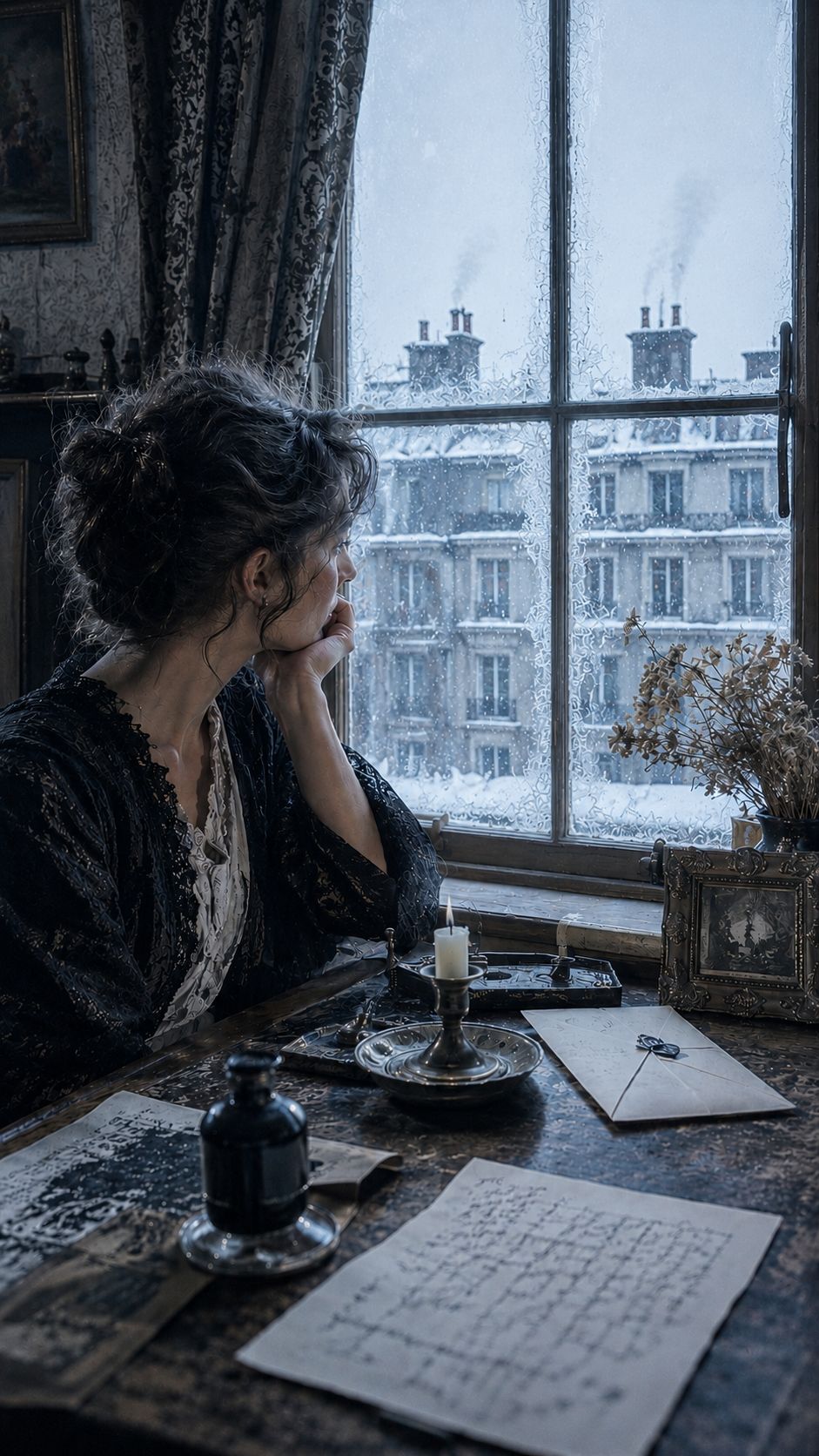

[Russian chanson / intimate poetic art-song, deeply emotional but restrained, elegant and cinematic, inspired by the atmosphere of early 20th-century Parisian salons without sounding nostalgic or theatrical. Do not imitate any specific singer or recording. Female Russian voice, warm, slightly husky and intimate, with a subtle vibrato. Half-sung, half-spoken phrasing in the verses, as if reading a private letter aloud. Clear Russian diction, natural literary pronunciation, fragile emotional control rather than dramatic belting. Slow 3/4 waltz, around 56 BPM, minor key, preferably F minor. The rhythm should feel suspended, almost as if moving through falling snow. Instrumentation: intimate felt piano as the harmonic foundation, sparse muted accordion, very soft strings with sordino, warm double bass pizzicato, extremely restrained brushed percussion. Occasional cello or viola phrases may answer the voice, never overpowering it. The piano should suggest falling snow: isolated descending notes, spacious pauses, soft resonance. The arrangement must leave generous space around the vocal line. Verse 1: very intimate, almost whispered, close-miked. Piano. Barely audible strings. The emotional focus is the letter, the voice, Passy, snow, and the frozen flower. Verse 2: slightly more movement in the piano and low strings, while remaining restrained. Let the images of the sea, winter, frost, and the silent page create the emotional landscape. Chorus: gently expands rather than explodes. Add fuller strings and a subtle harmonic lift. The voice becomes warmer and more exposed. On “снег — что тебя уносит”, let the melody descend and create a feeling of surrender rather than triumph. Bridge: pull the arrangement back dramatically. Almost spoken, intimate and trembling. Minimal piano, perhaps a single sustained cello note. Create the sensation of turning in circles and being afraid to hear the beloved's voice. Outro: nearly everything disappears. Voice alone or voice with very sparse piano. “Чтоб наконец тишина навек нас унесла…” should feel like a final acceptance, not despair. Hold the final word “унесла” delicately, almost in a fragile falsetto. After the final vocal phrase, leave a long silence, followed by a single soft F-minor piano chord fading naturally into silence. Overall mood: secret love, winter, restraint, longing, voluntary renunciation, tenderness, mystery, silence. No melodrama, no theatrical crescendo, no modern pop production, no heavy drums, no glossy vocals. The emotional power should come from understatement, breath, and silence.] [Verse 1- Piano- Barely audible Strings ] Держу твоё письмо — в нём свет чернил горит. Слышу твой голос — молитве моей вторит. Снег Пасси пеленою укрыл все аллеи. Цветок ледяной — на губах имя твоё. [Verse 2] Перечитываю каждое слово — как шаг по морю. Твой взгляд среди строк рисует зиму. Но иней сегодня студит смелость мою. И страница молчит, как птица без возраста. [Chorus] Я знаю: ты ждёшь меня — твой порыв пылает. Но сердце моё — пред тобой ещё медлит. И я всё же предпочту снег — что тебя уносит. [Bridge] Я всё кружусь, твоего голоса страшусь. И прячу на губах — то, что во мне дрожит… [Outro] Чтоб наконец тишина навек нас унесла…
