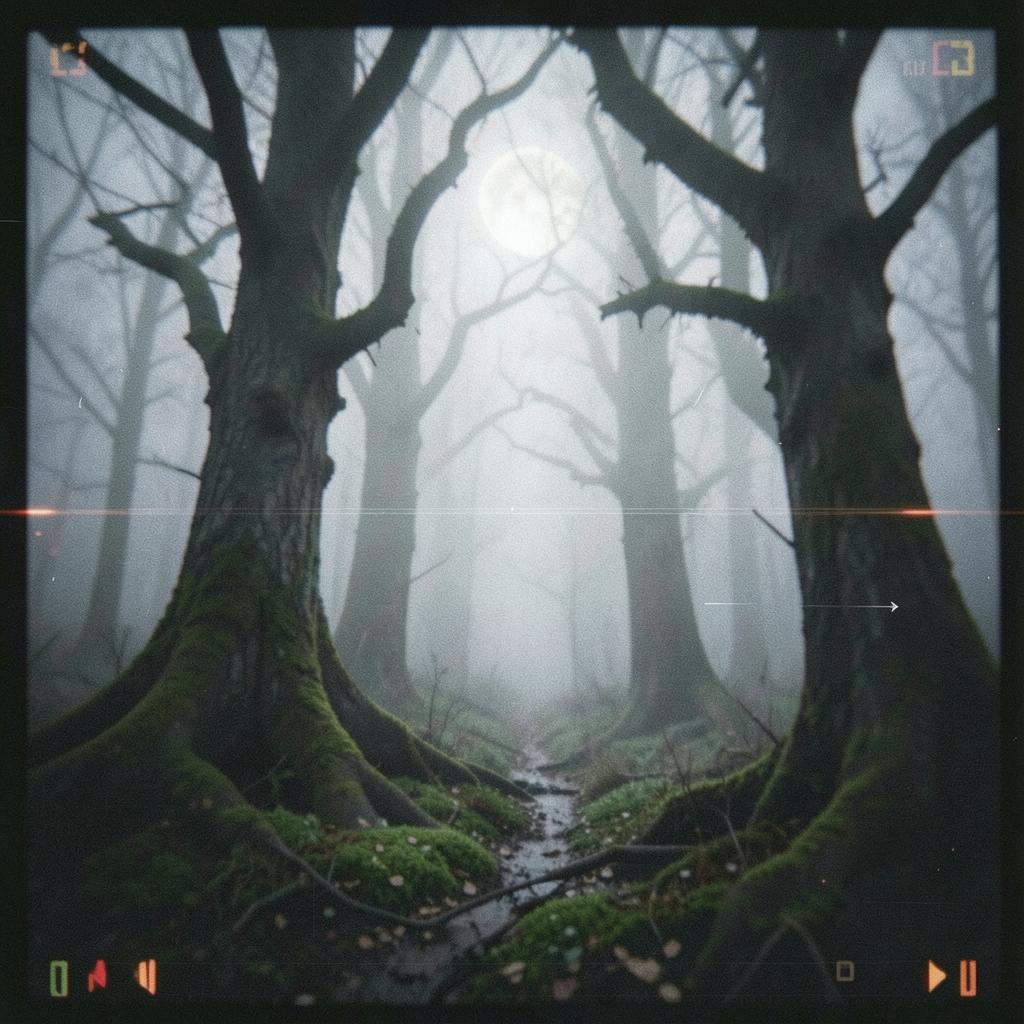
[INTRODUCTION – 0:00–0:35 | FOGBOUND FOREST] [Very soft contrabass and cello drones in D minor. Tremolo violins create a cold mist texture. Sparse harp harmonics shimmer like distant moonlight. Bassoon and bass clarinet enter subtly. Extremely quiet timpani pulses resemble distant footsteps. No melody yet. Build the sensation of something enormous moving through the forest.] [THE FOOTSTEPS – 0:35–0:55] [Low cello and contrabass establish a slow, heavy rhythmic pattern suggesting massive paws striking wet earth. French horn enters faintly beneath the strings. Increase rhythmic weight gradually without becoming loud.] [THE CREATURE STOPS – 0:55–1:20] [Sudden silence in the low strings. Hold a high, tense violin harmonic. Solo cello breathes beneath it. Bass clarinet sustains a dark note. A single distant horn suggests the creature lifting its head and sensing danger.] [DETECTION – 1:20–1:45] [Sharp violins and violas make a sudden directional gesture toward the left. Low cello growl answers. Introduce Hina’s leitmotif: aggressive cello and viola phrase supported by restrained French horn. The orchestra should feel frozen and watchful.] [REIN REVEALED – 1:45–2:15] [Introduce Rein’s leitmotif: elegant solo violin accompanied by harp and celesta. Beautiful, supernatural, aristocratic and deceptively gentle. Contrast his theme against Hina’s darker cello motif. Use musical call-and-response rather than overlapping them continuously.] [THE STANDOFF – 2:15–2:45] [Hina’s cello motif becomes stronger and more defensive. Rein’s violin answers calmly. Low strings maintain an unresolved ostinato. Gradually increase orchestral tension. Neither theme should dominate.] [TRANSFORMATION – 2:45–3:10] [Hina transforms from wolf form into human form. Use a sweeping harp glissando followed by descending violins and muted cello. Woodwinds shimmer briefly around the transformation. The supernatural moment should feel elegant rather than explosive. End with a sudden reduction in instrumentation.] [CHILDHOOD MEMORY – 3:10–3:45] [Reintroduce Rein’s violin theme softly, now warmer and more nostalgic. Add delicate harp and distant celesta. Hina’s cello motif quietly appears underneath, reminding us that the memory is painful. The two themes briefly share several notes, suggesting their forgotten childhood friendship.] [THE ACCUSATION – 3:45–4:20] [Hina’s motif returns with full emotional force. Cellos, violas, bassoons and French horns become increasingly powerful. Timpani enters slowly. Violins use increasingly tense chromatic movement. Rein’s violin theme attempts to emerge but is repeatedly overwhelmed by the darker orchestra.] [BLOODLINE AND BETRAYAL – 4:20–4:50] [Full orchestral climax. Heavy cello and contrabass foundation. French horns and bassoons reinforce Hina’s anger. Violins sustain painful dissonances above the orchestra. Timpani strikes become heavier but remain restrained and cinematic. No triumphant resolution.] [FINAL CONFRONTATION – 4:50–5:05] [Sudden orchestral collapse. Leave only a sustained solo cello note representing Hina’s hatred and grief. A distant French horn answers with Rein’s unresolved theme.] [ENDING – 5:05–5:20] [One final low cello note fades into silence. Very faint harp harmonic and distant violin overtone remain suspended in the air. End completely unresolved. No hopeful resolution. No vocals. No choir.] [PURE INSTRUMENTAL – NO VOCALS – NO SPOKEN WORDS – NO MODERN INSTRUMENTS]
