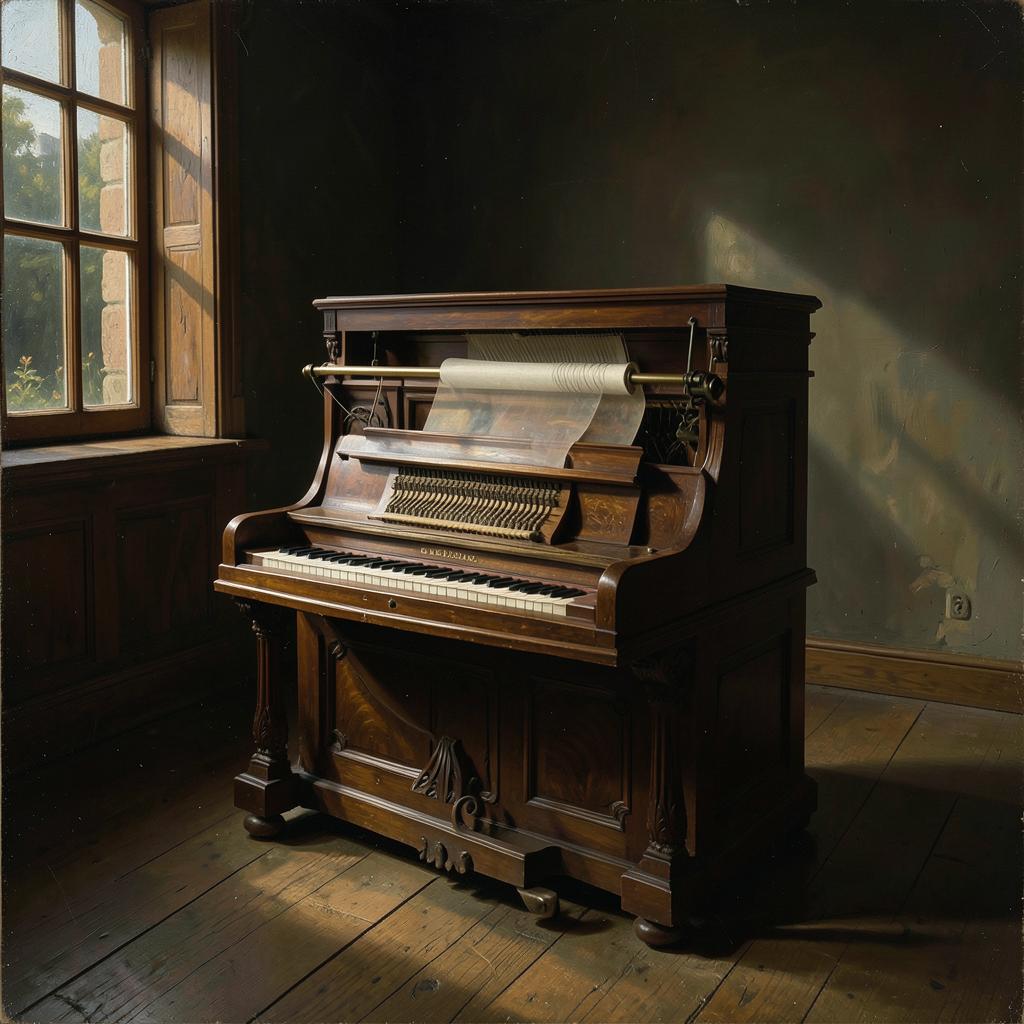

[Intro — room tone, one piano key, bellows breathing] [Jolly, spoken] Come here. I want you to meet someone. [Pause] She’s been quiet for a while... but don’t mistake that for having nothing to say. [Soft paper-roll click] [Verse 1] She stands against the old wall In polished timber brown, Eighty-eight little ivory soldiers Waiting to come down. Pedals underneath her feet, A paper heart inside, And somewhere in those bellows A whole ballroom waits to rise. No screen. No speaker. No electricity humming through the room. Just wood, Paper, Air, And a very clever machine that knows exactly what to do. [Verse 2] Slide the music roll in gently, Lock the little spindle tight, Find the start, Sit yourself down, And give the pedals life. [Bellows breathe] Then... one key moves. Another follows. A chord appears from nowhere. And suddenly those silent hands begin playing all by themselves. [Jolly, softly] Oh... There you are. [Chorus] 🎵 PLAY FOR US, OLD PIANOLA, LET THE PAPER START TO RUN, Breathe another little ballroom Back beneath the modern sun. Let the hammers strike the strings, Let forgotten melodies come through, 🎵 YOU DON’T NEED A PIANIST, DARLING — THE PAST WILL PLAY FOR YOU. 🎵 [Verse 3] Once somebody chose this roll. Someone carried it home. Perhaps after hearing the tune in a theatre, A dance hall, Or somebody else’s parlour. They threaded this same paper. Pushed these same pedals. Watched these same keys move. And maybe somebody laughed and said: “Play that one again.” [Deep bass clarinet] A hundred years later... here we are. [Pause] Playing it again. [Verse 4] People think old machines are primitive. I’m not sure I agree. Look at this. Thousands of little decisions working invisibly. Perforations tell the notes, Bellows give them breath, Valves decide which key will fall, Hammers do the rest. A song turned into holes in paper. Then holes turned back into sound. [Pause] That’s not primitive. That’s bloody marvellous. [Chorus] 🎵 PLAY FOR US, OLD PIANOLA, LET YOUR PAPER RIVER FLY, Little holes become a melody, Little bellows learn to sigh. No glowing screen, No algorithm, No invisible cloud above, 🎵 JUST AIR AND WOOD AND PAPER MAKING SOMETHING SOUND LIKE LOVE. 🎵 [Bridge — quiet] And here’s the part that gets me. The person who made the roll... might be gone. The person who bought the pianola... gone. The house where it first stood... perhaps gone too. But press your foot down gently... [Pedal] and the room fills with something they heard. Not approximately. Not as a photograph. The actual notes. In the actual order. Waiting inside paper for somebody to give them breath. [Short ascending cello-and-string memory jump] [Verse 5 — playful] [Jolly] Wayne... How many moving parts? [Mr Good] Lots. [Jolly] Technical. [Mr Good] Would you prefer I count them? [Pause] [Jolly] Absolutely not. [Muted trumpet] Because some things are better when you understand them... and some things are better when you simply sit there grinning while the keys move by themselves. [Final Chorus] 🎵 PLAY FOR US, OLD PIANOLA, YOU’VE BEEN WAITING LONG ENOUGH, Give us waltzes, Give us ragtime, Give us something slightly rough. Let the whole Emporium listen, Let the clocks all keep their time, 🎵 YOU’RE NOT JUST PLAYING MUSIC — YOU’RE LETTING YESTERDAY REPLY. 🎵 Play it softly. Play it proudly. Let the old floor feel the tune. Let somebody walking past the doorway stop and wander in the room. Because sometimes an antique doesn’t whisper. Sometimes... 🎵 IT SITS AGAINST THE WALL AND PLAYS THE BLOODY PIANO. 🎵 [Instrumental — pianola takes over] [Deep cello underneath] [Bass clarinet answers the melody] [Paper roll turning] [Pedals breathing] [Keys clattering gently] [Music slows] [Outro] [Jolly, spoken] So... meet our pianola. Beautiful furniture. Brilliant engineering. A mechanical musician. And proof that long before anyone said “press play”... some clever bugger had already thought of it. [One final piano chord] [Paper roll stops] [Silence] [Jolly, softly] Again? [Mr Good] Again. 🎵 MEET THE PIANOLA Wood. Paper. Air. Memory. And somehow… music. 🎹🖤
