Chopin — Fantaisie-Impromptu, Op.66 © 2026 v.1.0

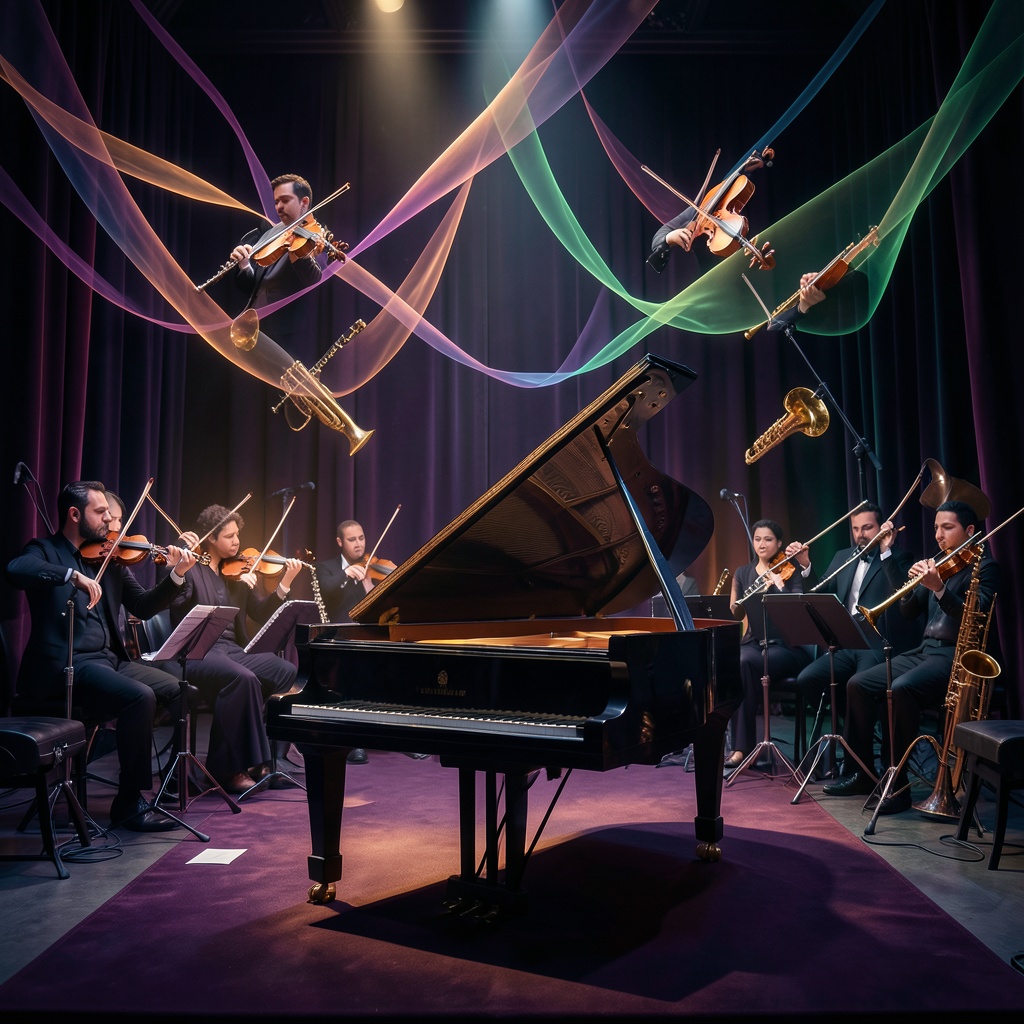
[instrumental] [Title: Chopin — Fantaisie-Impromptu, Op.66 (Contemporary Symphonic Reconstruction) © 2026 v1.0] [General Concept: Faithful symphonic reconstruction of Chopin's Fantaisie-Impromptu. Preserve the original melodic identity, harmonic progression, phrasing, formal architecture and dramatic trajectory. Expand only orchestration, instrumental dialogue, counterpoint, dynamics, orchestral colour and spatial depth. The listener should immediately recognize Chopin while experiencing the work as if originally conceived for a contemporary concert orchestra.] [Emotional Trajectory: restless energy → mounting tension → lyrical serenity → renewed struggle → triumphant release] [Musical Language: Late Romantic harmony preserved. Modern concert-orchestra orchestration. Transparent polyphony. Virtuosic orchestral writing. Continuous thematic development. Large cinematic concert-hall acoustics.] [Form: Introduction → Allegro agitato → Transition → Moderato cantabile → Return of Allegro agitato → Grand Coda] [Key: C# minor] [Tempo: Allegro agitato] [Meter: 2/2] [Harmony: Introduction: V7 pedal Main Theme: i – i – iv – i – V7 – i – V/V – V7 Continuation: i – i – iv – VII – III – VI – V/V – V7 Middle Section: D♭ major Harmony: I – vi – IV – V | I – ii – V – I Final Return: C# minor Harmony: i – iv – V7 – i] [Rhythmic Principle: Persistent 4:3 polyrhythm. Right-hand melodic figures remain in groups of four. Accompaniment flows in groups of three. The rhythmic tension must remain clearly audible throughout every Allegro section. The Moderato completely relaxes the polyrhythmic tension before it naturally returns.] [Dynamic Architecture: pp → mp → mf → f → ff → pp → mf → ff → fff → pp] [Instrumentation: Concert Grand Piano, Solo Violin, Solo Cello, Solo Clarinet, Solo Flute, Full String Orchestra, Woodwinds, French Horns, Trumpets, Trombones, Tuba, Concert Harp, Timpani, Concert Percussion, Suspended Cymbals, Modern Symphonic Drum Kit, Fretless Bass Guitar, Clean Electric Guitar.] [Instrument Roles: Concert Grand Piano preserves Chopin's original keyboard writing. Violins reinforce melodic peaks. Violas sustain inner counterpoint. Cellos expand lyrical passages. Double basses reinforce perpetual motion. Flutes and clarinets mirror brilliant right-hand figures. French horns support harmonic pillars. Trumpets appear only during climaxes. Trombones and tuba reinforce structural cadences. Harp extends harmonic resonance. Timpani emphasize dominant arrivals. Modern symphonic drum kit reinforces pulse using brushes, soft tom resonance, restrained bass drum and suspended cymbal swells only. Fretless bass guitar doubles contrabasses with warm sustained tone. Clean electric guitar contributes only harmonic swells, sustained overtones and orchestral colour.] [Texture Evolution: Solo piano introduction → Piano with strings → Woodwinds join → Full orchestra → Chamber reduction → Moderato cantabile → Gradual orchestral rebuilding → Grand symphonic climax → Quiet orchestral release.] [Moderato cantabile: Warm lyrical atmosphere. Broad singing strings. Solo cello. Solo violin. Gentle harp. French horns. Transparent orchestral texture. Deep emotional contrast. Complete disappearance of the 4:3 polyrhythm before its gradual return.] [Structure: Introduction (G# dominant pedal) | Main Theme | Development | Transition | Moderato cantabile | Return of Allegro agitato | Grand Symphonic Climax | Virtuosic Coda.] [Finale: The final pages retain Chopin's original virtuosity while expanding into full symphonic brilliance. The orchestra amplifies the emotional scale without replacing the original musical ideas. The conclusion remains unmistakably Chopin, presented through the expressive power of a contemporary concert orchestra.]
