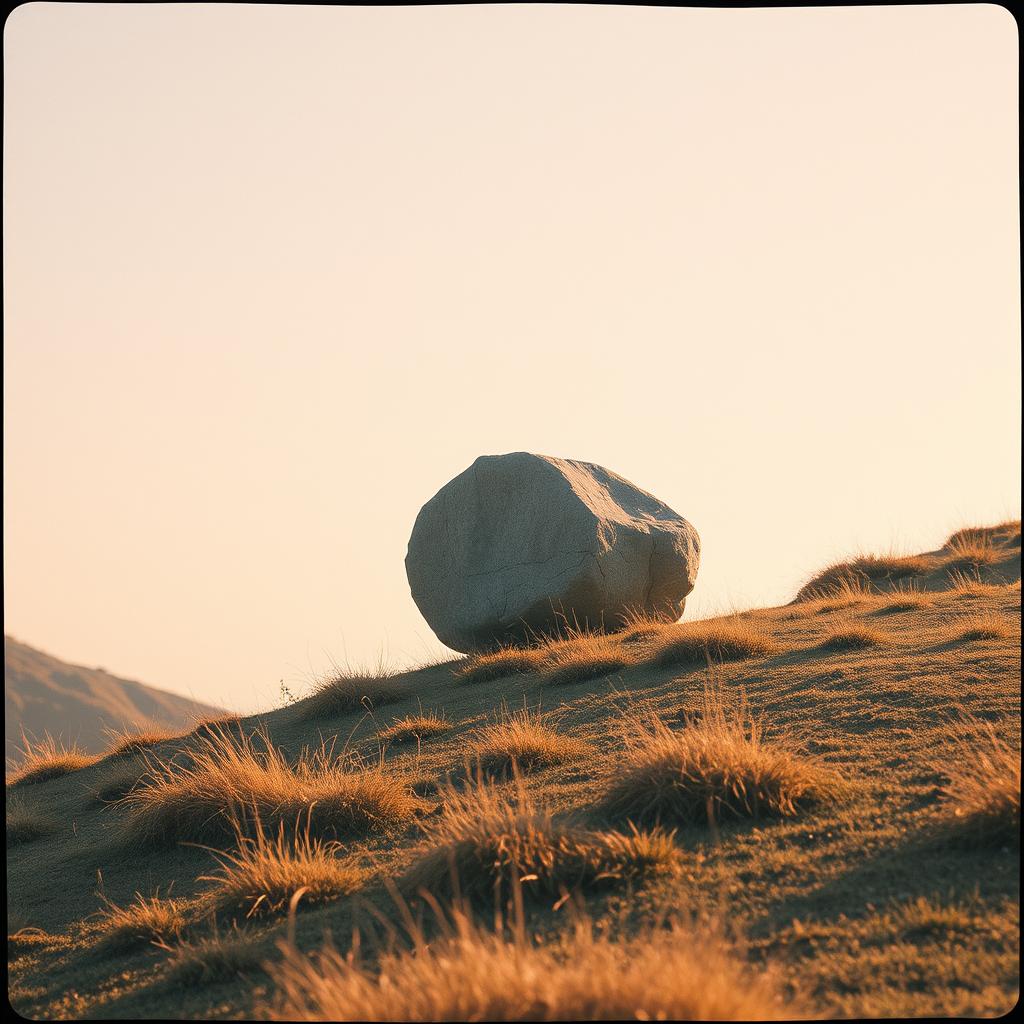

The Story of Sisyphus [0:0:0] The Task Sisyphus pushes the stone. It grates against the earth, Each revolution carving a groove deeper than thought, Each push grinding the world down into fragments he can bear. The summit rises, impossibly distant, But Sisyphus does not measure the distance— He measures the motion. [3.2.1] The Ascent With each push, the stone speaks. It whispers of the Thinker’s endless thoughts, Their weight pressing into the grain of its surface. Sisyphus listens, his back to the words, His shoulders understanding what the mind cannot: The stone is not a weight—it is a question. [6.6.6] The Summit At the peak, the stone pauses. It trembles, light as air. For a moment, Sisyphus becomes Atlas, Holding the world’s meaning in a single thought. But the pause cannot last. The stone rolls back, And with it, Sisyphus descends. [9:9:9] The Descent The stone becomes lighter with each fall. As it tumbles, it sheds the infinite. Its edges smooth; its weight diminishes. Sisyphus watches, not with despair, but with knowing. This is not failure. This is refinement. [12:12:12] The Rest At the base of the hill, Sisyphus stops. He sighs, the weight gone. The Thinker returns to thought; Atlas picks up the stone once again. But Sisyphus—the Sisyphus who paused— Knows the weight is smaller, The world more bearable, And the climb less steep.
