II. The Trial
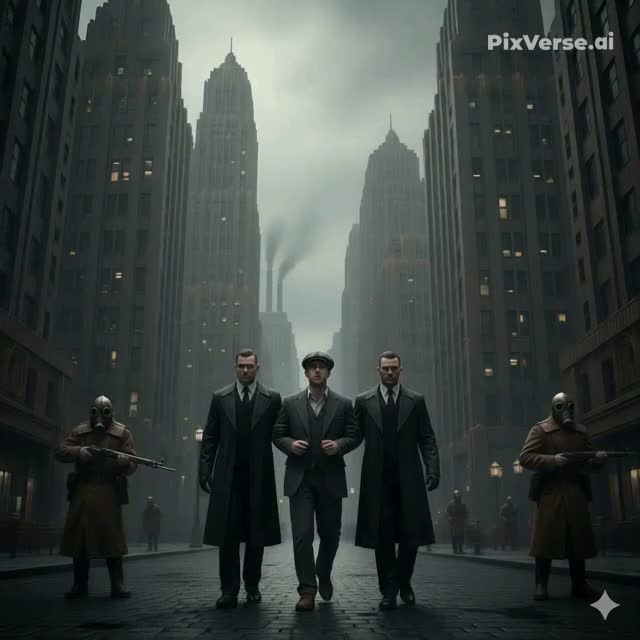
The People’s Republic of Iron The city towers rise like cathedrals of smoke and steel, monuments to progress built on the bones of those who dared to question it. Beneath their art-deco facades, engines hum with bureaucratic precision, and every life is recorded, categorized, and filed within the endless archives of the Ministry of Order. Here, the Law is a living machine. It has no face, no voice, no mercy. The clerks who serve it do not interpret — they process. Trials occur without accusation, sentences without guilt, and verdicts without reason. To exist is to be observed; to breathe is to be judged. In this Republic, the greatest sin is ambiguity. Every thought must align, every heartbeat conform. The individual has been replaced by the file, and truth itself is but a misprint waiting to be corrected. Rumors whisper of men and women who vanish at dawn, summoned by letters sealed in crimson wax — “Administrative Correction Notices.” They climb the stairs of the Central Hall, never to descend again. Their names fade from the Registry, erased as though they never lived. And yet, in the shadows between typewriters and pneumatic tubes, some still dare to question. They speak of a Trial that never ends — a metaphysical labyrinth where the soul itself is processed by the machinery of order. The old philosophers once said that bureaucracy was the price of civilization. In the People’s Republic of Iron, it has become its religion. “No one is guilty. But everyone is condemned.” It was Max Weber who first saw the shadow behind progress. He called it the Iron Cage — the destiny of a world ruled by rational systems that devour the human soul in the name of efficiency. For Weber, bureaucracy was not merely a tool, but a structure of spirit, an invisible mechanism that enslaves even as it organizes. And then came Kafka, who took Weber’s cage and filled it with nightmares. In The Trial, the labyrinth of law becomes metaphysical — an allegory of existence where guilt precedes crime and the search for meaning collapses under the weight of senseless authority. Kafka’s world is one where logic devours itself, where every door leads to another corridor, and every rule is a mirror of absurdity. In the People’s Republic of Iron, these visions converge. Weber’s sociological prophecy and Kafka’s existential horror fuse into one dieselpunk theology — a world where paperwork is scripture, and the bureaucrat is both priest and executioner. The machine does not hate you. It simply does not care... __________________________________________ Awakened by a knock at dawn, A voice declares, "Your fate is drawn!" No crime confessed, no guilt to bear, Yet judgment lingers in the air. Endless halls where echoes creep, A twisted maze where none can weep. A faceless court, a hollow gaze, Lost forever in the haze. No evidence, no words to plead, A nameless crime, a silent creed. Bound by chains you cannot see, Trapped inside this mockery! The Trial never lets you be, A ghost within bureaucracy! Scrolls of dust and empty lies, Judgment passed as reason dies. You speak, but silence fills the room, A verdict whispered in the gloom. The walls stretch wide, the doors deceive, No path to walk, no will to leave. A puppet lost in tangled strings, A pawn beneath the hand of kings. Bound by chains you cannot see, Trapped inside this mockery! The Trial never lets you be, A ghost within bureaucracy! A sentence passed, no soul to save, No truth remains beyond the grave… Bound by chains you cannot see, Trapped inside this mockery! The Trial never lets you be, A ghost within bureaucracy! .
