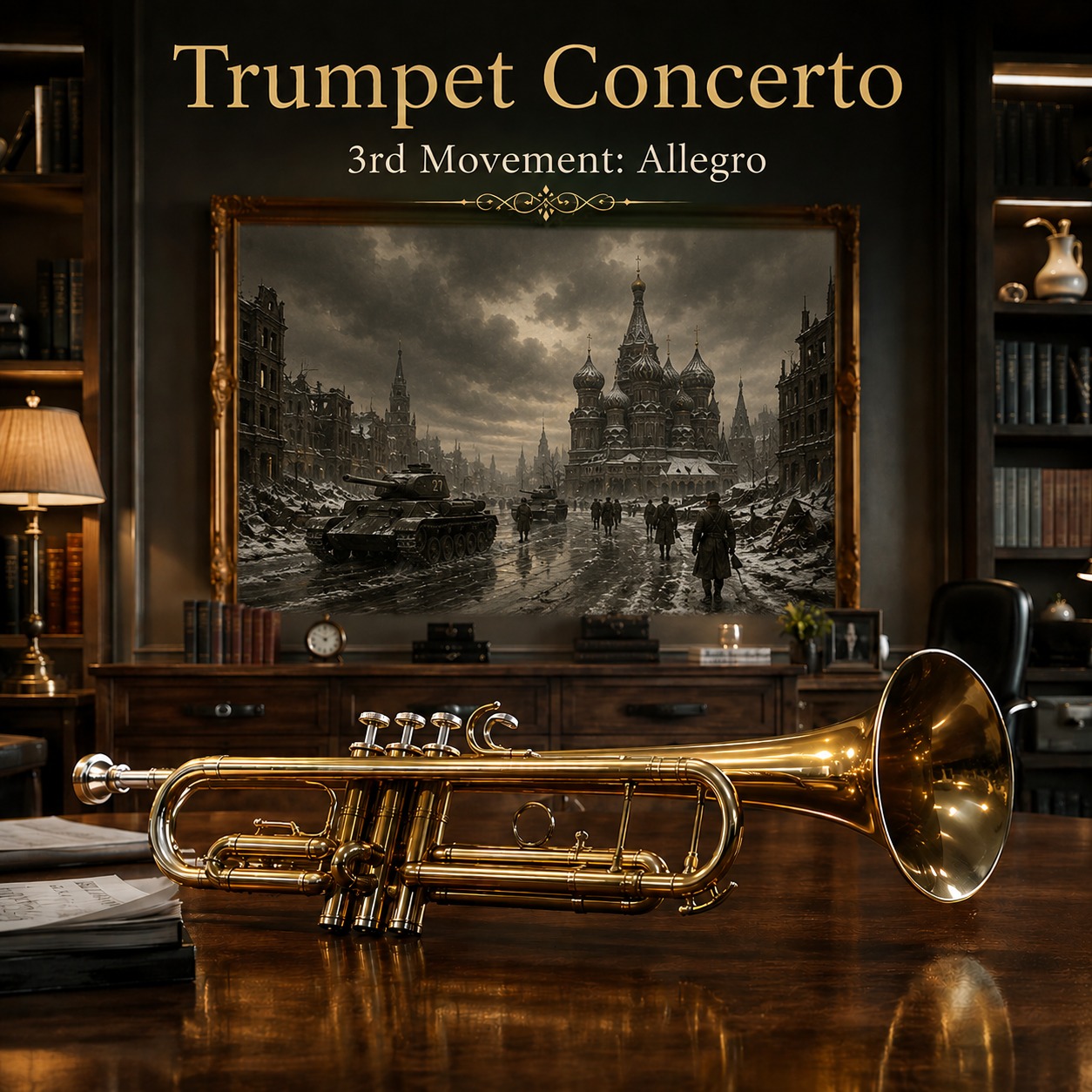

第3楽章:Allegro 短く細かな、重々しい刻みによって幕を開ける最終楽章。この楽章には、もともと並行して制作を進めていた「交響曲第8番(仮)」のために作った楽章を、本作のためにアレンジしたものを使用している。 全体としては、ロマン派とロシア音楽が融合したような重厚な雰囲気を持つ一方、その中を駆け抜ける独奏トランペットの旋律には、あえて明るさを持たせた。第1・第2楽章と比較すると技巧的な要素も増え、本作の中では最も独奏者に高い技術を求める楽章となっている。 途中、バスドラムの強烈な一撃をきっかけに転調すると、音楽の表情は一変し、より色濃くロシア的な響きへと移っていく。独奏トランペットは、いくつかのトリルや細かなタンギングを織り交ぜながら進み、短いカデンツァを経てコーダへと向かう。 終盤では再びカデンツァが置かれ、その余韻を長く引き延ばすことなく、終了と同時に音楽は一気に結末へと駆け抜ける。これまでの2つの楽章とは異なる、勢いと緊張感を保ったまま全曲を締めくくる。 【作品を振り返って】 交響曲第7番以降の本格的なクラシック音楽となった。その流れの中で生まれた本作だが、実際に作ってみると、個人的には交響曲以上の難しさを感じる作品でもあった。 特に難しかったのが、独奏者とオーケストラとのバランスである。ソリストを前面に出しながらも、伴奏が単なる背景にならないようにする。その両者の関係を調整していく作業は想像以上に難しかったが、協奏曲を書くという点において非常に良い経験となった。 また、この経験は今後予定している「ピアノ協奏曲第1番」の制作に向けた、大きな一歩にもなったと感じている。 本作品を、私と同じく演奏経験を持つ仲間の一人である、369様へ献呈する。 ーーーーーーーーーーーーーーーーーーーーーー 3rd Movement: Allegro The final movement opens with short, tightly articulated, weighty rhythmic figures. This movement is based on material originally written for my Symphony No. 8 (working title), which I was developing alongside this concerto, and was rearranged specifically for this work. The movement as a whole has a powerful character that blends elements of Romanticism with the sound world of Russian music. Against this darker and more substantial orchestral backdrop, however, I deliberately gave the solo trumpet a brighter melodic character. Compared with the first and second movements, the technical demands are greater, making this the most challenging movement for the soloist in the concerto. Partway through the movement, a powerful single stroke of the bass drum triggers a modulation, and the character of the music changes dramatically, taking on a much stronger Russian flavor. The solo trumpet continues through a series of trills and rapid articulations, followed by a brief cadenza that leads the music toward the coda. Near the end, another cadenza appears. Rather than allowing its conclusion to linger, the music immediately surges forward toward its final bars. With a sense of momentum and tension quite different from the preceding two movements, the third movement brings the entire concerto to a decisive close. REFLECTIONS ON THE WORK Beginning with Symphony No. 7, my music has moved more fully into the realm of serious classical composition. This concerto was born from that same direction, yet in writing it, I personally found the process even more challenging than composing a symphony. One of the greatest challenges was finding the right balance between the soloist and the orchestra. The solo trumpet needed to remain at the forefront without reducing the orchestral accompaniment to a mere background role. Shaping and adjusting the relationship between the two proved far more difficult than I had anticipated, but it also became an extremely valuable experience in learning how to approach the concerto form. I also feel that this experience has been an important step toward my planned Piano Concerto No. 1. This work is dedicated to 369, a fellow musician who, like myself, has experience as a performer.
