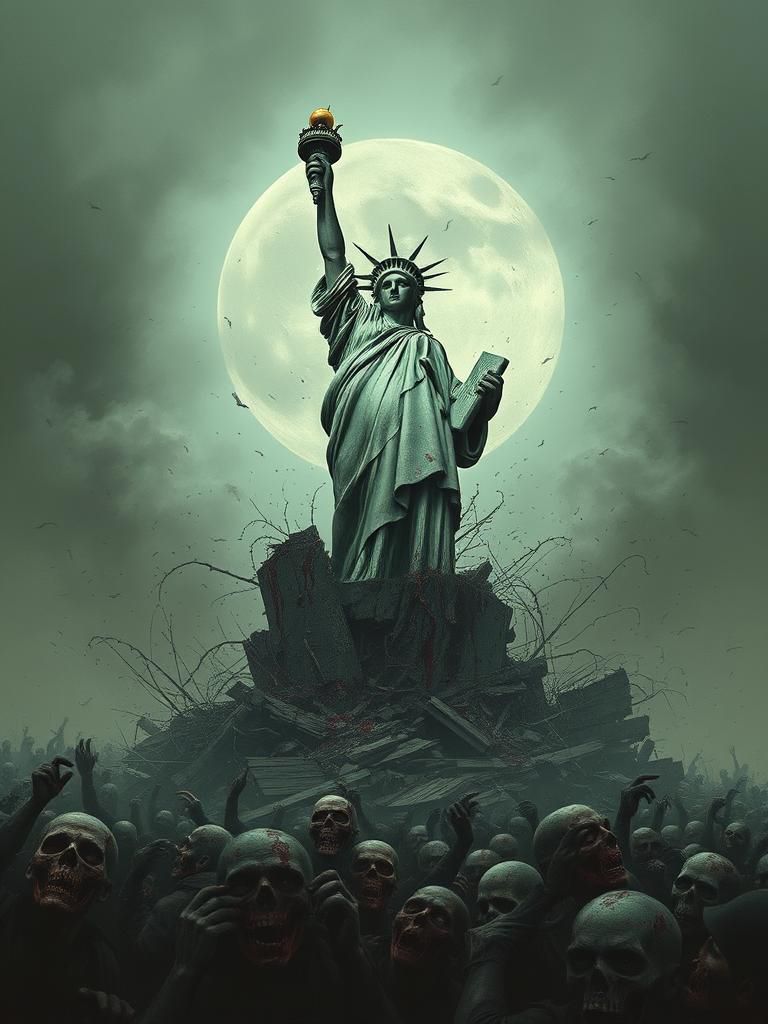
We like to think nations rise or fall on the shoulders of a single leader, as if history bends to the will of one person’s character. That is a comforting lie. The truth is slower, subtler, more insidious. Nations do not collapse in an instant, and they do not crumble merely because of one bad actor. They fall because they normalize lowering the bar. They fall because they begin to accept mediocrity, compromise with incompetence, and mistake chaos for courage. The United States did not fall because of one leader. It fell because it taught itself that standards were negotiable. First, it whispered: “Well, he’s not that bad.” Then it cheered: “At least he fights.” Next came the dangerous chorus: “The rules are the problem.” And then, the unthinkable: competence itself became suspect, elitism in disguise, something to be mocked, feared, or resisted. A society that turns on its own ability to discern skill, integrity, and capability is a society willingly sabotaging its own future. This is the anatomy of decline. It is quiet at first, almost invisible. The erosion begins not with lawlessness, but with the normalization of excuses. The public tolerates flouting knowledge, abandoning expertise, and mocking evidence. Audacity is celebrated; prudence ridiculed. The structures that once upheld accountability—institutions, processes, even civility—are recast as unnecessary, elitist, or corrupt. And when competence is derided, chaos walks in dressed as liberty. Peace is not the absence of disagreement. It is the presence of accountability, clarity, and shared understanding. Peace exists only when competence is demanded, standards are defended, and trust in institutions is upheld. When a society ceases to require that those in power are capable, knowledgeable, and just, it invites failure. When respect for expertise is abandoned, crises compound. What begins as complacency ends in catastrophe. The United States has already provided a cautionary tale. Across decades, warnings went unheeded. What was once unthinkable became routine. Principles were treated as optional. The rule of law was questioned; facts were doubted; expertise was ridiculed. Spectacle replaced substance. Loyalty to the nation was measured in applause, not accountability. Competence became a liability. Integrity was mocked. And the country stumbled. Hard. Slowly, almost imperceptibly, the foundation cracked. The danger lies not in individual elections. It lies in a habitual erosion of standards, a willingness to accept incompetence for the thrill of entertainment, the comfort of grievance, or the illusion of victory without effort. Citizens normalized it, cheered it on, and framed resistance to it as elitism. Audacity replaced skill. Anger replaced reason. And once the bar is lowered, chaos does not knock politely—it floods in, unstoppable and unforgiving. Peace is not a gift handed down from the powerful. It is a practice, and it is hard. It begins with vigilance, with refusing to accept mediocrity, with holding leaders accountable and demanding that standards never bend to convenience or popularity. It begins in the quiet moments, in the conversations we refuse to let fads, outrage, or fear dictate. Peace is responsibility in action. Chaos is what happens when we abandon it. Do not mistake quiet for irrelevance. Do not confuse compromise for strength. A society that lowers its standards for comfort or entertainment is a society signing its own obituary. Competence is not optional. Integrity is not negotiable. Vigilance is not a choice. History will not forgive the comfortable. Peace will not shelter the complacent. Chaos will always rush through the gaps left by those unwilling to enforce the bar. If we do not raise it ourselves, no one else will.
