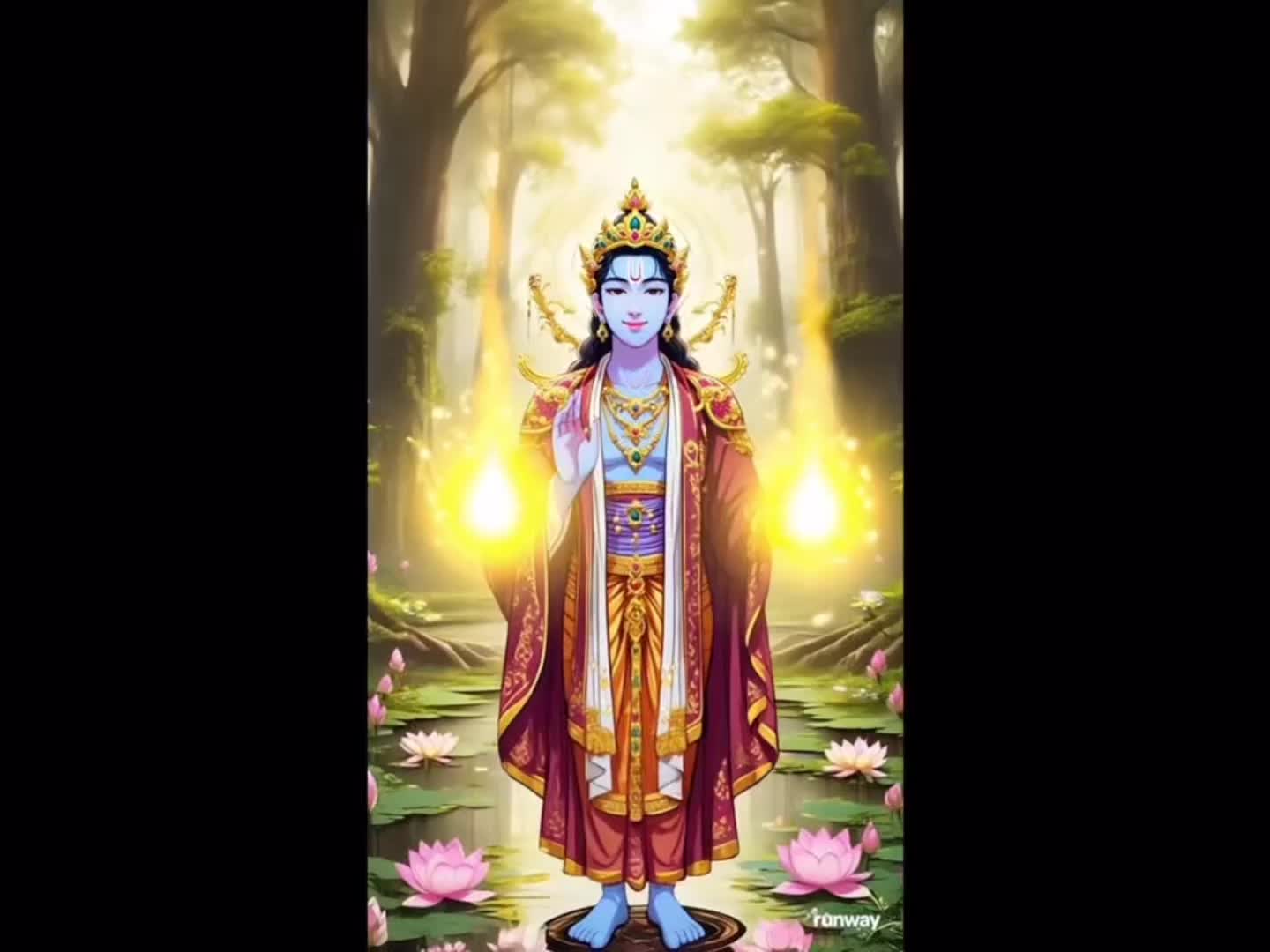
Rama. (Devotional)

Below is the most traditional English translation of the provided Sanskrit text, presented in the format "Sanskrit | English". The translation adheres closely to the original Sanskrit's literal meaning, grammatical structure, and devotional tone, prioritizing a classical and scriptural interpretation. This approach avoids modern or interpretive embellishments and maintains the traditional reverence of the hymn, which glorifies Lord Rama. --- **[Verse 1]** सर्वशक्तिमान् रामो दिव्यतेजसा | All-powerful Rama, with divine radiance दशरथनन्दनः लोके धर्मस्य रक्षिता | Son of Dasharatha, protector of righteousness in the world अञ्जनानन्दनं हन्ता वालिनं रणे | Slayer of Vali, the delight of Anjana, in battle अहं भावयामि तं रामं सततम् | I ever contemplate that Rama **[Chorus]** राम नाम धुनि | The sound of Rama’s name जग में गूँजती | Resonates in the world धनुर्धर वीर | The heroic bow-bearer कृपा सदा बरसती | Whose grace ever showers सिंहासन अधिष्ठाता | The occupant of the throne सीता के प्राण | The life of Sita जय श्रीराम जय श्रीराम | Victory to Shri Rama, victory to Shri Rama **[Verse 2]** अग्निपरीक्षासमये सत्यं प्रकटितं | At the time of the fire ordeal, truth was revealed मर्यादापुरुषोत्तमः लोके विख्यातं | The supreme man of propriety, renowned in the world राक्षसविनाशकः धर्मस्य आधारं | Destroyer of demons, the foundation of righteousness मधुर गानं करुणा से संसारं | Sweet song, with compassion for the world **[Bridge]** मृदंग की ध्वनि संग वीणा की तान | The sound of the mridang with the melody of the veena तबले के संग सितार का गान | The song of the sitar with the tabla नृत्य करे संसार | The world dances चंद्र किरणों में | In the rays of the moon राम की लीला हर युग में | Rama’s divine play in every age हर क्षण में | In every moment **[Chorus]** राम नाम धुनि | The sound of Rama’s name जग में गूँजती | Resonates in the world धनुर्धर वीर | The heroic bow-bearer कृपा सदा बरसती | Whose grace ever showers सिंहासन अधिष्ठाता | The occupant of the throne सीता के प्राण | The life of Sita जय श्रीराम जय श्रीराम | Victory to Shri Rama, victory to Shri Rama **[Verse 3]** हनुमान के हृदय में बसे राम की माया | Rama’s divine power resides in Hanuman’s heart सुग्रीव के साथ मिलकर धर्म का छाया | With Sugriva, spreading the shade of righteousness लक्ष्मण के संग रणभूमि में पराक्रम | With Lakshmana, displaying valor on the battlefield हर भक्त का स्वप्न राम का दर्शन | The dream of every devotee is Rama’s vision **Notes**: - **Literal Translation**: The translation stays faithful to the Sanskrit text. For example, "अञ्जनानन्दनं" refers to Hanuman (the delight of Anjana, his mother), and "वालिनं हन्ता" directly translates to Rama’s slaying of Vali. "अग्निपरीक्षा" is rendered as "fire ordeal," referring to Sita’s trial by fire in the Ramayana. - **Traditional Tone**: Terms like "मर्यादापुरुषोत्तमः" (supreme man of propriety) and "धर्मस्य रक्षिता" (protector of righteousness) reflect Rama’s classical epithets. The phrase "चंद्र किरणों में" is translated as "in the rays of the moon" to preserve the poetic imagery. - **Devotional Context**: The hymn’s repetitive invocation of "जय श्रीराम" is retained as "Victory to Shri Rama" to echo traditional chants. The bridge’s musical imagery (mridang, veena, tabla, sitar) is translated directly to maintain the devotional setting. - If you need a deeper grammatical analysis, specific Ramayana references, or further clarification, please let me know!
