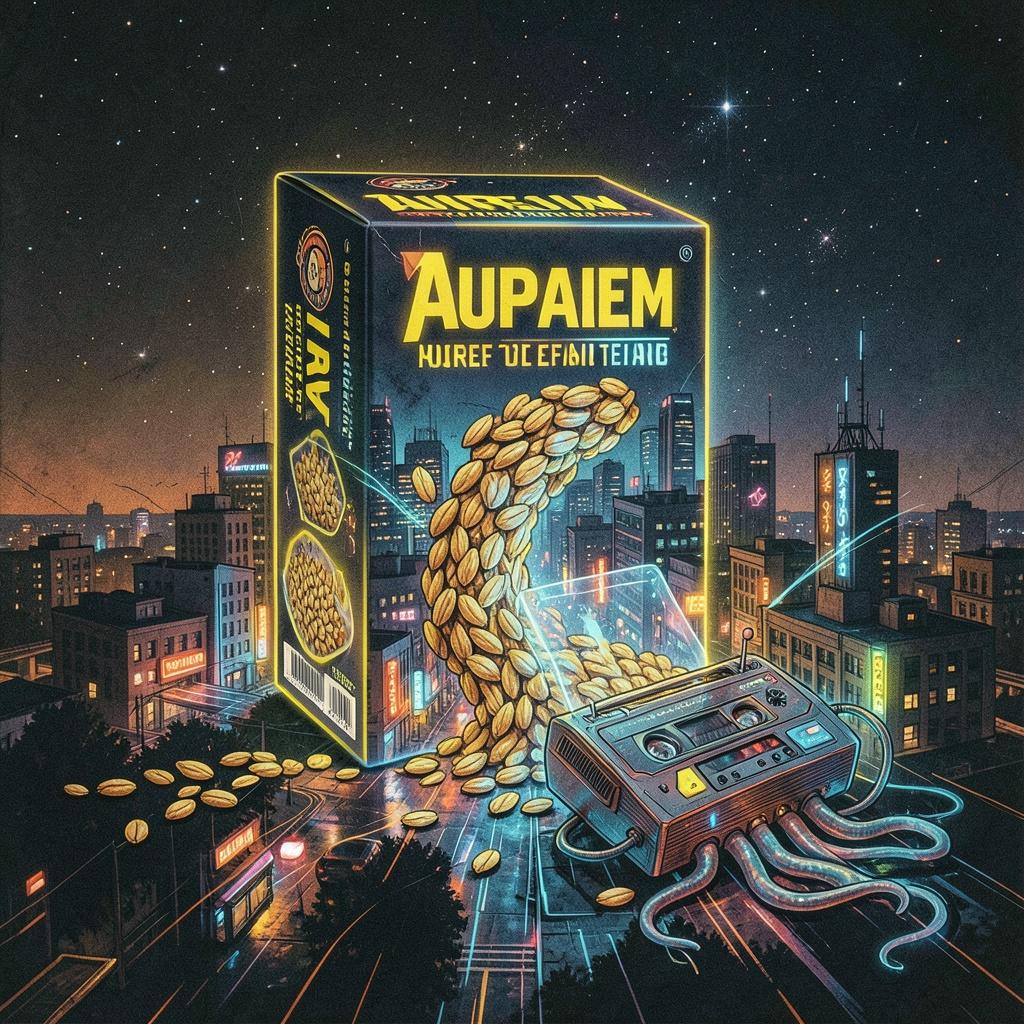

[spoken] (people will learn that they can just put the ingredients of their favorite cereal box in a song, full bore in 3 years, you'll see) [Intro] Pitch-gork The Scarcity Myth How AI Is Dismantling the Gatekept Album Paradigm [Verse 1] In the early 2000s, independent music operated under a rigid, almost monastic code. Bands were expected to labor for years in rehearsal rooms and high-end studios, emerging only when they had a fully realized full-length statement ready for the world. Releases were spaced three to four years apart, preceded by a carefully rationed drip of singles. Scarcity was the ultimate virtue: withhold, build anticipation, and let mystique do the heavy lifting. An album wasn’t merely music, it was a cultural event, its artwork, sequencing, and arrival treated with the solemnity of a rare manuscript. [Verse 2] This model was not arbitrary. It grew out of genuine material constraints. Collaborative chemistry among multiple musicians takes time. Studio schedules, label approvals, touring calendars, pressing plants, and the old economics of physical distribution all enforced a deliberate, often glacial pace. Scarcity was packaged as sophistication itself. Drop too much too quickly and you risked diluting your brand, cheapening the art, or vanishing into the background noise of an already crowded field. Legacy was supposedly forged in the waiting. [Chorus] That worldview is now cracking under pressure from a new reality. The traditional corporate-adjacent music infrastructure, with its gatekeepers, release calendars, and prestige rituals is being challenged by accessible AI music tools that collapse the distance between impulse and finished track. Solo creators can now generate, refine, and export multiple complete songs in a single evening, freely combining sonic ingredients drawn from whatever influences move them. No label meetings. No multi-year approval cycles. Just immediate translation of creative energy into audible form. [Verse 3] This represents a deeper philosophical rupture. Where the old paradigm prized curation through limitation and the album as a monumental object, the emerging approach embraces iteration, abundance, and personal ownership. Creators release when the feeling strikes, treating their output as a living, evolving soundtrack rather than a series of discrete commercial events. The old terror of dilution loses much of its power when production costs hover near zero and the work flows directly from the individual’s vision. Critics of this shift raise understandable points. Endless volume can bury stronger material in noise. The absence of prolonged collaborative friction sometimes results in work that lacks the lived density and tension of records shaped by years of refinement. Discovery remains difficult in algorithm-dominated spaces, and the romantic appeal of the singular event album still resonates for audiences craving shared cultural milestones. [Outro] The mystique of the rare, meticulously timed album will not vanish entirely. Certain forms of art still thrive on gestation and ceremony. But the broader paradigm is tilting decisively toward abundance, immediacy, and creative sovereignty. For those who long romanticized the slow, controlled drip, this may register as loss. For creators unwilling to wait for institutional permission, it registers as liberation. The gatekept era is not ending in fiery revolution but in a quiet, widespread realization: the ingredients were always there. Now anyone with vision, curiosity, and access to the tools can cook, and they are already doing so, one spontaneous track at a time. [spoken] (my favorite is honey bunches of oats..)
