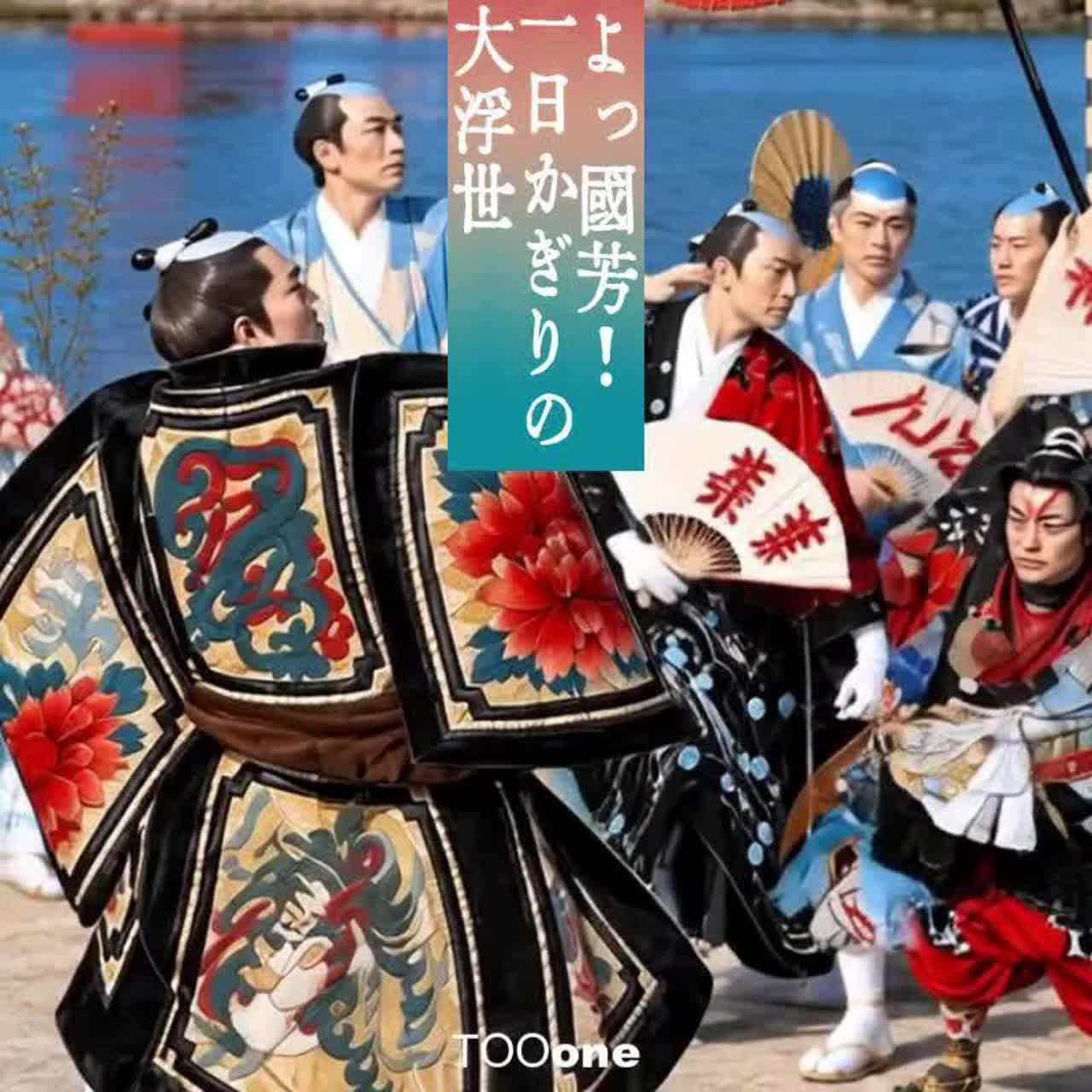
よっ、國芳 ! 一日かぎりの大浮世- Hey, Kuniyoshi—A One-Day-Only Grand Ukiyo-

この曲の動画は、歌川国芳の三枚続きの《勇国芳桐対模様》を題材にしています。 猫から骸骨、武者、妖怪まで、国芳が描いた世界は実に多彩ですが、私はなかでもこの作品が大好きです。 まだ「美術」や「インスタレーション」といった概念すらなかった時代に、国芳がここでやってのけたこと。それは、魅力にあふれた路上のパフォーマンスであり、今の言葉でいえば、まさしく一日限りのアート・インスタレーションだったのではないかと思います。 行列の先頭で、派手などてらを羽織り、こちらに背を向けて歩いている人物が国芳本人です。 This video is inspired by Utagawa Kuniyoshi’s three-panel work Isami Kuniyoshi Kiri no Taimoyō. Kuniyoshi’s world was extraordinarily wide-ranging—from cats and warriors to monsters, ghosts, and skeletons—but this particular work has always been one of my favorites. Long before anyone spoke of “contemporary art” or “installation,” Kuniyoshi seems to have created something remarkably close to both: a vivid street performance, with the city itself becoming part of the work. At the head of the procession, seen from behind in an extravagantly decorated padded coat, is Kuniyoshi himself. ---------------------- Lyrics 東西 東西 ちょいとご覧じろ あのいでたち 先に立つのは 誰である 龍虎牡丹を 身にまとい 肩で風切る 絵師ひとり (よっ!) (待ってました!) (国芳先生!) 龍を背負って 虎を連れ 牡丹咲かせて 町をゆく 金襴緞子じゃ あるまいに 着ればたちまち 絵になった 袖をひらけば 風が立ち スソを返せば 虎が鳴く 刀差さずに 筆一本 それでもなんだか 武者姿 (おいおい 今日はまた派手だねえ!) (師匠みずから お出ましかい?) (その虎ァ どこで飼ってんだい!) よし[芳]の一字を 旗印 弟子をぞろぞろ 引き連れて 扇に傘に 揃いの印 祭り囃子へ 乗り込んだ ひとり歩けば 絵師だけど 一門歩けば 見世物だ 今日だけ紙も 絹もなし 江戸の大路が 画布になる (来たぞ来たぞ!) (国芳一門だ!) (道をあけな! いや、あけなくていい、見てけ見てけ!) よっ 国芳 龍を背負って 町をゆく よっ 国芳 虎を連れ立ち 風を切る 筆を置いたら 町へ出て 町を丸ごと 絵に変える 絵にせし町か 町なる絵か 喝采までも 絵のうちだ (よっ!) (もう一声!) (国芳!) 「猫を描いたら 天下一!」 「武者を描いても 天下一!」 「化け物なんざ お手のもの!」 「髑髏一匹 空を衝く!」 「金魚にゃ芝居を させるわな」 「鯨も海から 連れてくる」 「役者も美人も 描きゃしたが」 「先生いちばん 面白え!」 (違ぇねえ!) (こりゃ一本取られた!) 武者を描けば 血が騒ぎ 役者描けば 声がする 猫を描けば 猫が化け 骸骨描けば 夜が立つ 大小天地を ひっくり返し 浮世の裏まで 描き出す されど今日だけ 筆を置き 己れ自身が 絵となった よっ 国芳 天下御免と 威張りゃせぬ よっ 国芳 子ども町人 みな仲間 けんぶつにん[見物人]まで 巻き込んで 笑う声まで 色にする 一日かぎりの 大浮世 江戸を描くんじゃ 物足りぬ 江戸を浮世絵に しちまった (よっ!) (国芳!) (日本一!) 「先生!」 「なんでえ」 「ずいぶん今日は ご機嫌じゃねえか」 「祭りだもの」 「その格好でどこまで行くんで?」 「決まってらァ」 龍を背負って 虎を連れ 弟子を連れ立ち 町をゆく 拍手も野次も 笑い声も まとめて今日の 一枚絵 「よっ、国芳!」 「待ってました!」 「先生、天下一!」 ――すると先頭 振り向きもせず 「おうよっ」 ----------------------English Lyrics Hear ye, hear ye! Come take a look at that getup there! Who’s that leading the parade? Dragons, tigers, peonies on his back, one painter strutting through the street. (There he is!) (That’s what we came to see!) (Master Kuniyoshi!) A dragon on his back, a tiger at his side, peonies blooming as he walks through town. No brocade, no silken finery— but once he puts it on, the man himself becomes a picture. He spreads his sleeves—the wind kicks up. He swings his hem—the tiger growls. No sword at his waist, just a single brush, yet somehow he looks every inch the warrior. (Well, well—gone flashy today, haven’t you!) (The master himself leading the show?) (Hey! Where’d you get that tiger?) The single character Yoshi flies like a banner, his pupils trailing after him in a crowd. Fans and parasols bearing the same mark, and off they march into the festival drums. One painter walking is only a painter. A whole school walking becomes a spectacle. No paper today. No silk today. The broad streets of Edo become the canvas. Voices from the crowd (Here they come! Here they come!) (Kuniyoshi and his whole crew!) (Make way!—No, don’t make way! Stay there and watch!) Hey, Kuniyoshi! Dragon on your back, walking through the town. Hey, Kuniyoshi! Tiger by your side, cutting through the wind. Put down the brush and step into the street— then turn the whole town into a picture. Is it a town made into art, or a picture that became a town? Even the applause belongs inside the frame. (Hey!) (One more!) (Kuniyoshi!) “When it comes to cats—he’s number one!” “Warriors too—number one!” “Monsters? Child’s play for him!” “One giant skeleton and it touches the sky!” “He even makes goldfish put on a show!” “And drags whales straight out of the sea!” “He’s painted actors, beauties, all of them—” “But the funniest thing he ever drew might just be himself!” (Can’t argue with that!) (Ha! You got us there!) Paint a warrior—the blood begins to stir. Paint an actor—you can almost hear the voice. Paint a cat—the cat turns strange. Paint a skeleton—and suddenly night rises. Big and small, heaven and earth, he turns the whole world upside down, painting even the hidden side of the floating world. But today, just for today, he puts the brush aside— and becomes the picture himself. Hey, Kuniyoshi! He never needs to boast. Hey, Kuniyoshi! Children, townsfolk—everyone joins in. He pulls the spectators into the scene and turns even their laughter into color. For one day only, one enormous floating world. Painting Edo is no longer enough. So he turns Edo itself into an ukiyo-e print. (Hey!) (Kuniyoshi!) (Best in all Japan!) “Master!” “What is it?” “You’re in a mighty good mood today.” “It’s a festival.” “And dressed like that, where exactly are you going?” “Where do you think?” A dragon on his back, a tiger at his side, his pupils all around him, he walks through town. Applause, heckling, laughter— all gathered together into one picture for the day. “Hey, Kuniyoshi!” “We’ve been waiting!” “Master! Number one!” And then, at the head of the parade, without even turning around— “Damn right.”
