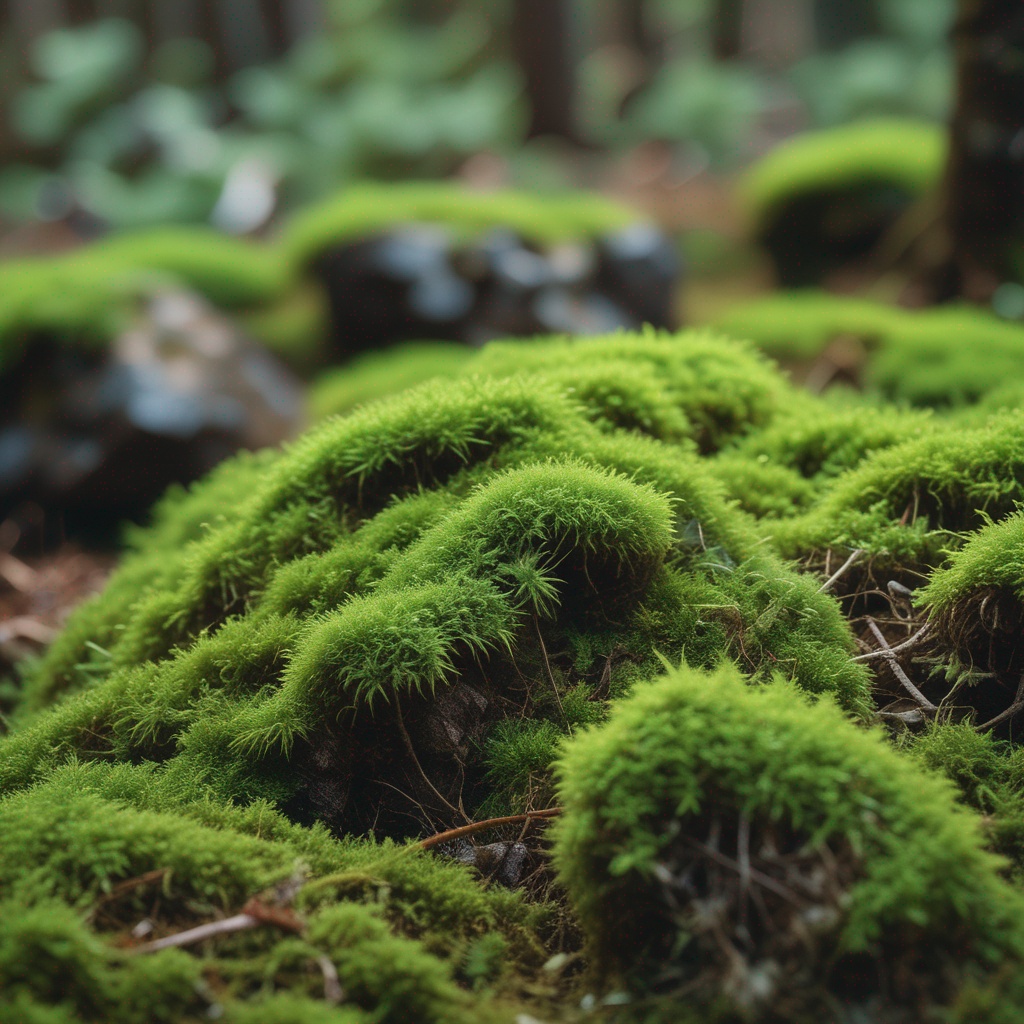

The moss life-cycle starts with a haploid spore that germinates to produce a protonema. this is a mass of thread-like filaments or a thalloid form -- that means flat and thallus-like. Massed moss protonemata looks like a thin green felt. This is a transitory stage in the life of a moss, from the protonema grows the gametophore or "gamete-bearer." structurally differentiated into stems and leaves. A single mat of protonemata may develop several gametophore shoots, making a clump of moss. From the tips of the gametophore stems or branches develop with the sexual organs. The archegonia are small flask-shaped clumps of cells with an open neck, The antheridia are enclosed by modified leaves called the perigonium, the antherida sprays it's male gametes into the female archegonia's waiting cup... but they need to be wet! fertilisation cannot occur without water! sperm from the antheridia swim to the archegonia! then the immature sporophyte pushes its way out of the archegonial venter, over several months the sporophyte body develops a long stalk, called a seta, and a capsule capped by a cap called the operculum. Within the capsule, spore-producing cells undergo meiosis to form haploid spores, so the cycle can start again!
