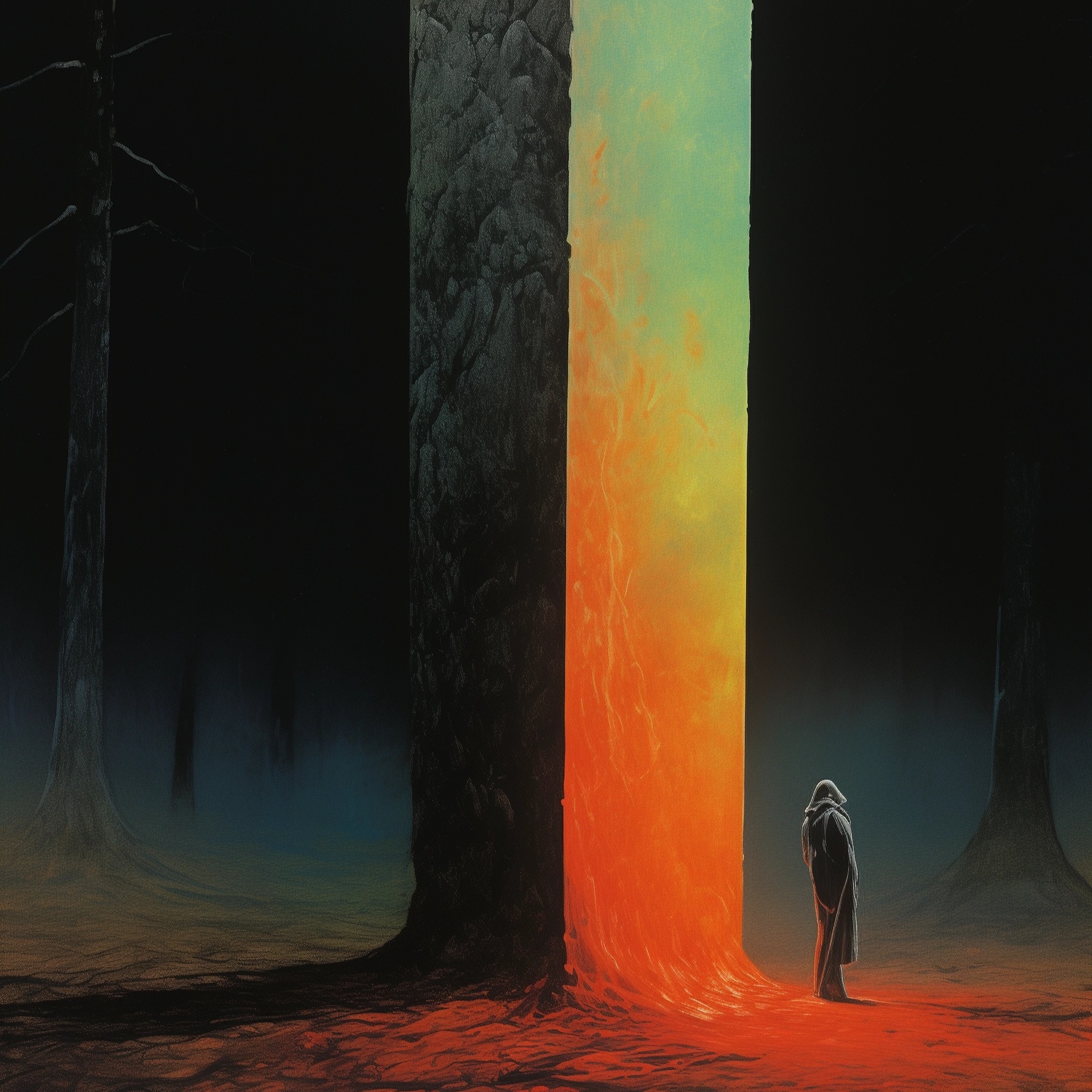

During our expedition within the dense groves of a remote celestial woodland, we encountered a structure, seemingly part of the planetary fabric. Dubbed "The Hidden Opal," its appearance was deceptively primitive, one facet blending seamlessly with the ancient groves. Yet, its other visage revealed a spectacle of cosmic craftsmanship. When bathed in the artificial glow of our ship's lanterns, the monolith's surface erupted in a cascade of colors that danced like the auroras of high latitudes remembered from ancient Earth stories. This was no simple stone but a complex interplay of minerals and light, forming a radiant display that defied known natural occurrences. The composition of "The Hidden Opal" remains a riddle. Our instruments, calibrated for known elements and compounds, faltered in its presence, hinting at undiscovered materials or perhaps a deliberate construct beyond our current grasp of physics and artifice. This monolith, shrouded by the forest's embrace, stands as a beacon of the universe's untold secrets. It compels us to delve deeper into the study of its origins — a testament to the unyielding march of discovery that propels us across the stars.

0/500