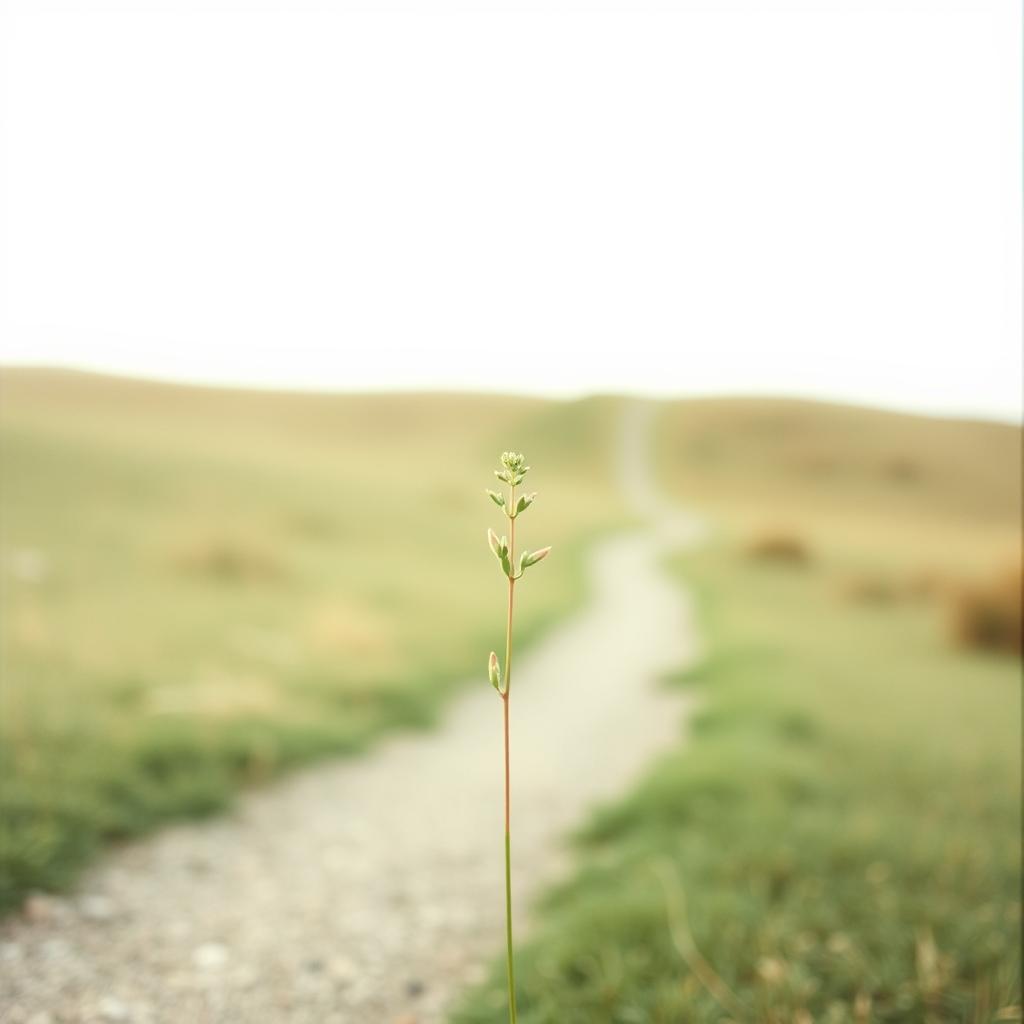
The way
The Tao Te Ching is a small book that has cradled me since my youth. Written by Laozi, a Chinese sage of the sixth century before our era, it is a collection of brief philosophical poems that explore harmony between humankind and nature. The Tao means “the Way.” It names the universal principle that underlies all things. Invisible and inexpressible, it is both the origin and the balance of the world. It turns our attention to simplicity, to fluidity, and to the principle of wu wei, acting without forcing— a wisdom that invites us to live in accord with the natural rhythm of life. I love when it says: “Know the masculine, embrace the feminine, be the valley of the world. Whoever is the valley of the world, constant virtue will never leave, and childhood is restored.” I find it essential to rediscover the inner child, even if, for many, childhood itself was a garden of sorrows. I love too when it reminds us that the World is a spiritual vessel, something very fragile, unpredictable and terrible, and that we must not try to shape it as influencers and media voices do, at the risk of losing and destroying the World. I love when it asks us: “Fame or health— which is more precious?” Pointing out that: “Those who love fame too much pay too great a price,” and: “Those who hoard too much suffer heavy loss.” “Looked at, it cannot be seen— it is called the invisible. Listened to, it cannot be heard— it is called the inaudible. Touched, it cannot be grasped— it is called the intangible. These three states, whose essence is unfathomable, blend finally into one.” “The spirit of the valley never dies. There dwells the dark feminine. At the gate of the dark feminine lies the root of the universe.” Thus: Emptiness, unpredictability, and immortality— these are three virtues of the Tao. All the trees, all the forests of the world, every brook, every river, every shoreline of river or sea teaches you “the Way.” It depends on you alone to decipher your deep nature through them. Let the landscape enter you, and at last inhabit your inner landscape. Let, oh, let the branching patterns of your nervous system, your bloodstream and lymph, become the branching patterns of the root of life. The most fragile plant, on the edge of a path, shows you “the Way.”
