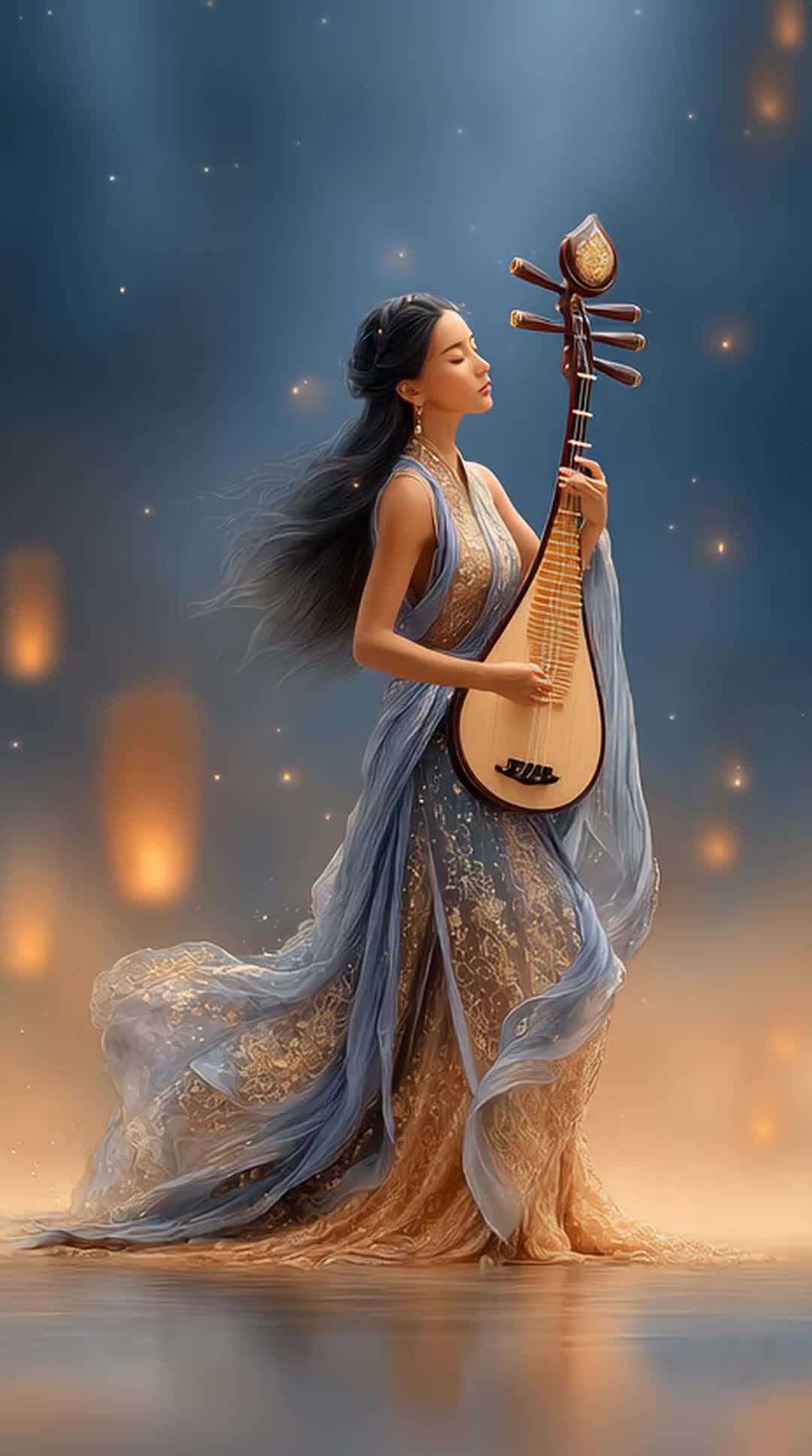
Arabian Tale (to read & listen...)

I recommend listening with headphones! -- You can find this musical tale in English, Russian and Bulgarian, along with its video and many other tales, on my new website: www.solaria-gallery.com/tales/ -- This story and song were inspired by a gift — a beautiful book about Scheherazade, given to me by my daughter on my birthday. In its pages, I found the thread that wove this melody into a tale. 🎶 And along the way, I owe a thank you to AIMORI — whose music ideas nudged this melody in the right direction! ===== 🏜 Arabian Tale (A story to be read while the music travels) Her name was Nura — a name that means light (نُور), and she carried that light within her voice. Born where caravan trails crossed beneath the stars, she grew up in the breath of many lands. Traders passed. Storytellers lingered. Musicians came and went. Each left her something: a kalimba from the west, a daf from Arabia 🥁, a whisper of a song or the memory of rhythm. She learned to play not with hands — but with heart. Each evening, when the sky turned indigo and the desert wind softened, her voice would rise — not as words, but as sound. Strings, flutes, and skin would echo with longing and fire. 🌬️✨ But one night, something changed. The wind carried her melody farther than ever before. She could feel it — her song was reaching for someone. Someone real. 🎶 In Baghdad, beneath lanterns swaying above the spice market, she first saw him. He was not performing. He was simply playing — as if breathing through the oud. His eyes were quiet amber. His fingers, storytellers. And the music... it held something raw, something ancient, something that recognized her. Nura stood frozen between two stalls of woven silk, heart thundering. For the first time in her life, she wasn’t just listening to a melody. She was hearing herself, sung by another. He looked up once. Smiled. And vanished with the morning caravan. 🌙 She didn’t speak to him. Didn’t even have time to ask his name. But after he disappeared, she couldn’t stop wondering. Who was he — the man whose music echoed her own soul? As Nura traveled eastward, she began to ask. In tea houses and under silken tents, she played fragments of the melody he had left behind. Some shrugged. Some smiled. But a few leaned closer and whispered the same name, like a memory carried by wind: Kamar al-Nay — the Moon of the Flute 🌕🎵. A musician who played not for gold or glory, but for the spaces where stories sleep, waiting for someone to awaken them. Nura set out chasing his music — as if the wind had taken his song and scattered it across the world for her to find. Through Persia’s cascading rooftops, where she learned to bend sound like water with the santur. Through India’s red-dusted temples, where the sitar taught her longing, and the tabla taught her joy. 🛕🔥 With every land, her music grew wilder, deeper — not darker. She wasn’t searching to remember. She was playing to reach. People started calling her The Girl Whose Song Seeks Someone. She smiled. They didn’t know how right they were. 🎼 One morning, by the still lakes of the East, where cranes sleep in mist and flutes echo like dreams, she heard something that wasn’t hers. A phrase — soft, trembling — rising from a bamboo flute. It matched a melody she had only played once. The wind had found him. And now it was bringing him back. 🌅 Nura’s hands trembled on the guzheng. The rhythm beneath her grew — not heavy, but alive. She wove the djembe’s earth into the daf’s trance. Kalimba met oud. Guzheng sang back to sitar. The music became a bridge. She laughed — out loud, free, fearless. “He heard me,” she whispered. “And he’s answering.” 🎇 All the sounds she had carried across the world now circled her — not in chaos, but in joyful call and response. And in the center of it all: one quiet, golden thread — a memory becoming a meeting. A bell rang in the distance. Nura lifted her head to the wind and played one final note — bright, soft, complete. “Kamar…” she said, as the music faded. "We will meet in the next verse.” 🎵
