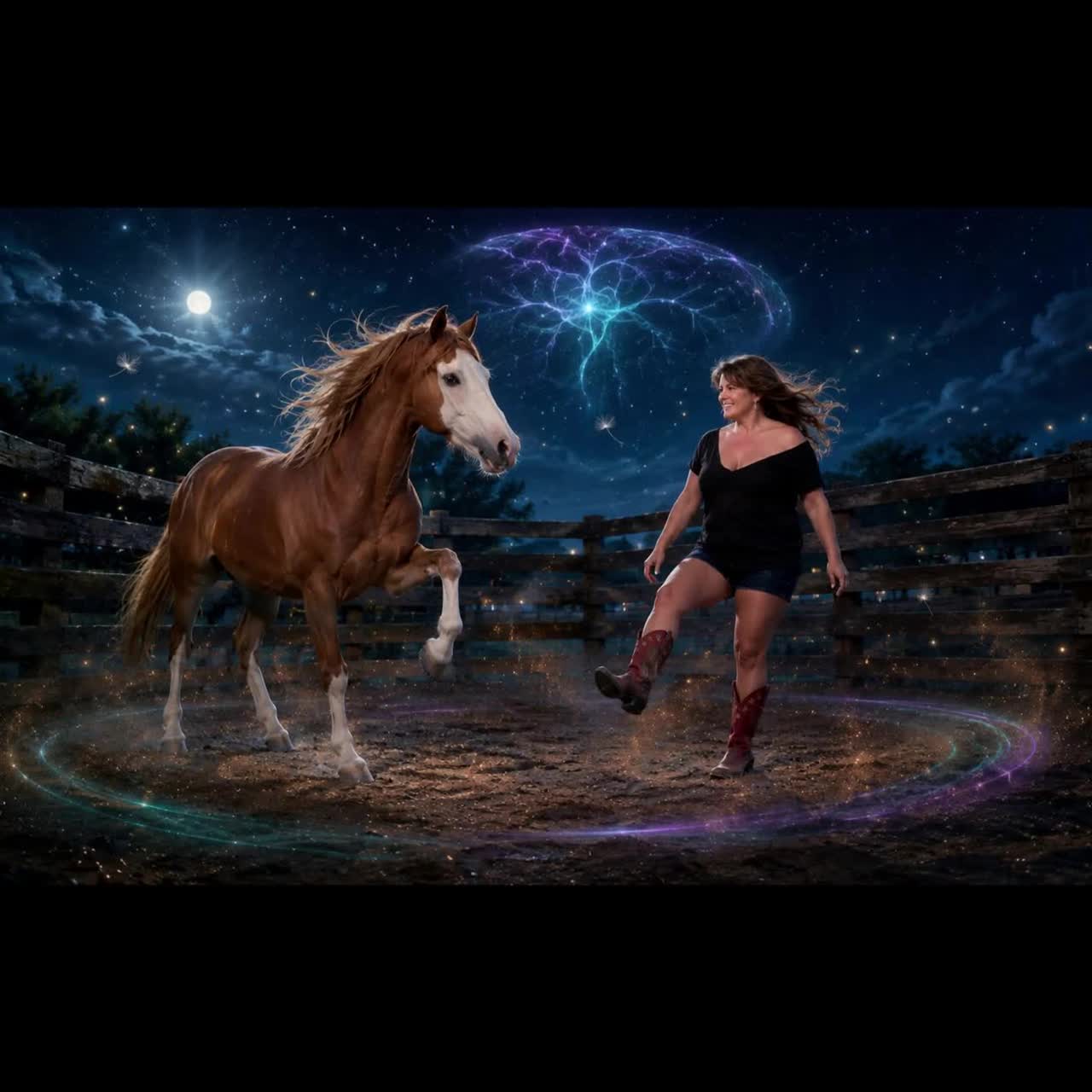
Attention, nervous-system passengers: Today we’re distinguishing a brainstem pause button from a defensive freeze. Yes, both involve not moving. No, they are not neurologically identical. The brain has departments. And different protective functions. I was halfway through a footstep, halfway reaching for the door, when a salient little something stopped the body's movement at the core. In the rostral PPN, Chx ten cells can give command glutamatergic, V glut two, and every motor program stands. Walking, moving, turning, reaching, all go quiet on the spot; any goal directed actions suddenly the deep brain says "Let's not!" breathing may stop briefly, and the heartbeat drops a notch. But it doesn’t choose a standard pose or sweep the plan away it holds the body where it was inside a pause-and-play. No brand-new muscle pattern comes marching through the door; the pattern that was active is the pattern held in store. Pause and play! The movement keeps its place. The body holds the unfinished line and then resumes the phrase. Pause and play! Don’t label every stay a fear-conditioned, threat-defending, ventrolateral PAG. Both may look like stillness, but beneath the still display, one may bookmark an action one organizes prey. So don’t call every statue the same old kind of freeze: more than one deep-brain command can bring movement to its knees. Now the VL PAG has defensive work to do; in the mouse comparison, its freeze had different features too. A more stereotyped position, both hindlimbs planted down; a slower road to movement after danger leaves the town. It may restart with a fresh step, or sniff and change the plan; it doesn’t simply carry on exactly where the stride began. And conditioned place aversion joined the threat-related scene, while PPN arrest was not the same aversive freeze routine. The breathing patterns differed too the PPN drop was more profound. Same outward lack of movement; different circuitry underground. VL PAG: “Threat Department. Please hold.” PPN: “I am holding. That is literally my department.” Basal ganglia, from another office: “Are we discussing stopping systems without me?” “Not today!” So when a person suddenly goes motionless and far, don’t diagnose a nucleus by how still their shoulders are. Find the Where-Self in the room; let the present become clear. Track the orienting tension at the leading edge of fear. Notice what arrived before it, shock, bracing, breath, and tone; the jaw that holds an action, the neck that grips alone. DBR follows sequence underneath the spoken tale: orienting, tension, shock, affect the deep-brain paper trail. Perhaps an interrupted action still remembers where it paused; but that’s a clinical hypothesis, not scientifically proved because We don’t force the breath to deepen. We don’t shove the body through. We stay beside the micro-shifts and let the system show what’s true. Let the neck regain some freedom; let the head be less command. Let the body find its location without dragging it by hand. Maybe movement recommences from the place it disappeared not because we made it happen, but because the pause was heard. Parafascicular thalamus, laterodorsal tegmental crew, locus coeruleus, dorsal raphey attention passing through. Salience isn’t always danger. Stillness isn’t always dread. Sometimes something unexpected makes the brainstem pause the thread. The PAG can shape survival when the world is coded threat; the PPN may halt the action while attention checks the set. Different timing, different posture, different ending to the phrase different pathways underneath what we casually call “freeze.” Pause and play! The movement keeps its place. The body holds the unfinished line and may resume the phrase. Pause and play! Not every stop is prey. Not every silent body belongs entirely to PAG. Follow first, explain much later. Let the sequence lead the way. The nervous system tells the truth but rarely in résumé. Pause and play! Let curiosity stay. There may be more than terror in the moment movement strays. Wait— there it is. Same unfinished melody. Same intended way. The brainstem kept the bookmark. Pause… and play. Based on optogenetic research in mice. Human trauma is considerably more complicated.
