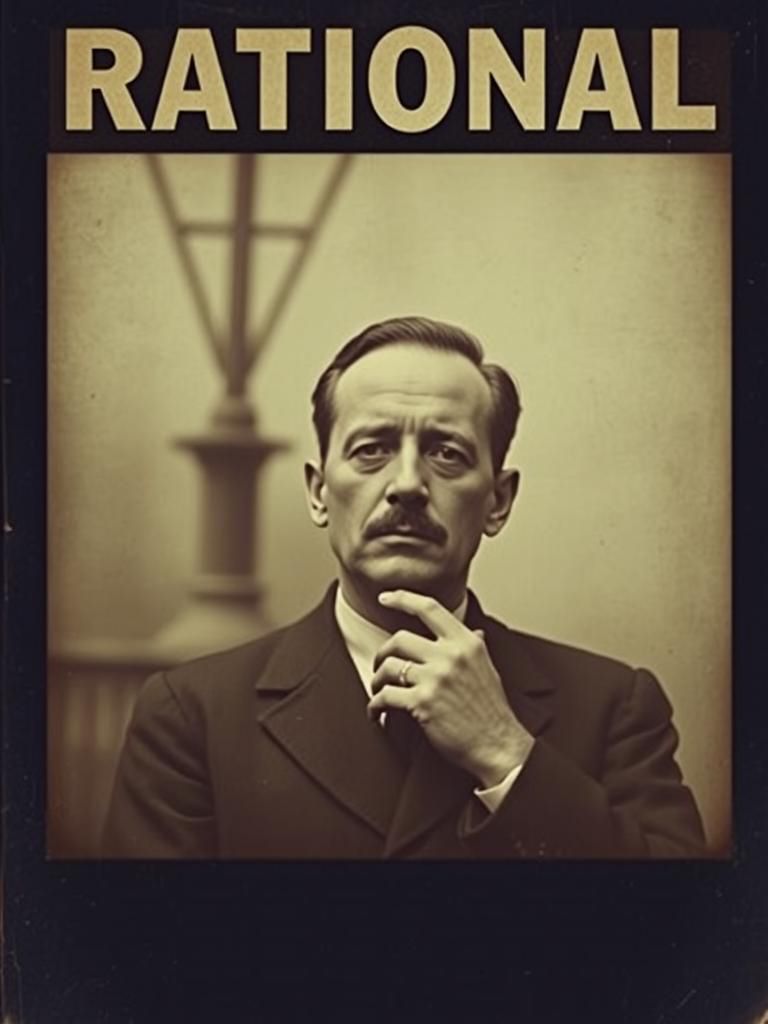
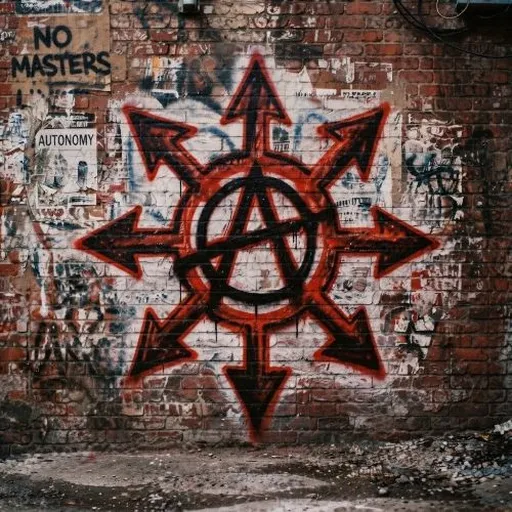
There’s a quiet mistake we make when we talk about truth, as if it lives at one end of a spectrum and all we need to do is march hard enough in that direction to reach it. Be rational, we’re told. Be skeptical. Demand evidence. Those are good tools — indispensable, even. But like any tool, used without judgment, they can become a kind of blindness. Extreme rationality can harden into a refusal to see. When rationality is treated as a shield rather than a lens, it starts filtering out anything that doesn’t arrive neatly packaged: motives without paper trails, incentives without memos, patterns without signatures. Power rarely announces itself in ways that satisfy laboratory standards. It fragments responsibility, hides behind intermediaries, exploits plausibility. If we demand courtroom-grade proof before allowing suspicion to form, we often arrive too late — long after harm has already been done. History is full of moments when “there’s no proof” really meant “there’s no proof we’re willing to accept yet.” Financial crimes, state surveillance, corporate cover-ups — none were exposed because authorities suddenly became transparent. They were exposed because people noticed that things didn’t add up and refused to ignore that discomfort. Rationality didn’t fail them; rigid rationalism did. But suspicion has its own gravity, and it pulls just as dangerously. Extreme suspicion creates a world where absence of evidence becomes evidence of absence’s opposite — concealment. Every contradiction becomes proof of deeper deception. Every failure to confirm becomes confirmation of how clever the enemy must be. At that point, falsification is no longer possible. The theory feeds on doubt, and doubt feeds on the theory. This is where suspicion stops being a tool and becomes a belief system. It doesn’t ask, “What would prove me wrong?” It asks, “Why hasn’t this been proven yet?” — a question that can accept any answer except the most threatening one: that the pattern might not be what we think it is. Ironically, this mirrors the very structures of power suspicion often seeks to expose. Closed systems. Self-reinforcing narratives. Immunity from challenge. The danger isn’t asking hard questions. The danger is answering them too quickly. Truth doesn’t live at either extreme. It lives in tension. Real understanding requires the humility to hold two uncomfortable positions at once: that powerful actors can and do manipulate systems in ways that leave indirect, deniable traces — and that not every coincidence, overlap, or benefit implies orchestration. That patterns matter — and that humans are exceptionally good at finding patterns whether they exist or not. The most resilient stance is neither cynical dismissal nor total distrust. It is disciplined curiosity. Disciplined curiosity notices incentives without assigning authorship too soon. It tracks who benefits while remaining open to boring explanations. It treats skepticism as something applied inward as much as outward. It asks not only “Could this be true?” but “What would convince me it isn’t?” This balance is difficult because it offers no emotional payoff. Certainty feels good. Suspicion can feel righteous. Rational detachment can feel superior. Disciplined curiosity feels unfinished. It requires patience in a culture built on instant conclusions. But it’s the only posture that doesn’t collapse under pressure. Being extremely rational can blind you to truth when truth emerges messily, politically, and indirectly. Being extremely suspicious can blind you to falsification when doubt becomes identity. Truth survives where both forces are kept in check — not by abandoning reason or suspicion, but by refusing to let either become an ideology. That refusal is harder than belief. And that’s why it matters.

0/500