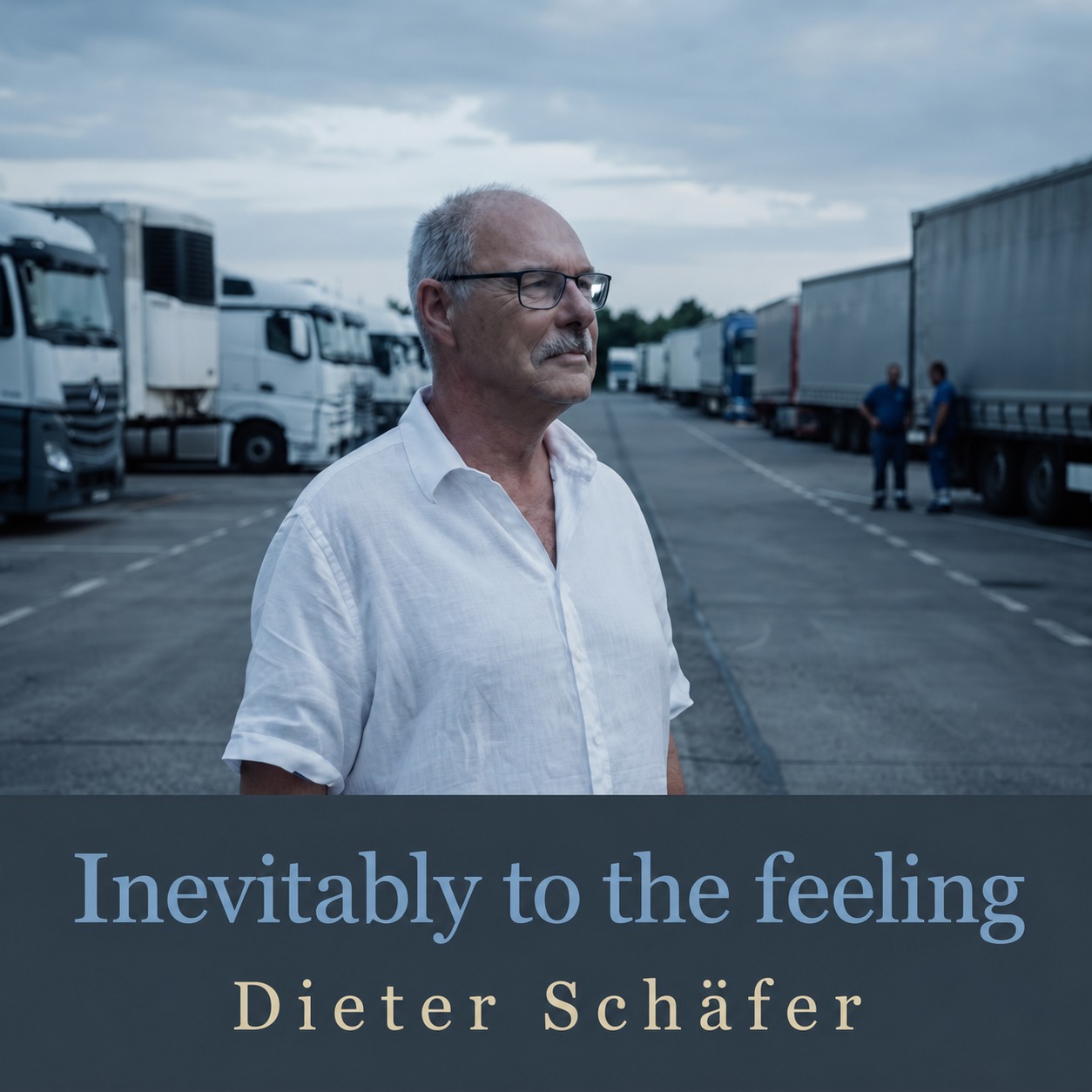
Emotional Prevention for Professional Drivers

Road safety efforts traditionally rely on statistics, accident analyses, rules, and technical solutions. While these tools remain important, they do not always influence people’s behavior. For professional drivers in particular, time pressure, traffic jams, sleep deprivation, monotony, economic pressures, and a lack of appreciation can cause traditional appeals and lectures to lose their effectiveness. This is why the approach of emotional prevention was developed: a message should reach not only the mind but also the heart. An additional source of motivation lies in the psychological consequences of serious traffic accidents. Those affected include not only the dead and injured, but also relatives, survivors, first responders, emergency personnel, witnesses, those responsible for the accident, and others involved. A social study of German Road Safety Council cited an average of onehundredthirteen people with a stress-related disorder of varying severity for each traffic fatality. Accident prevention therefore means not only saving lives, but also preventing great emotional suffering. This line of thinking gave rise to the idea of using music as a prevention tool. Catchy lyrics, recurring choruses, and emotional imagery can anchor messages in the memory. The starting point was the story of Helena, whose family was killed in a serious accident. This inspired the song “Watch out! - A Message to Everyone”. The focus is not on abstract accident statistics, but on the lives destroyed by the accident and the realization that a few seconds of inattention can change a life. The resulting campaign, “Max-Achtzig: A Trucker’s Fate – Watch out!”, combines psychological, cultural, and preventive elements. Professional drivers should be addressed not merely as a risk group, but as human beings with emotions, identity, and dignity. The songs were therefore translated into numerous languages and musically adapted to different cultural listening habits—including Polish, Ukrainian, Lithuanian, English, Romanian, Serbo-Croatian, Greek, Italian, French, and Spanish. The goal is not a literal translation, but rather to convey the emotional impact. This impact is also evident in my lectures: When music, images, and real-life stories come together, some drivers react more emotionally than they do to statistics or presentations. Helena’s story, in particular, makes it clear that behind every fatal accident lies a life that is never the same again. I state explicitly that I do not view music as the sole solution. It is intended to reinforce a message and be linked to concrete preventive measures: the Ten Max-Achtzig Rules, the safety registry, training materials, driver’s manuals, lectures, and workplace instruction. The central approach is therefore: Emotion plus Information plus Structure. Only the combination of emotion and reason can help ensure that this emotional connection potentially leads to a change in behavior. The “Max-Eighty” Prevention Edition and the latest compilation album, “The Road Keeps Count,” are thus intended as an international prevention mantra for everyone who drives—and for everyone waiting for their safe return. The key idea: If a message is present in a driver’s mind at the right moment, it can help ensure that the driver puts down their cell phone, takes a break, and manages stress
