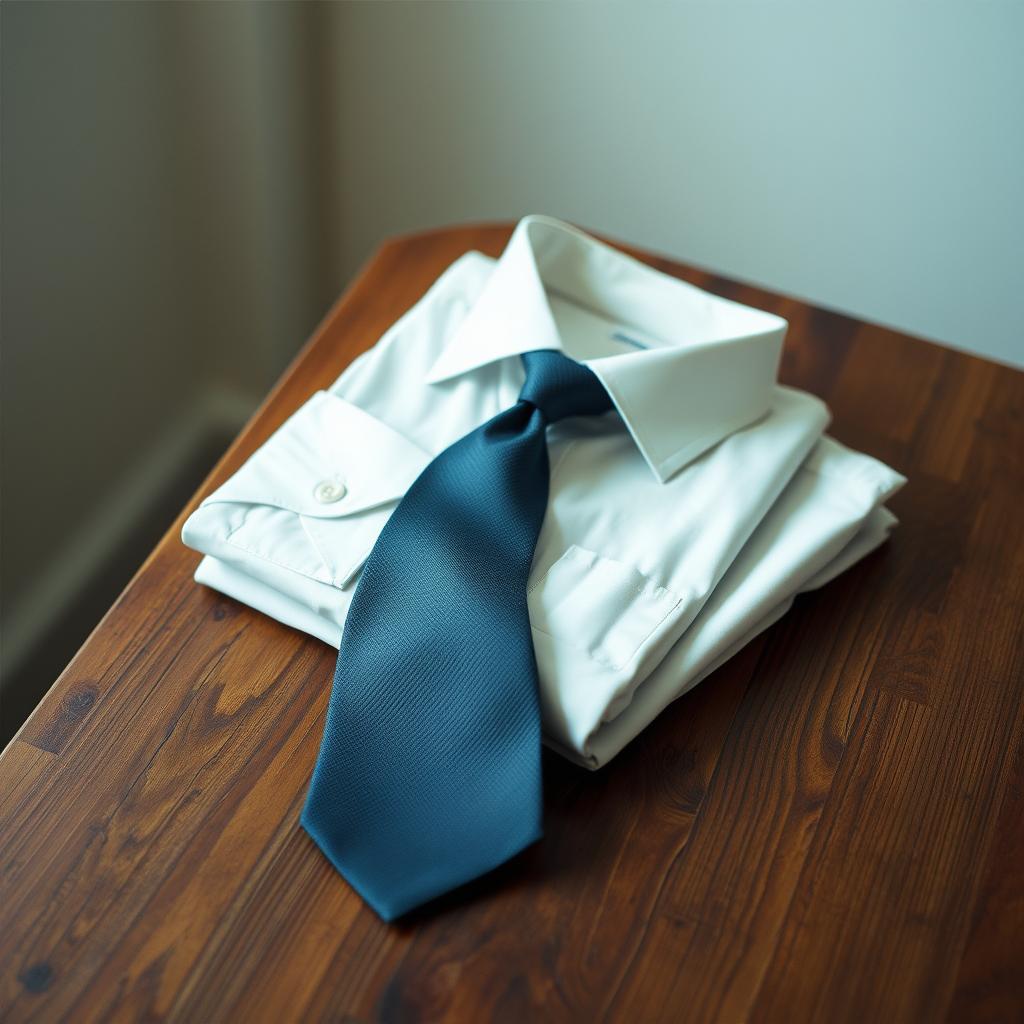
Shirt and tie
Wearing a shirt and tie is becoming less and less common in our society, and yet, they are my delight, for to me, this tandem embodies rigor, discipline, and self-control in all its dignity. And you know, for an aging person, there is no longer evolution on the physical level, but a certain involution at variable speed. The shirt and tie give me the impression of temporarily putting a brake on that involution, by giving me back a certain control over what is happening to me. They respond to my need for a clear framework, for inner order, for a taste for precision, for refinement, for that rare feeling of mastery over oneself and over situations. For the aging man that I am, this garment “frames” the body, imposes composure — in both senses of the word: physical posture and moral bearing maintained. I know they also symbolize status, recognition, but, not being from the world of finance, I find in them the old values of my childhood: respect, uprightness, perseverance. I no doubt seek in them respectability, perhaps success, or the desire to be taken seriously in my efforts toward inner mastery. I love this image, even if it betrays a desire to be recognized, despite the ageism that weighs on the elderly, and I like to project, in spite of it all, an image of quiet authority and connection. In environments where the shirt-and-tie is nothing more than a memory of the past, the fact of choosing it, voluntarily, reveals in me an affirmation of identity: an assumed elegance, a rigor with distinction. From a psychological point of view — Jung and Goffman would invite me to — the shirt and tie represent the persona, that social mask we wear in order to exist. They are the costume of the role I assume, but the affection I feel for them says something else: this role has become part of myself, I feel aligned with what it proclaims. On the aesthetic level, it is also a pleasure: classical beauty, clean lines, the harmony of colors and discreet materials. To choose, tie, and adjust the tie is a ritual of intimacy before facing the world, a simple yet profound gesture. Finally, for me, this symbol of balance between freedom and constraint inspires me: the tie tightens the neck, limits freedom — but it is this very constraint that gives presence and truth. I love finding freedom within form, and expression within discipline. Thus, the shirt and tie, far from being uniforms, resonate within me as an intimate harmony, an echo of old values, of rebirth, and, in a certain way, of snobbery — which I assume as a wink to bygone elegance and to the nobility of a mastered form.
