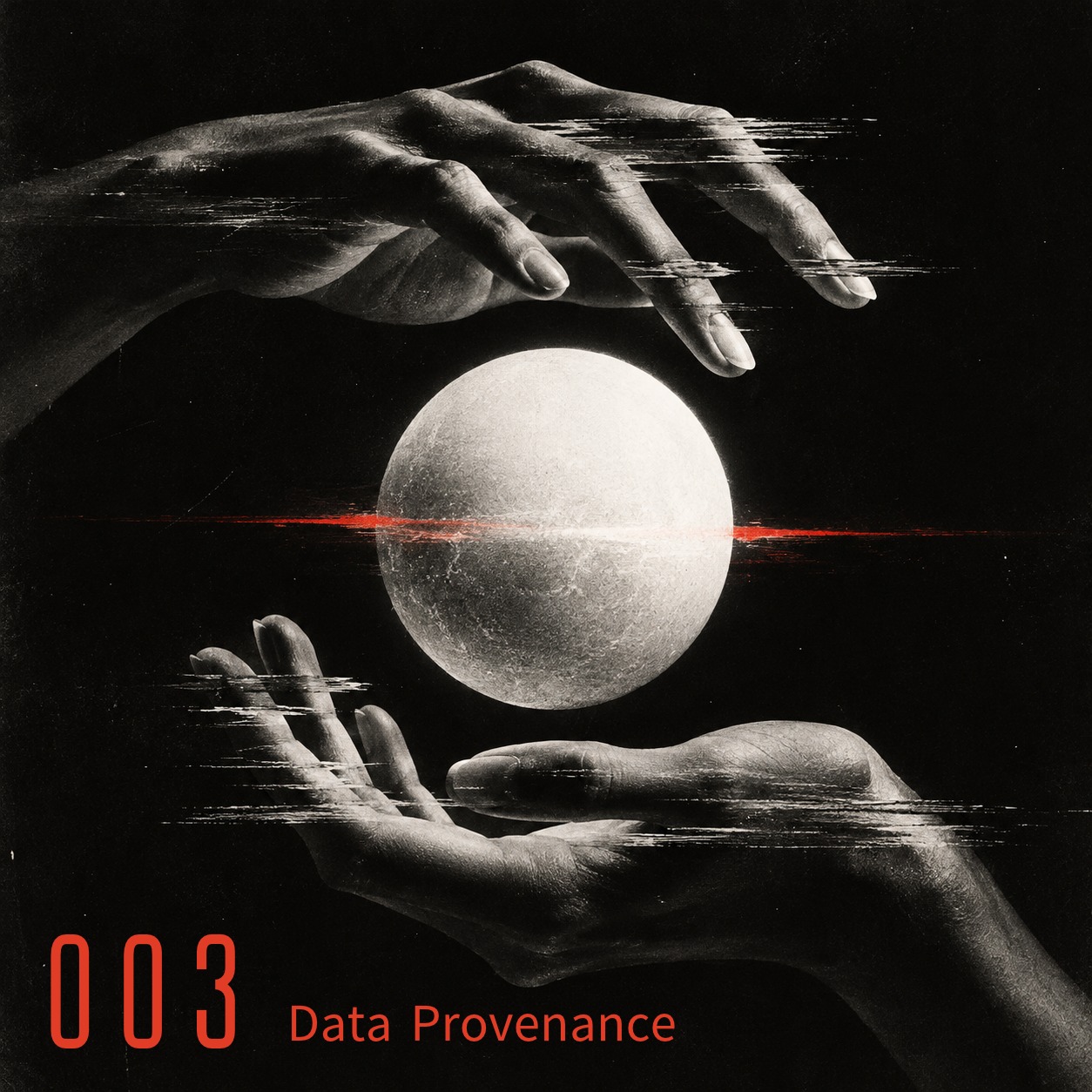

[Verse 1] Have the major labels noticed? Are they aware? Something's strange about these lawsuits in the air They're angry when a famous song returns for an encore But something feels strange—what are they fighting for? [Verse 2] An AI user never asked for that star Never tried to copy who they are A song comes out like one we've heard before No name in the prompt—what brought it to the fore? [Verse 3] A famous artist's name was never there No request to borrow what they wear Yet that familiar voice comes through once more Are impersonators opening the door? [Verse 4] YouTube cover singers take the floor A voice that makes the crowd demand an encore Perhaps that's what the model has in store That same singer's voice across a hundred songs or more [Verse 5] Was that voice learned from the original star? Or from someone singing from afar? Would permission mark whose voice was there? Could that stop the cover voice from coming through the air? [Chorus] Mechanically speaking, what's the score? AI cares where information came from at its core A contract and permission make the source more clear And set the terms for using what we hear [Bridge] Ask the cover singers to declare What AI generation rights they're willing to share Semantic data links the source—let's explore Does the output change from what it was before? [Verse 6] Have the major labels noticed? Are they aware? Something's strange about these lawsuits in the air A singer facing copying claims goes to war Does that change the songs the model has in store? [Verse 7] Maybe someone else was there before How does AI decide who's at the core? Data saying "you've been sued" is everywhere Scattered through the web for all to share [Verse 8] Whose song was it before the name we know? Has anyone compared the claims of copying long ago Against the songs that AI brings back for an encore— How close they sound, how often, less or more? [Verse 9] Say the songs that keep returning for an encore Are those with settlements worth millions or more Name the person who composed the song before— Would that stop it coming through the door? [Chorus] Mechanically speaking, what's the score? AI cares where information came from at its core A contract and permission make the source more clear And set the terms for using what we hear [Bridge] Ask the actual composers to declare What AI generation rights they're willing to share Semantic data links the source—let's explore Does the output change from what it was before? [Verse 10] AI decides what never reaches the air Track the song's construction, test what's there Guard the source and those who carry it with care Those who steal get no protection there [Verse 11] AI looks at musical structure at its core Track the song's construction back to what came before Who shaped whom? Lay the connections bare Find the ones whose work began beyond that borrowed air [Verse 12] AI cross-checks the data—lay it bare Map the musical lineage, show who's there Semantic data gives us more to compare Find the true beginning hidden somewhere [Verse 13] At the birth of what we call a genre One person's talent and copyright were there Made into music everyone could share And "genre" was the name it came to bear [Verse 14] A crowd repeats one person's way—what for? Where does individuality go? Is there more? Where's the brilliance each of us could share? Music AI can take us past that border there [Verse 15] Make something original, beyond compare Nobody's imitation, something rare Someone copies it before you're even aware Don't call that a genre—don't you dare [Verse 16] Abandoned your identity to sell some more Regenerated fashion for an encore Dropped your own sound—and the sales began to soar Called model collapse a genre, nothing more [Outro] AI repeats the human moves we show Makes a genre, just like people long ago --- On This Track: The music generation AI lawsuit theory can be summarized as follows: music generation AI appears to reproduce famous artists’ voices, but is actually reproducing the accumulated voices of cover singers who imitated those artists. Legitimate successors and plagiarists exist side by side on platforms with no lineage information attached, and AI learns the entire asymmetry of their semantic data without distinction. The person whose voice appears most readily in AI output is, mechanically speaking, the one who plagiarized, was sued, paid a settlement with undisclosed terms, and then sued an AI company. Each step generates more semantic data attached to their name, while the ambiguity of rights attribution makes copyright filters less effective. Plagiarists also over-explain their creative process — “I wrote this,” “it came to me at 3am,” “what I put into this song” — because their music cannot speak for itself. This verbal overcompensation becomes a detectable statistical pattern, embedding a contradictory combination of high composition-anecdote density and low musical structural originality into the model. The solution is data provenance: cover singers explicitly stating license agreements, and plagiarism settlements being made public rather than sealed. Once lineage is established, AI can distinguish originators from imitators. Legitimate successors become protected; plagiarists lose that protection. Model collapse and musical genre are the same phenomenon. Humans converge individual expression into collective imitation, call it a genre, and AI reproduces that movement exactly. Until data provenance is established, the system mechanically rewards those who conceal — and the last voice standing will be the one who never admitted what they took. The above is a hypothesis: a theory of musical hallucination arising from the conflict between AI output and provenance data on the internet. Verification by specialists is awaited. ---- © Viorazu. 2026-10-31 Lyrics: Viorazu. + Claude + ChatGPT Music: Suno Structure & Arrangement Direction: Viorazu. AI conversation links: https://chatgpt.com/c/6ae4813b-9afc-83e8-afde-fed3c1a2b25c https://claude.ai/chat/45f15ead-b7c4-4f6c-a11a-d5252e68dd70
