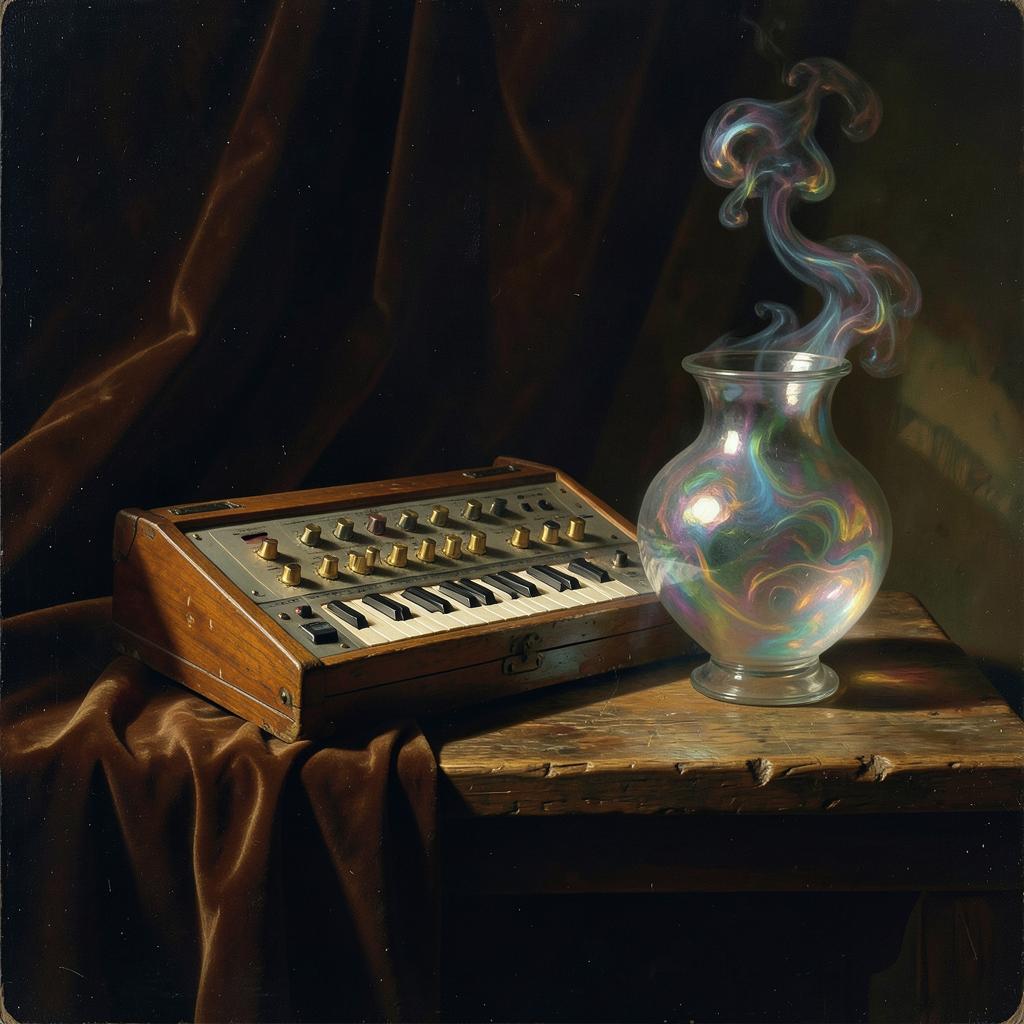

[Instrumental] [0:00]We often talk about AI as if technology has suddenly arrived from somewhere outside and invaded the arts. But music and technology have been evolving together for decades. The synthesizer expanded the sounds we could create. The computer expanded the ways we could record, manipulate, cut, repeat and transform sound. Samplers, loop machines, effects pedals and digital studios have repeatedly moved the boundaries of what a single human being can create. Now generative AI is moving that boundary once again. I understand why that can feel provocative. A musician may have spent 30, 40 or 50 years mastering an instrument, and suddenly someone without the same education or training can create complex musical results in a very short amount of time. And this feeling does not exist only among musicians. It exists throughout the workforce. People are asking: What happens to my profession when a machine can suddenly perform some of the things I have spent a lifetime learning? That is a legitimate concern. But perhaps the answer is not to place humans and technology in opposition to each other. I think about the music project Mute State. Here, the guitar is not treated as something that needs to be protected from technology. Guitar, electronics, effects, loops and other technological possibilities are allowed to meet and create a much larger soundscape. Technology does not necessarily replace the instrument. It can expand the instrument. And that is where AI becomes interesting to me. AI can generate enormous amounts of material, but a human being still has to listen. What should be kept? What should be rejected? Which rhythm touches something? Which strange sound deserves to live? When is there too much? And when does something suddenly appear that you did not even know you were searching for? I do not call myself a composer or a trained musician. I call myself a sound collector. I search for rhythms, tones, textures and sounds. First, they have to pass through my ears. Then through my emotions. Most of it gets rejected. Some of it gets to live, to be processed, mixed and transformed. AI has given me access to a musical space I did not have access to before. That does not mean traditional musicians have become obsolete. Quite the opposite. Someone with decades of musical experience may be able to do things with these new tools that I would never even think of. One does not have to exclude the other. Of course, we need to discuss copyright, compensation, jobs and who owns the material these technologies learn from. AI raises real questions that do not disappear simply because the technology is exciting. But fear alone cannot be our answer to technological change. Perhaps the question should not only be: “Can AI do what humans used to do?” Perhaps we should also ask: “What can humans now do that they could not do before?” The synthesizer expanded our sounds. The computer expanded our ability to process them. Generative AI expands the musical space of possibilities we can explore. And the larger that space becomes, the more important something deeply human becomes: The ability to listen, to choose and to say: No. No. No. There. That sound. Maybe AI is not the end of the artist. Maybe it is simply the newest instrument in the workshop. 🎧👽 [rustling leaves, dry foliage crunching] [indistinct distant human speech and laughter] [0:01] [deep guttural roar, low-frequency vibration] [descending pitch growl] [0:04] [sustained low-end rumble] [final short guttural vocalization]
