Cemeteries Fascinate Me
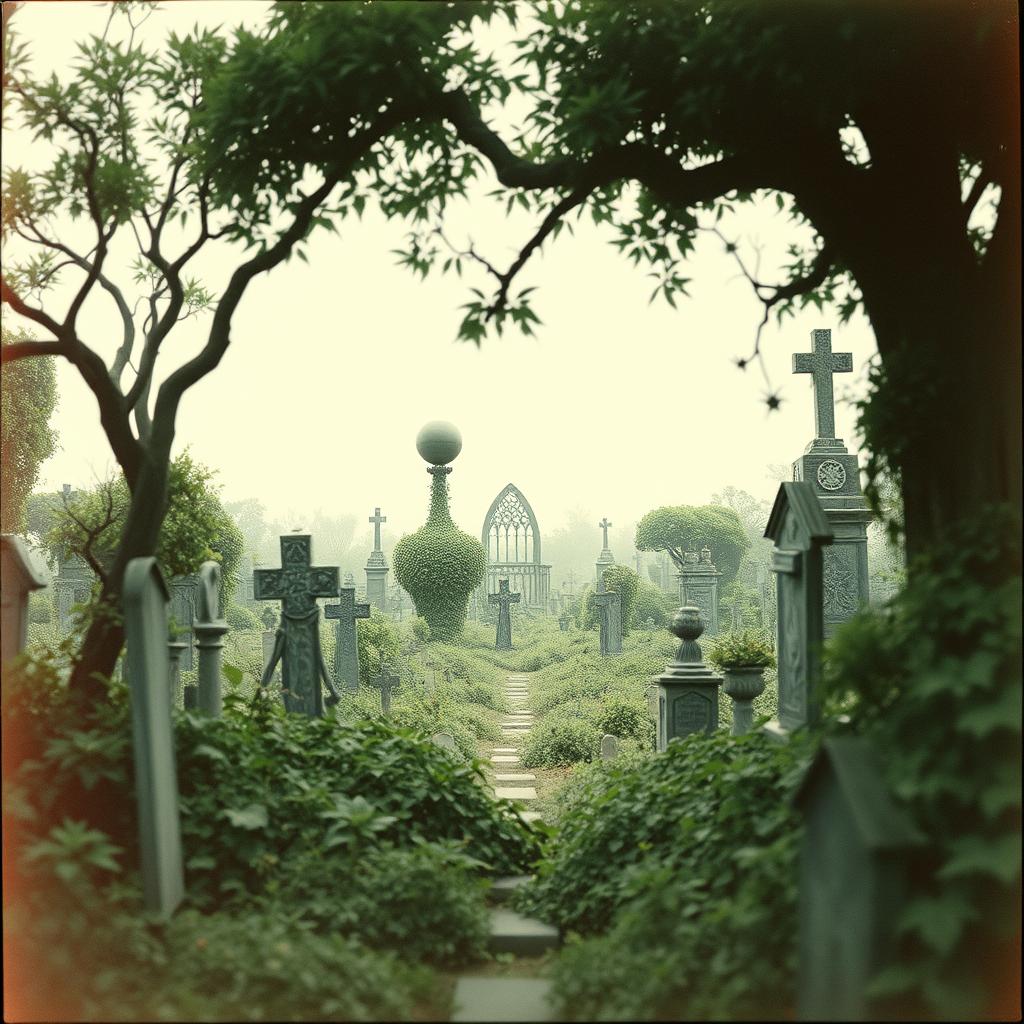
Cemeteries fascinate me. They are not places for the dead, but for the living. They are an extension of the celebration of past lives, a prolongation of memory. They are adorned and landscaped with common plants and sometimes exotic ones. In that sense, some cemeteries are true arboretums — living, three-dimensional treatises on botany. And yet they are four-dimensional, for they open the mind to spirituality, to the expansion beyond field and time, into the boundless adventure of humankind. Cemeteries are often mysterious, for they conceal many symbols — timeless perches, upright stems at the border between the temporal and the eternal. They are also resting places, sites of deposit and burial of human remains. When crossed by crypts and family vaults, they often take on a lugubrious air. And as these decay over time, they sometimes offer dismal spectacles, a disorder of graves and stones. For all things pass, and the fragile trace of our passage fades. Cemeteries have a life of their own: they are born of a human community’s need to endow itself with a place of remembrance. They stretch and decay over time — by wind erosion, the slow creeping of the soil, the work of moles and rodents, floods and rains, acid rain corroding inscriptions, oxidation and dampness rusting gates and metalwork. Decay caused by looting and vandalism leads to the death of some cemeteries, often when the communities that created them have vanished. Then they become places of desolation — or of fairy-like poetry. In London, the beauty of Highgate, which never ceases to die and wither, creates a setting fit for a land of fairies and elves worthy of Shakespeare. The precious austerity of Père-Lachaise, in Paris, with its costly decay, draped in museological discourse, full of ancient democracy and attempts at stillness — a vain ostentation of the debris of celebrity. The peaceful, rolling expanse of Mount Royal Cemetery, its landscape shaped by Harvard’s former botanist. The Celtic humility of Glen Nevis Cemetery in Ontario. All this speaks to me and enchants me. Cemeteries fascinate me. They are not places for the dead, but for the living. They are an extension of the celebration of past lives, a prolongation of memory. They are never haunted by the spirits of the dead, but often visited by the spirits of the living. When I am there alone, I feel peace and safety. But when wanderers roam among the tombs, I prefer to leave. Fear not the departed, but be cautious among the living. The spirits of the dead never come to haunt; they prolong your life through the magic of memory. They come to you only when invited — to comfort you, advise you, protect you. The spirit of certain living souls, however, can discourage you, isolate you, divide you, antagonize you. And as so often witnessed in wars, brawls, attacks, and crimes, it can tear you from life and devastate those you love.
