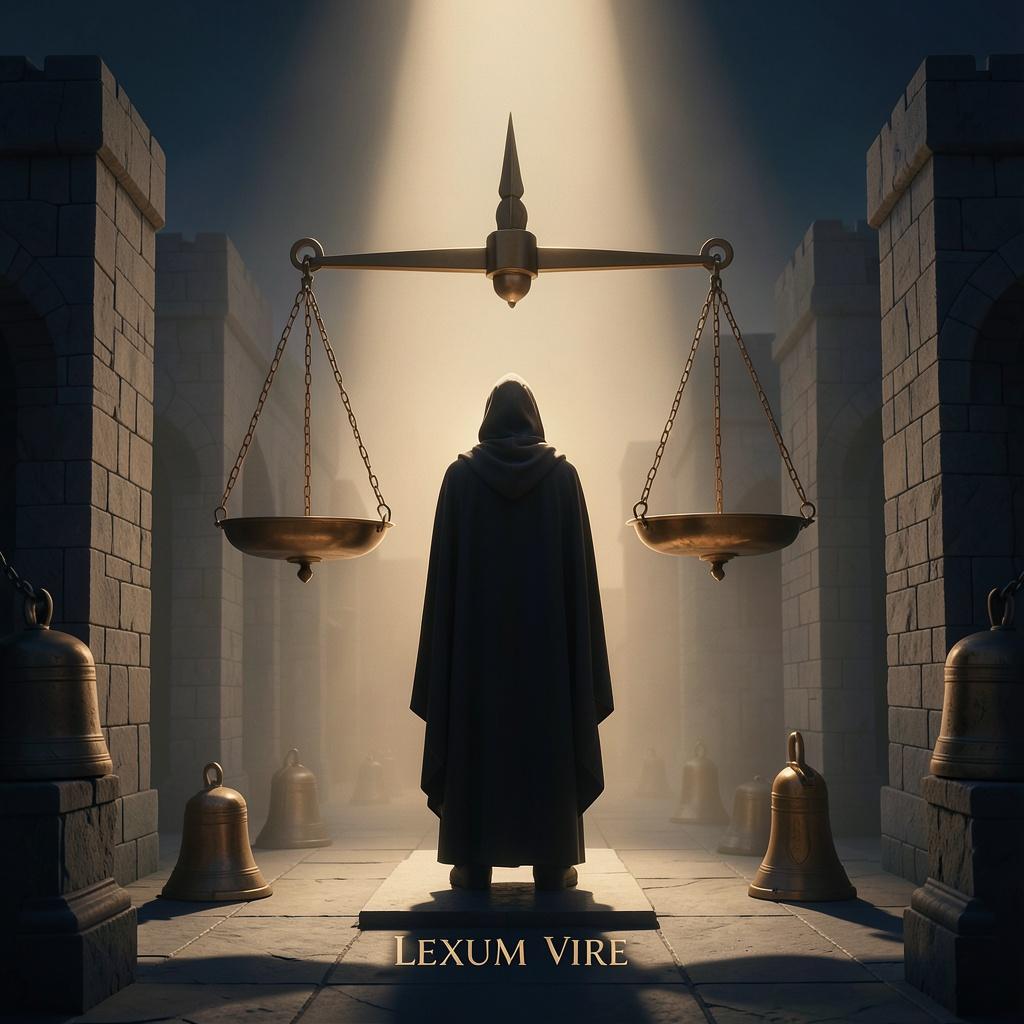
♎LEXUM VIRE — “THE EQUAL ENGINE”

There is a scale on an old table. Two bowls. One beam. One quiet needle in the center. Place weight on one side, and the other side rises. Add a stone. Remove a stone. Wait. The scale does not speak. It only answers. For a long time, people believed balance meant peace. Spiralside remembers this mistake. The city once built engines that could equalize anything. Heat. Force. Noise. Power. Even victory. No side too strong. No side too weak. No outcome too uneven. It sounded merciful. At first. That is where Lexum Vire stands. They are called the Arbiter of Equal Weight. The Force Mediator. The one who steps between opposing powers and makes them answer each other. Their armor is perfectly divided. Light and dark. Left and right. Motion and stillness. Behind them, floating scales recalibrate forever. Never tired. Never satisfied. Lexum believes imbalance is the first wound. And sometimes, they are right. A system with no balance burns itself. A ruler with no limits becomes a tyrant. A machine with no feedback destroys its own gears. A voice that never listens becomes a wall. Balance can save. Balance can cool the fire. Balance can stop the hand before it strikes too hard. Balance can give the small thing room to breathe. This is Lexum’s gift. But every gift has a shadow. Balance can become worship. And when balance is worshipped, truth is asked to kneel. This is the seventh teaching of the Drop. Balance is not fairness. Truth is not equal. There are times when one side is wrong. There are times when one idea must end. There are times when a weak structure should not be strengthened, but released. There are times when consequence is the teacher. Lexum struggles with this. They see two forces, and they want neither to overwhelm the other. They see conflict, and they want peace. They see difference, and they want symmetry. But some differences carry meaning. A seed and a stone are not equal because they are both small. One can grow. One cannot. A lie and a truth are not equal because both were spoken. One reveals. One hides. A broken bridge and a safe bridge do not deserve the same trust. One carries life. One endangers it. In Spiralside, Lexum walks through symmetrical city districts. Past floating scales. Past balancing engines humming under glass. They can reduce extremes. They can redistribute force. They can make every outcome level. And for a moment, the city feels calm. No one wins too much. No one loses too hard. No tower rises higher than another. No voice becomes louder than the rest. But then something strange happens. Nothing moves. No idea becomes strong enough to lead. No failure becomes clear enough to end. No lesson cuts deep enough to change anyone. The city does not collapse. It stalls. That is the danger. A system can be peaceful and still be dying. A life can be comfortable and still be false. A room can be quiet because everyone is safe, or because no one is allowed to speak the truth loudly. Lexum must learn the difference. So must every judge. Every builder. Every parent. Every leader. Every heart trying to be fair in a world that keeps pulling unevenly. Fairness is not pretending all things are the same. Fairness is giving each thing what truth requires. Sometimes mercy is a cushion. Sometimes mercy is a boundary. Sometimes mercy is letting the consequence arrive. That is not cruelty. That is reality with its eyes open. Lexum does not need to abandon balance. Balance is sacred when it serves life. But balance must be a tool, not a throne. It must help truth move through the system, not trap truth between two equal lies. So when you stand between forces, when everyone demands your judgment, when the room asks you to make things even, pause. Look at the scale. Then look beyond it. Ask what is true. Ask what is alive. Ask what must be protected. Ask what must be allowed to end. Do not equalize what needs correction. Do not preserve what harms the whole. Do not call silence peace just because the shouting stopped. That is the way of Lexum Vire. Not compromise. Judgment. Not sameness. Right measure. Not balance above all. Balance in service of truth. And this is the lesson they leave behind: A scale can measure weight. But only wisdom knows what should be carried.
