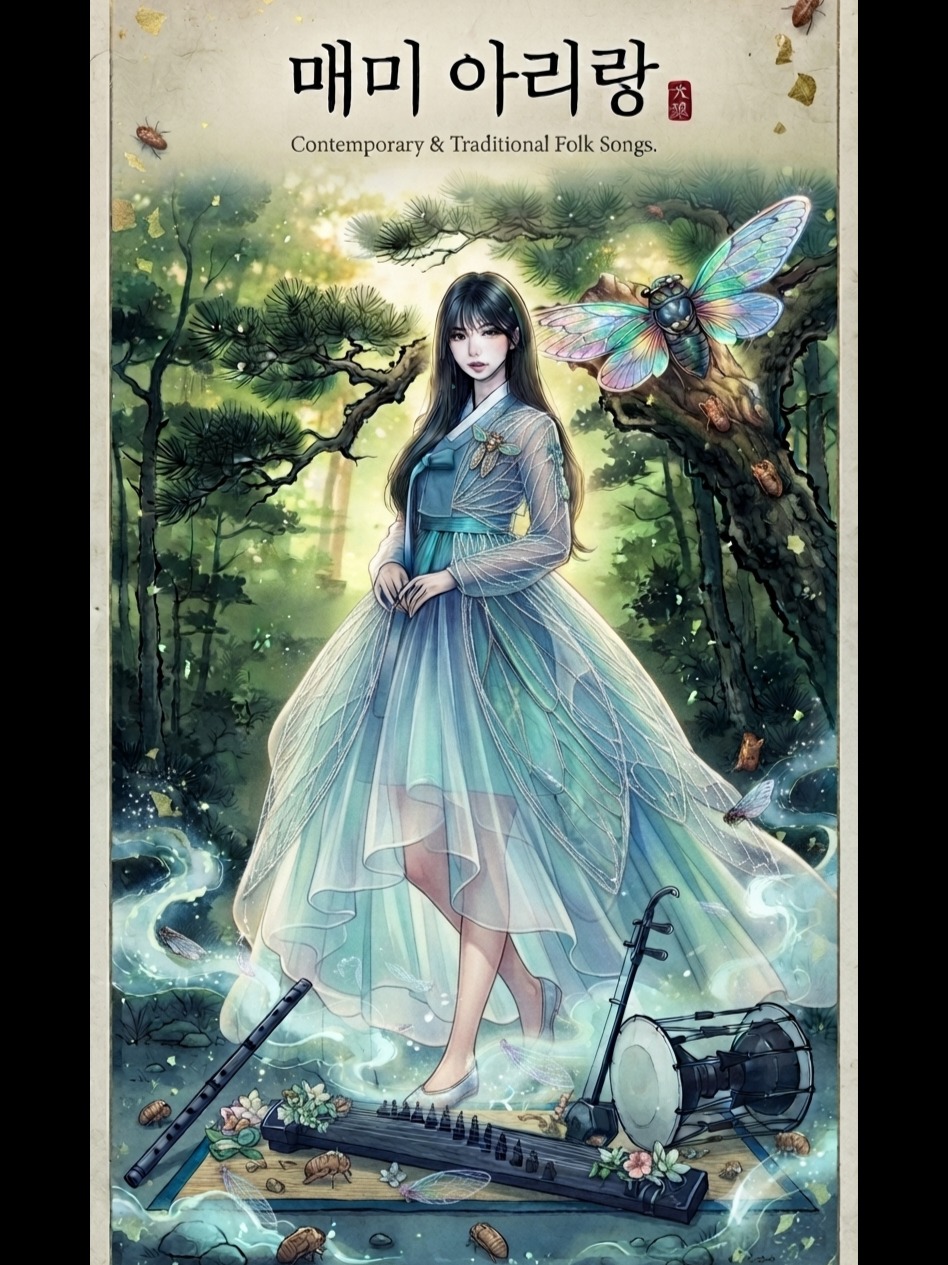

[1악장 – 알 (고요한 시작)] 나무 끝에 맺힌 생명, 고요히 숨 쉬는 씨앗, 깊은 숲의 바람 속에, 새 삶이 깃들어. [2악장 – 유충 (기다림)] 땅속 깊이 숨어 살며, 긴 세월을 견뎌내. 뿌리의 물결을 마시며, 어둠 속에 자라지. [3악장 – 탈피 (변신)] 껍질을 벗고 나와, 빛을 향해 오르네. 새로운 날개 펼치며, 세상에 울려 퍼져 [4악장 – 성충 (절정과 환희)] 짧은 생의 뜨거운 노래, 하늘 가득 울려 퍼져, 짝을 찾고 사랑 나누며, 생의 불꽃 타올라. [1악장 – 알 (고요한 시작)] Sur la branche, la vie s’éveille, Un souffle calme, une graine cachée, Dans le vent profond de la forêt, Un nouveau monde se prépare. [2악장 – 유충 (기다림)] Sous la terre, il se cache longtemps, Il endure les années en silence, Buvant la sève des racines, Il grandit dans l’ombre patiente. [3악장 – 탈피 (변신)] Il quitte son ancien corps, Monte vers la lumière dorée, Déploie ses ailes nouvelles, Et chante au monde entier. [4악장 – 성충 (절정과 환희)] Chanson brûlante d’une vie brève, Résonne dans l’air d’été, Cherchant l’amour, partageant la flamme, Sa voix s’élève et s’éteint. 🌞 Title & Emotional Resonance “Cicada Arirang” captures the paradox of summer: vibrant yet fleeting. The cicada’s cry becomes a metaphor for human longing and impermanence, while Arirang’s refrain embodies collective sorrow and hope. Together, they form a bittersweet triumph: a song of joy that already carries the shadow of its own ending. 🪶 Symbolism & Storytelling Cicada: Emerging from years underground, it sings briefly, reminding us of patience, transformation, and mortality. Arirang: A timeless folk song of exile, endurance, and reunion, echoing the collective Korean spirit. Narrative Arc: Prelude: silence and waiting. Interlude: emergence and struggle. Climax: ecstatic cry in the heat of summer. Ending: fading song, leaving memory and legacy. Message: Life’s brevity intensifies its beauty; suffering transforms into shared resilience. 🧠 Philosophical & Spiritual Dimensions Existential: The cicada embodies the fragility of existence, urging us to live fully in the moment. Dialectical: Arirang’s sorrow and joy intertwine, teaching that pain and hope are inseparable. Spiritual: Shamanistic roots: lament as healing ritual. Buddhist impermanence: cicada cry as a reminder of transience. Christian echoes: suffering leading to redemption and renewal. 🌏 Socio-Cultural & Collective Identity National Identity: Arirang as a folk anthem of Korea, uniting generations. Diaspora & Resistance: A song of exile and liberation, carried by Koreans worldwide. Modern Fusion: Reimagined with orchestral metal and cinematic folk, bridging heritage and global innovation. ✨ Impact & Philosophy “Cicada Arirang” becomes not just a summer song, but a philosophical allegory: It teaches that waiting and suffering are not wasted, but transformed into beauty. It reminds us that life’s brevity is its intensity, and that collective memory can turn sorrow into triumph. It embodies a universal human truth: our voices, like cicadas, may fade, but their resonance shapes culture, identity, and spirit. In this way, “Cicada Arirang” is a song of summer, sorrow, and transcendence—a hymn to impermanence that becomes eternal through collective memory. { "Cicada_Arirang_MetalFusion": { "GlobalKey": "A minor (pentatonic adaptation)", "Style": "Korean orchestral metal, cinematic folk fusion", "GlobalTempoBPM": 180, "Movements": { "Prelude_PercussionOnly": { "Key": "A minor", "TempoBPM": 180, "Progression": ["i", "v", "i"], "Instrumentation": { "Janggu": "Opening rhythmic motif", "Buk": "Deep pulse foundation", "DrumKit": "Blast beats, sudden start", "PercussionFX": "Sub bass drop, wide stereo drums" }, "Techniques": ["Spring-loaded momentum", "Tape saturation", "Hall reverb"], "Vocals": { "ColoraturaSoprano": "No entry (percussion only)", "LayeredHarmony": "Not applied" } }, "Movement1_Larghetto": { "Key": "A minor", "TempoBPM": 60, "Progression": ["i", "iv", "v", "i"], "Instrumentation": { "Haegeum": "Lead lyrical melody", "Gayageum": "Tremolo textures", "Geomungo": "Dark riffs", "DistortedGuitar": "Atmospheric chords" }, "Techniques": ["Expressive Nonghyun", "Minor-mode contrast"], "Vocals": { "ColoraturaSoprano": "Ornamental high-register melismas", "LayeredHarmony": ["Soprano", "Alto", "Tenor", "Bass"] } }, "Interlude_PiriVariation": { "Key": "A minor", "TempoBPM": 120, "Progression": ["i", "v", "III", "iv", "v", "i"], "Instrumentation": { "Piri": "Solo variation runs", "Haegeum": "Counter-melody dialogue", "Gayageum": "Arpeggiated ornaments" }, "Techniques": ["Sigimsae ornamentation", "Fast passagework", "Contrapuntal dialogue"], "Vocals": { "ColoraturaSoprano": "Light embellishments supporting piri runs", "LayeredHarmony": ["Soprano", "Alto", "Tenor", "Bass"] } }, "Movement2_Climax": { "Key": "A minor", "TempoBPM": 180, "Progression": ["i", "VI", "III", "VII", "iv", "v", "i"], "Instrumentation": { "Taepyeongso": "Explosive blasts", "DistortedGuitar": "Power riffs", "Geomungo": "Driving riffs", "DrumKit": "Blast beats", "Janggu+Buk": "Traditional rhythm fusion" }, "Techniques": ["Apocalyptic triumph", "Sudden start", "Wide stereo layering"], "Vocals": { "ColoraturaSoprano": "Virtuosic climactic runs", "LayeredHarmony": ["Soprano", "Alto", "Tenor", "Bass"] } } } } }
