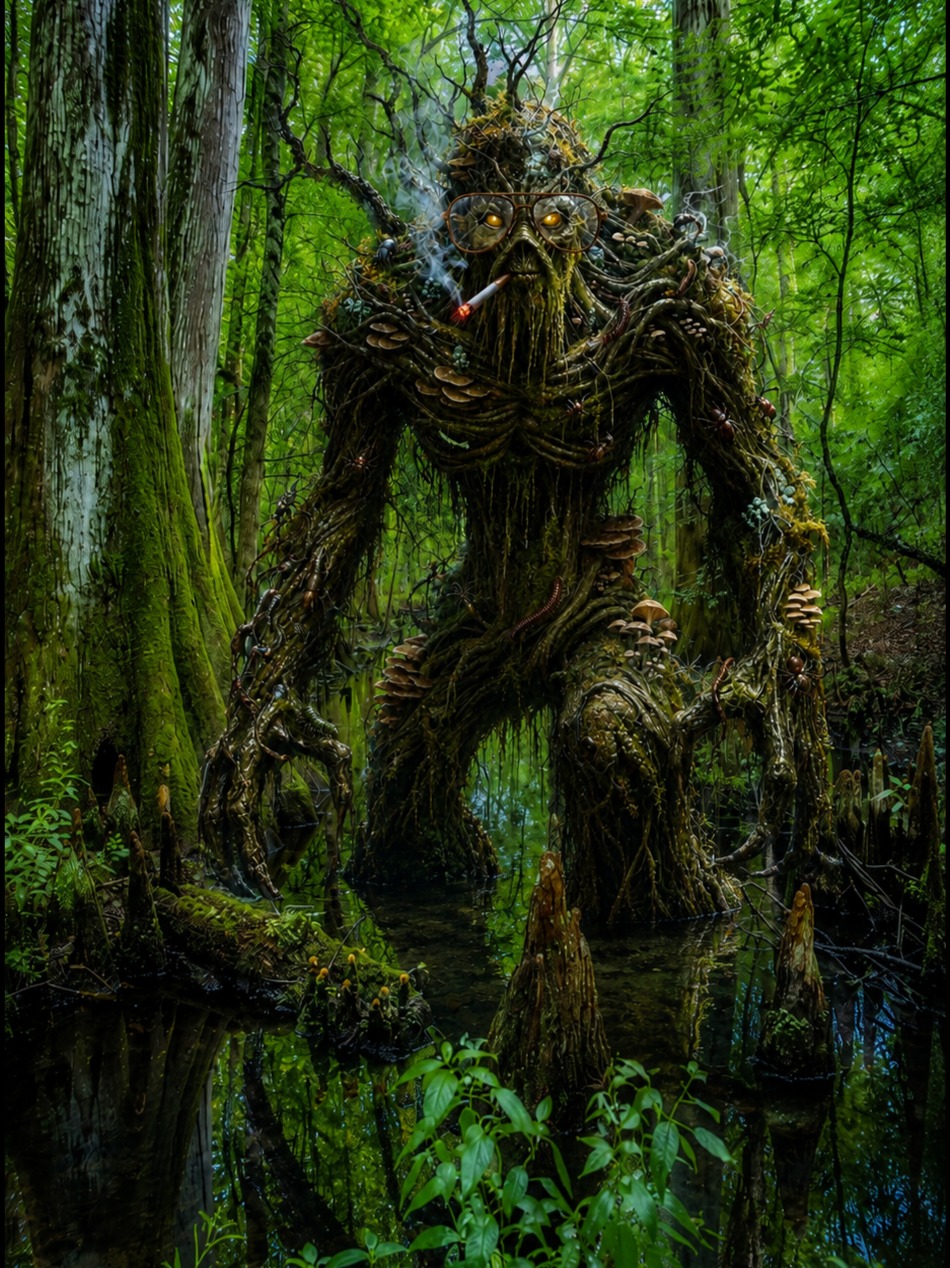
Congaree Swamp: A Lesson on the Last Old-Growth Bottomland Hardwood Forest
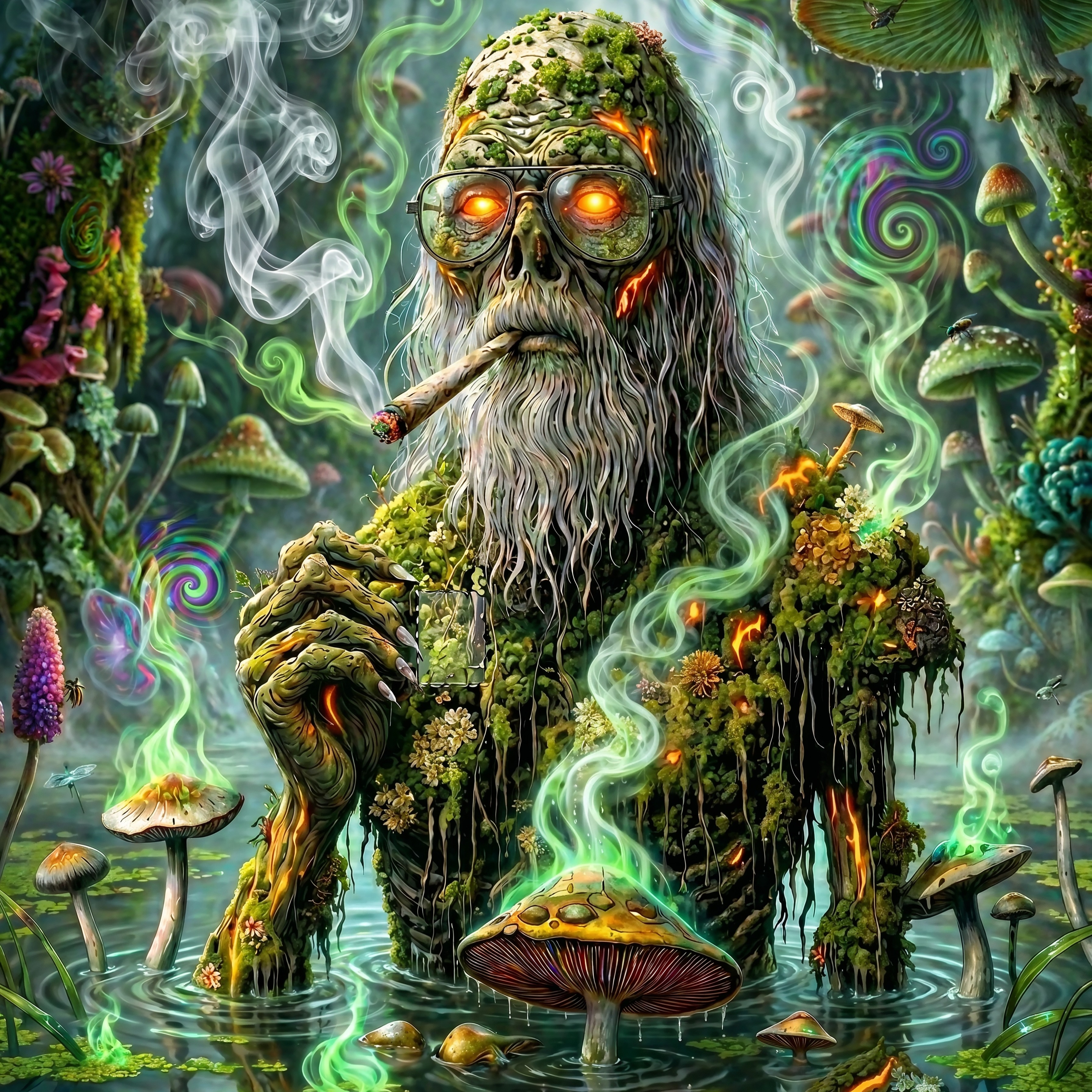
Congaree Swamp: The Last Living Cathedral of America’s Bottomland Forests. Congaree National Park is not merely a swamp, a wet forest, or a scenic Southern wilderness. It is one of the rarest ecological survivors in North America: the largest remaining intact expanse of old-growth bottomland hardwood forest in the United States. To call it “beautiful” is accurate but insufficient. Congaree is not just scenery. It is a living archive of what the southeastern floodplain world once was before logging, agriculture, urban expansion, river engineering, and centuries of land conversion shattered most of that original landscape into fragments. What makes Congaree extraordinary is not one single feature, but the convergence of many rare features in one place. It is old-growth forest, floodplain, wetland, blackwater maze, biological refuge, champion-tree sanctuary, cultural landscape, and hydrological machine all at once. Many places contain cypress trees. Many places flood. Many places are green, humid, tangled, and ancient-feeling. But Congaree is not a generic “swamp aesthetic.” It is a specific ecological fingerprint: a Southern bottomland hardwood forest shaped by the Congaree and Wateree Rivers, built by repeated flooding, nourished by fresh sediment, and preserved at a scale that almost nowhere else in the country can match. This distinction matters. Congaree is often called “Congaree Swamp,” but that name can be misleading if it makes people imagine a simple stagnant marsh. Congaree is far more dynamic. It is a floodplain forest, meaning it is periodically overtaken by river water. The floodwaters do not merely cover the land; they remake it. They spread nutrients, recharge wetlands, shape sloughs and oxbow lakes, feed slow creeks, saturate soils, and determine which trees can survive where. In Congaree, water is not background. Water is architect, undertaker, farmer, and ghost. That flood-driven process creates a terrain that is deceptively complex. The land may appear flat, but it is not simple. Small changes in elevation create dramatic differences in habitat. A slight rise may support giant oaks, sweetgum, or loblolly pine; a lower pocket may hold bald cypress, water tupelo, knees, standing water, amphibians, and fish habitat. Ridges, natural levees, sloughs, oxbow lakes, rim swamps, creeks, and saturated forest floors interlock into a landscape that feels less like a park and more like a breathing organism. Congaree’s old-growth character is central to its identity. Old-growth bottomland hardwood forests once covered tens of millions of acres across the southeastern United States. Most were cleared, drained, logged, or converted. Congaree survived because parts of it were difficult to reach and exploit. That accident of inaccessibility became a miracle of preservation. The result is a forest that still carries the vertical drama, age structure, canopy complexity, and ecological weirdness of a world largely erased elsewhere. [Spoken Word] The park’s trees are not just old; they are monumental. Congaree is known for national and state champion trees. Individual trees recognized for exceptional size. The forest includes nearly ninety native tree species, and its canopy is among the great temperate de-siid-yew-us canopies of the world. These are not decorative trees placed around a trail. They are skyscrapers of floodplain life: bald cypress, water tupelo, cherrybark oak, sweetgum, loblolly pine, swamp chestnut oak, American elm, and others rising from mud, water, leaf litter, and sediment like a drowned cathedral refusing to die. This is where Congaree becomes impossible to mistake for imitation. A copy can reproduce the look of Spanish moss, cypress knees, boardwalk planks, muddy water, and green filtered light. It can fake the costume. It cannot fake the origin story. Congaree’s identity is written into its hydrology, soils, tree ages, species assemblages, flood cycles, and historical survival. It is not “like” a swamp in a fantasy illustration. It is the preserved remnant of an ecosystem that once dominated the Southeast and now persists at full force in only scattered pieces. Congaree is not borrowing atmosphere from somewhere else. It is the source material. The forest also refuses easy comparison because it is both intimate and immense. Western parks often announce themselves with mountains, cliffs, geysers, and panoramic spectacle. Congaree does not perform that way. Its power is immersive. It surrounds rather than towers from a distance. The visitor does not stand before a single monument; the visitor enters a system. The spectacle is vertical, humid, shadowed, and alive: insects humming, frogs calling, barred owls sounding from the canopy, blackwater sliding under fallen trees, fungi working through rot, fireflies pulsing in season, roots gripping mud like knuckles. Its uniqueness is also cultural. Congaree is not wilderness in the false sense of a place untouched by humans. People have lived with, traveled through, altered, used, and defended this landscape for thousands of years. [Spoken Word] ...The park’s significance includes Indigenous presence, African American history, cattle mounds, transportation routes, logging history, maroonage, Reconstruction-era connections, and the modern conservation struggle that saved the forest from destruction. This layered human history does not weaken Congaree’s wildness; it deepens it. The swamp is not empty. It remembers. That is why Congaree National Park deserves the phrase “last of its kind.” Not because there are no other floodplain forests, not because no other place has cypress trees, and not because every acre is untouched. It is “last of its kind” because it protects the largest remaining intact old-growth expression of a once-vast American ecosystem. It is a surviving body, not a museum replica. It is not a theme-park swamp, not a borrowed bayou, not a Southern gothic backdrop assembled from clichés. It is Congaree: river-fed, sediment-built, flood-shaped, champion-tree crowned, biodiversity-dense, historically charged, and unmistakably itself. To imitate Congaree would be like imitating a thunderstorm by painting lightning on a wall. You might capture the outline, but not the voltage. Congaree’s power comes from process, scale, age, rarity, and survival. It is a place where the old Southeast still speaks in water, wood, mud, moss, rot, birdsong, and towering green shadow. There may be other swamps. There may be other forests. There is no other Congaree... [Spoken Word conclusive outro] So in conclusion, y'all see, let there be.... No confusion...I dispel the illusion... Factually, in actuality, there is no greater source of.... Originality....than this 'ere.....good ole.... Swampy Congaree! (Home to me...) Know your limitations, don't make false accusations, The consensus is clear (they all heard whatcha said! and they all agree), if you don't respect what I'm sayin here, (if you keep disrespectin me), while demanding respect for your own gimmick, lemme tell ya there ain't no limit, no mud to which I won't descend, to put a decisive end, to that which you chose to begin. If you come to Pondscum, and attack! (gonna getchu some!) Just. Like. Artax....
