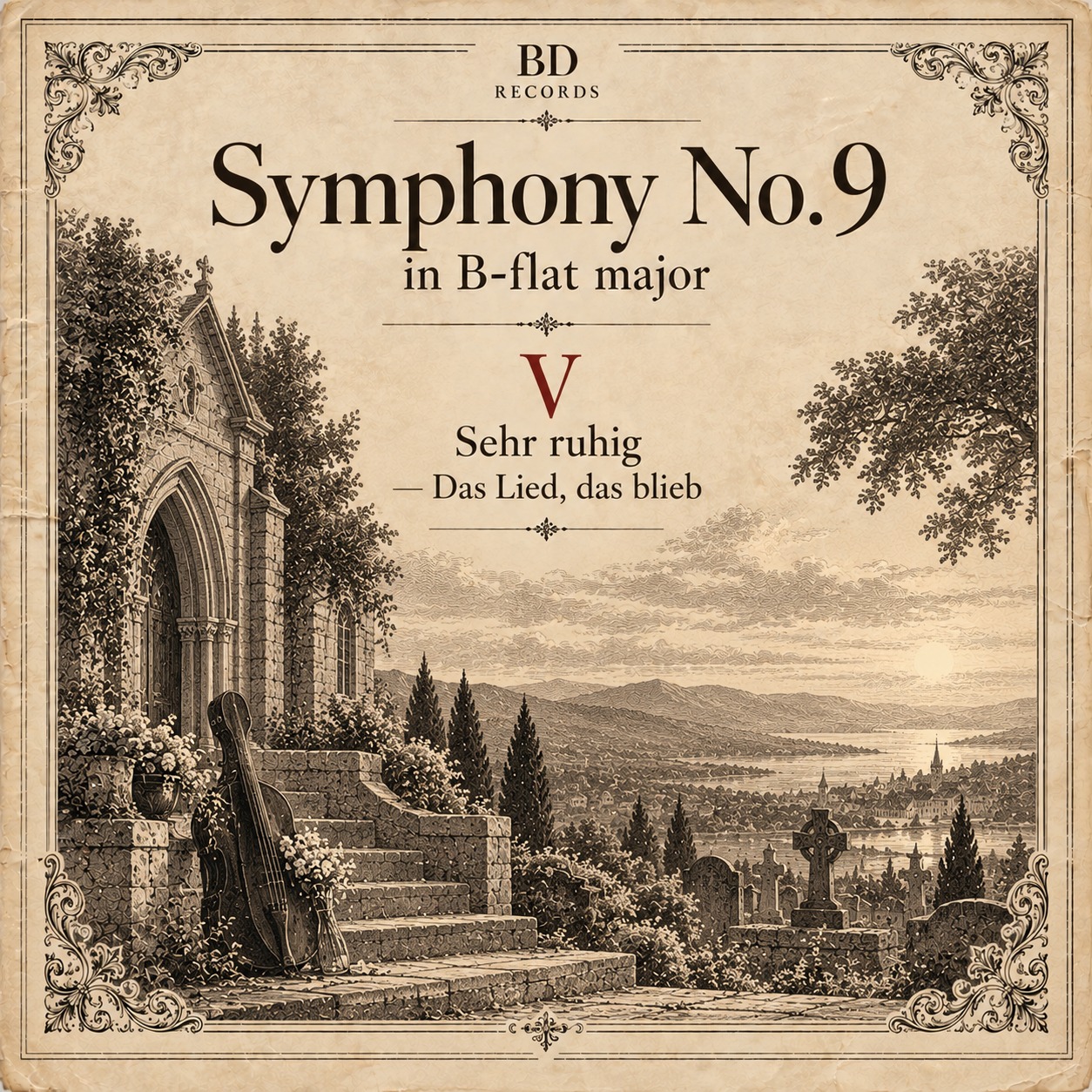

ALL Movements Playlist here! ↓↓↓ https://suno.com/playlist/f42b8aad-4af3-492c-bbba-175dc5af0205 ーーーーーーーーーーーーーーーーーーーーー Movement V: Sehr ruhig — Das Lied, das blieb (The Song That Remained) The fifth movement brings Symphony No. 9 to a quiet conclusion through a song written for alto solo and orchestra. While the fourth movement reaches the symphony’s outward climax through its polka rhythm and brilliant orchestral writing, the fifth abandons that brilliance entirely and turns toward the memory of a single person. What remains at the end of the symphony is neither a grand theme nor a dramatic victory, but a song once sung for someone and the memories connected to it. Following a quiet orchestral introduction, the alto solo enters gently. The text recalls ordinary moments spent with someone: sitting together, exchanging few words, and simply sharing the same time. The orchestra remains close to the voice, serving primarily to surround and support the memory being told. The story then moves to one particular evening when only three people remained. Gathering the courage to do so, the narrator sang a small song. The listener remained silent and then said that the song should be preserved. This moment becomes the emotional center of the movement, transforming an ordinary recollection into a specific memory embodied by music itself. Later, when the narrator returns to the same place, that person is no longer there. A disciple who remained behind reveals that the song had been played repeatedly during the farewell. At this point, the meaning of the title Das Lied, das blieb becomes clear. Even after leaving the hands of its creator, the song remained with that person and accompanied their memory until the end. In its latter half, the music moves beyond grief toward the meaning of remembrance itself. Looking back on the night when the song was sung, the narrator realizes that not everything had been left unsaid. What could not be expressed directly in words had already been carried by the music. The story then turns toward inheritance. The disciple who once stood beside that person quietly carries forward what was left behind. Although the person is gone, their work, memories, and music continue to live within someone else. Near the end, the soloist sings that closing her eyes can briefly bring back the scene of those earlier days. What remains is not simply the pain of loss, but gratitude: gratitude for having sung that song, and gratitude that it was heard. For the first time in a symphony that has until now been entirely instrumental, the human voice appears in the final movement. It is not introduced to create another monumental climax, but to give words to a personal memory that the orchestra alone could not express. If the fourth movement represents the brilliant outward face of Symphony No. 9, the fifth reveals its inner world. The symphony ultimately ends without conquest or overwhelming tragedy. Instead, it arrives at something far smaller and more human: a single song passed from one person to another. Das Lied, das blieb — “The Song That Remained.” The title itself becomes the final word of the symphony. ーーーーーーーーーーーーーーーーーーーーーーー 第5楽章:Sehr ruhig — 《Das Lied, das blieb(残された歌)》 第5楽章は、女性アルト独唱と管弦楽のために書かれた歌曲によって、交響曲第9番を静かに締めくくる終楽章である。 第4楽章がポルカのリズムと鮮やかな管弦楽によって作品の外面的な頂点を築いたのに対し、第5楽章ではその華やかさを完全に手放し、一人の人間の記憶へと視点を移す。交響曲の最後に残されるのは壮大な主題でも劇的な勝利でもなく、かつて誰かのために歌った一曲の歌と、その歌に結びついた記憶である。 管弦楽による静かな序奏に続き、アルト独唱が穏やかに現れる。歌われるのは、ある人物と過ごした何気ない時間の回想である。椅子に座り、ほとんど言葉を交わすこともなく、ただ同じ時間を過ごしていた日々。音楽もその情景に寄り添うように、声を包み込む役割に徹している。 やがて物語は、三人だけになったある夜へ進む。語り手は勇気を出して小さな歌を歌い、その人物は黙って耳を傾け、「この歌を残しておきたい」と告げる。この出来事が楽章全体の中心となり、単なる追憶だった音楽に「歌」という具体的な記憶が与えられる。 しかし次の場面で、語り手が再びその場所を訪れたとき、その人物はすでにいない。残された弟子から、自分がかつて歌った曲が別れの場で繰り返し流されていたことを知らされる。ここで「残された歌」という題名の意味が明らかになる。歌は作った本人の手を離れたあとも、その人の記憶の中に残り、最後まで寄り添っていたのである。 後半では悲しみだけを強調するのではなく、記憶の意味そのものへと音楽が向かう。語り手は、あの夜に勇気を出して歌ったことを振り返り、「すべてが言葉にならなかったわけではない」と気づく。直接伝えられなかった思いを、歌が代わりに届けていたのである。 そして物語は「継承」へ進む。かつて傍らにいた弟子が、その人の残したものを静かに受け継いでいく。人そのものはいなくなっても、仕事、記憶、そして音楽は別の人間の中に残り続ける。 終結部で独唱は、再び目を閉じれば一瞬だけ昔の光景が戻ってくると歌う。そして最後に残されるのは、喪失そのものではなく、「あのときあなたのために歌えてよかった」「私の歌を聴いてくれてよかった」という感謝である。 それまで純器楽によって進んできた交響曲に、最後の楽章で初めて人間の声が加わる。その声は新たな巨大なクライマックスを築くためではなく、これまで管弦楽だけでは語られなかった個人的な記憶を言葉にするために置かれている。 第4楽章が第9番の華やかな「表の顔」であるなら、この第5楽章はその「内面」にあたる。 そして交響曲第9番は、最後に何かを征服することも、巨大な悲劇を描くこともなく、一曲の歌が一人の人間から別の人間へ残されたという、小さな出来事へと帰着する。 《Das Lied, das blieb》――「残された歌」。 その題名そのものが、この交響曲の最後の言葉となる。 ーーーーーーーーーーーーーーーーーーーーーー [Orchestral Introduction] (Sehr ruhig) [Voice I] Wie oft saß ich auf diesem Stuhl, und zwischen uns war kaum ein Wort. Du tatest still dein gutes Werk, ich schloss die Augen, blieb bei dir. Wir mussten niemals vieles sagen. Die Stille war uns längst vertraut. Wer ahnt in solchen stillen Stunden, wie kostbar einst Erinnerung wird? [Orchestral Interlude] [Voice II] An einem Abend waren wir zu dritt im stillen Raum allein. Da fasste ich endlich meinen Mut und sang für dich mein kleines Lied. Du hörtest schweigend zu und lächeltest verlegen. Dein Schüler stand ein wenig fern und hörte lächelnd mit. Du sprachst: „Dies Lied möcht’ ich behalten.“ So ließ ich es bei dir zurück. [Orchestral Transition] (Dunkler) [Voice III] Als ich eines Tages wiederkam, war alles da — nur du nicht mehr. Dein Schüler trat zu mir und sprach, und lange fand ich keine Worte. Mein Lied, so sagte er, war bei dir, als man von dir Abschied nahm. Es kehrte immer wieder zurück, weil du es gern gehört hattest. [Orchestral Expansion] (Etwas bewegter) [Voice IV] Da sah ich jenen Abend wieder: dein stilles, scheues Lächeln, den Schüler dort an deiner Seite, und mich, wie ich für dich einst sang. Wie gut, dass ich den Mut gefunden. Wie gut, dass ich für dich gesungen. Nicht alles blieb unausgesprochen. Mein Lied hatte dich erreicht. [Final Voice] (Wieder sehr ruhig) Nun steht dein Schüler dort und trägt behutsam weiter, was du zurückgelassen hast. Die Tür bleibt offen. Das Licht bleibt an. Und wenn ich wieder die Augen schließe, ist für einen Augenblick alles wie zuvor. Ich bin froh, dass ich damals für dich sang. Ich bin froh, dass du mein Lied gehört hast. [Orchestral Epilogue] ーーーーーーーーーーーーーーーーーーーーーー [ 日本語訳 ] 【オーケストラ序奏】 (非常に静かに) 【第1歌唱部】 何度この椅子に座っただろう 私たちの間に 言葉はほとんどなかった あなたは静かに いつもの仕事をして 私は目を閉じて あなたに身を委ねていた たくさん話す必要なんてなかった 沈黙は もうずっと私たちに馴染んでいた そんな静かな時間が いつかどれほど大切な思い出になるのか 誰が知っていただろう 【オーケストラ間奏】 【第2歌唱部】 ある日の夕方 静かな店には 私たち三人だけがいた そこで私は ようやく勇気を出して あなたのために 私の小さな歌を歌った あなたは黙って聴いて 少し照れくさそうに微笑んだ 弟子は少し離れたところに立って 微笑みながら聴いていた あなたは言った 「この歌を残しておきたい」と だから私は その歌をあなたのもとに残した 【オーケストラ経過部】 (暗く) 【第3歌唱部】 ある日 私が再び訪れると すべてはそこにあった ただ あなたの姿だけがなかった 弟子が私のもとへ来て 話してくれた 私は長い間 言葉を見つけられなかった 私の歌は あなたのそばにあったという みんながあなたに別れを告げた そのときも その歌は 何度も繰り返し流された あなたが あの歌を気に入ってくれていたから 【オーケストラ展開部】 (少し動きをもって) 【第4歌唱部】 そのとき私は あの夕方を思い出した あなたの静かな 照れくさそうな微笑み あなたのそばにいた弟子 そして あなたのために歌っていた私自身を あのとき 勇気を出して本当によかった あなたのために歌って 本当によかった すべてが 言えないまま残ったわけじゃなかった 私の歌は あなたに届いていた 【最後の歌唱部】 (再び非常に静かに) 今は あなたの弟子がそこに立ち あなたが残したものを 大切に受け継いでいる 扉は開いている 灯りは今もついている そして私が もう一度目を閉じれば ほんの一瞬だけ すべてがあの頃のままに戻る 私はうれしい あのとき あなたのために歌えたことが 私はうれしい あなたが私の歌を聴いてくれたことが

0/500