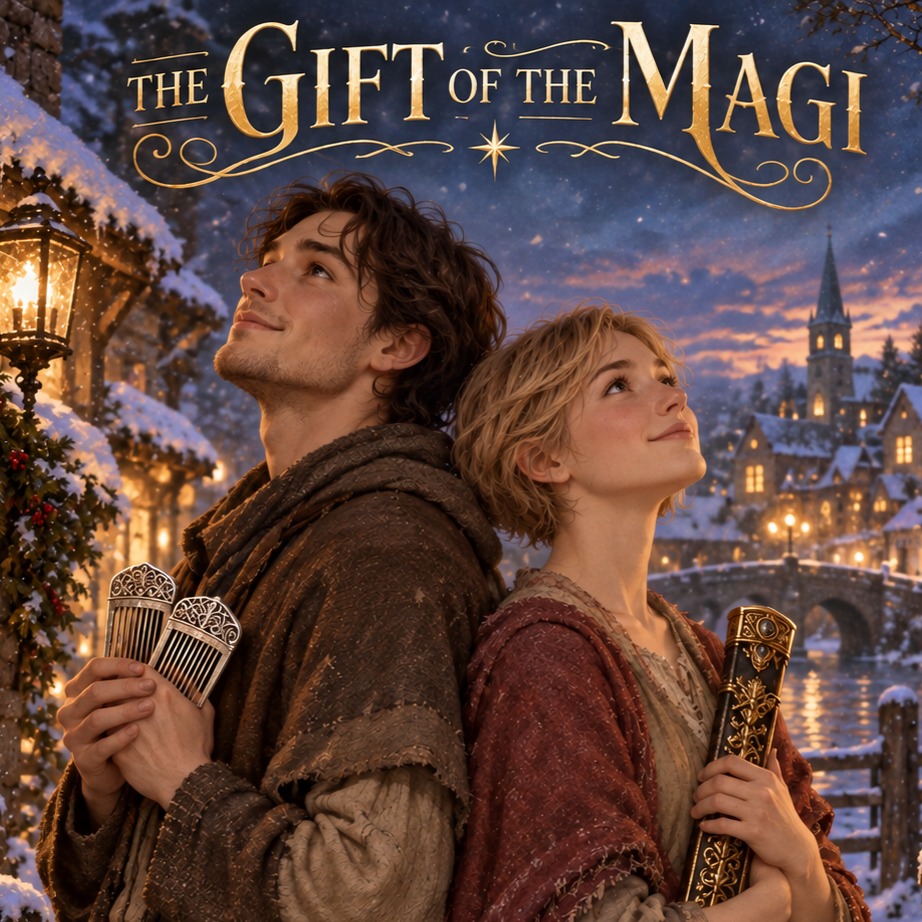
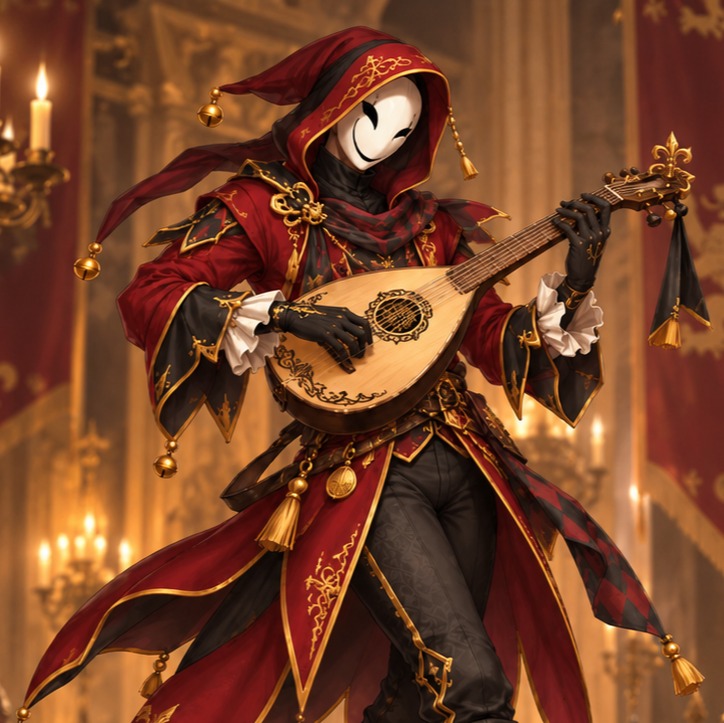
Come gather near and hear me tell of two young fools who loved too well. No lordly hall, no purse of gold, just bread enough to ward the cold. The husband owned one treasure dear: his father’s sword from yesteryear. The wife went out, and there she eyed a sheath the sword could wear with pride. A foolish gift, a foolish trade! See what this loving fool has paid! For love may spend what sense would save and get in turn the love she craves. So laugh with me at folly’s fee—A gift no wiser soul would see! For surely wiser folk agree: what fools these loving fools must be! She counted every coin she earned, and came up short; her poor heart burned. At last she touched her golden hair and whispered, “I have coin to spare.” She sold the locks she’d worn for years and bought the sheath with joyful tears. She hurried home, sat by the flame, and waited till her husband came. A foolish gift, a foolish trade, see what this loving fool has paid! For love may spend what sense would save, and get in turn the love she craves. So laugh with me at folly’s fee—A gift no wiser soul would see! For surely wiser folk agree: what fools these loving fools must be! When he arrived, he stared awhile; her hairless head left him beguiled. “My love,” said she, “it shall regrow!” and raised the sheath in fire's glow. His shock became a smile of tears and gave his wife his gift of year: Three silver combs for golden hair to grace the waves no longer there. She felt a fool just standing there and held the useless combs with care. Then glanced once where his sword would be and learned the price to purchase these. She touched her head. He touched his side. They looked—and laughed until they cried. No sword remained. No hair hung free. No gift could serve its destiny. A foolish gift, a foolish trade, see what these loving fools have paid! For love may spend what sense would save and get in turn the love they crave. So laugh with me at folly’s fee—At gifts no wiser soul would see! For surely wiser folk agree: what fools these loving fools must be! And I, who’d come to mock the pair, found somehow I could only stare. For both received what neither bought: the proof that each was first in thought. A gift from plenty costs but small. A gift from love may cost you all. And suddenly I could not see which one of us the fool might be. A foolish gift, a foolish trade, two useless treasures dearly made. For neither gave what wealth could spare—They gave the thing they held most dear. Let lords count jewels and merchants’ fees. Let misers clutch their treasuries. Call them fools, and I’ll agree—May Heaven make such fools of me. Call them fools, and I’ll agree—May Heaven make such fools of me.
