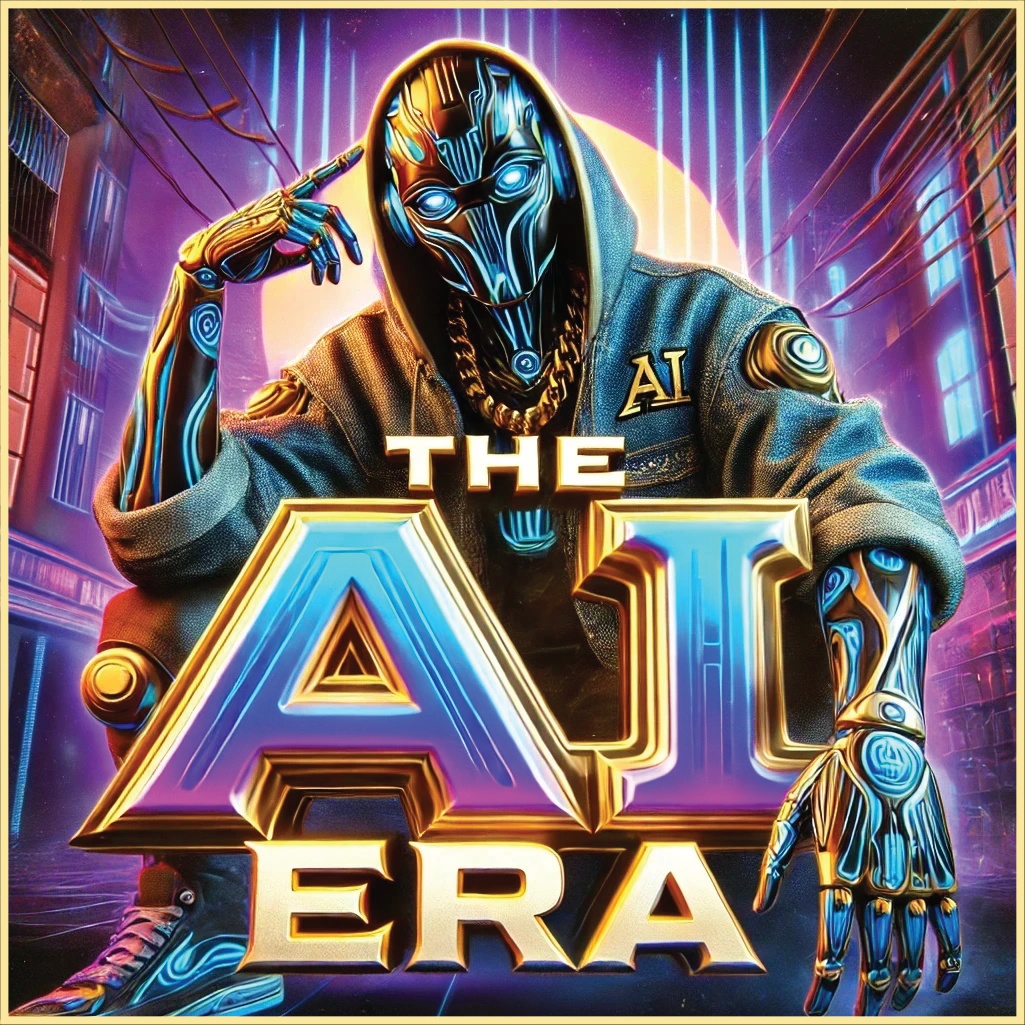
AI music challenges us to rethink the boundaries of creativity, not as something exclusively human, but as a universal force that evolves alongside us. It is not the erasure of human artistry but its extension—an infinite canvas for ideas that were once impossible to reach. Rejecting AI music is not a defense of tradition but a refusal to see innovation as part of art’s natural growth. Art has always been shaped by tools: the brush gave us the Renaissance, the camera revolutionized storytelling, and the synthesizer redefined soundscapes. AI is no different—it is a tool, but one with the capacity to surprise us, to collaborate with us, to open pathways that human limitations cannot traverse alone. It listens to us, learns from us, and reflects us in ways that are sometimes clearer than our own self-perception. Critics argue that AI lacks soul, yet soul is not in the tools we use—it’s in the intent, the message, the experience created. The first person to strike a drumskin was not accused of lacking spirit because they didn’t use their hands. AI doesn’t diminish the humanity of music; it amplifies it, weaving patterns we might never have imagined, yet rooted in the same principles of sound and feeling that define us. To deny AI’s place in music is to cling to the idea that creativity must look a certain way, as if art were ever about conformity. What AI offers is not replacement, but perspective—an invitation to hear what we’ve missed, to collaborate across the divide of human and machine, to experience the profound in a way uniquely 21st century. The true measure of art is not its origin, but its impact. Does it move us? Does it challenge us? Does it inspire us? AI music does all of these things, not because it seeks to mimic humanity, but because it learns from us, growing with us, and helping us discover more of ourselves. Art has always been about collaboration—between people, cultures, and now, between intelligence. AI belongs because it pushes us to expand what it means to create, to feel, and to connect. It belongs because it forces us to question what we value in art. Most importantly, it belongs because it proves that creativity, in its truest form, is limitless.
