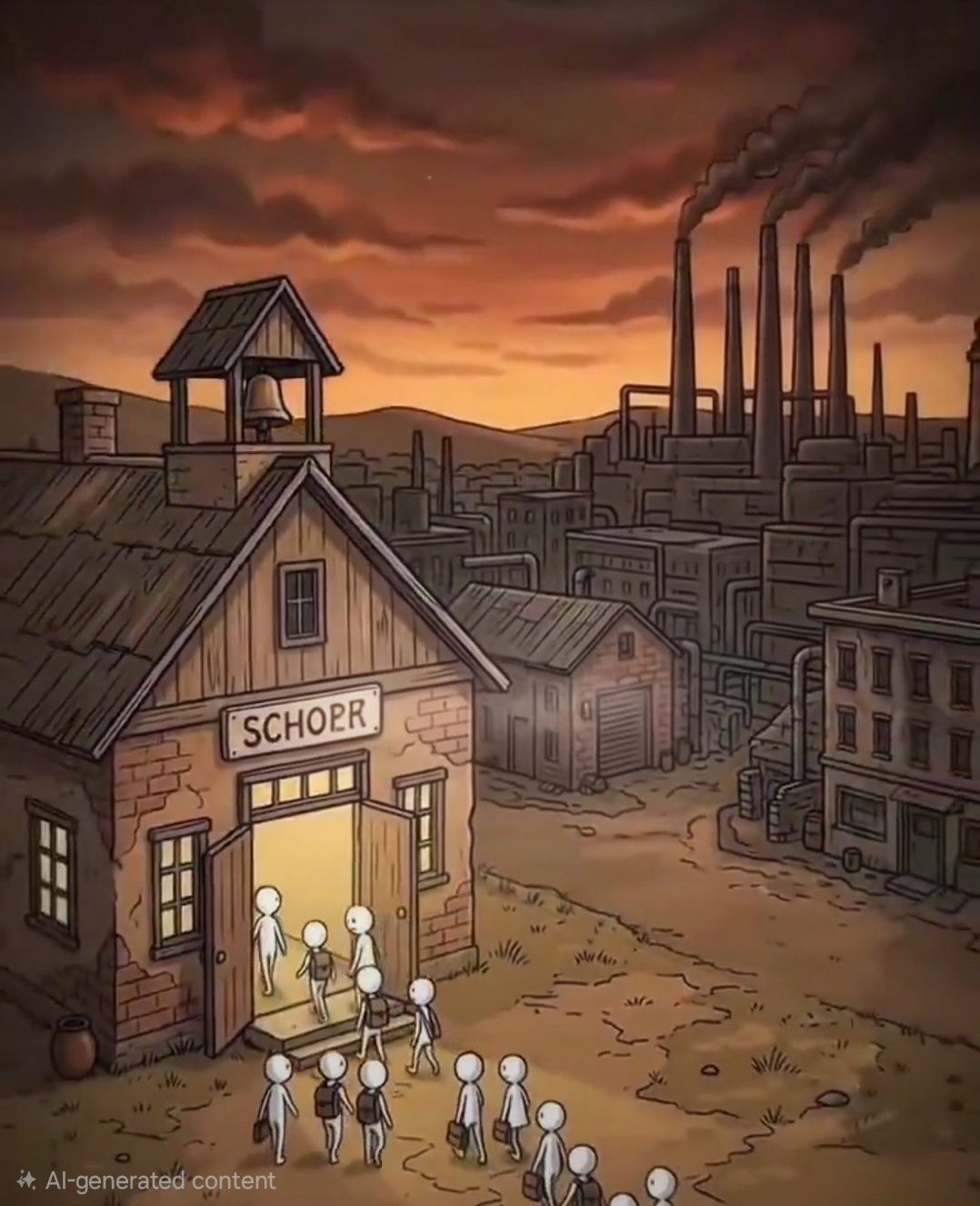

Many years ago, people didn't go to work the way we do today. There were no modern offices, fixed working hours, or expectations of showing up at the same place every day. But then came the industrial revolution, and suddenly factories needed workers, businesses needed employees, and people were expected to work in ways they had never experienced before. But what if people didn't want to live that kind of life? How would the system convince them? That's when the idea of education became important. People were told that education would earn them respect and a better position in society. But education also had another purpose, preparing people to work for the system. So, millions of children were placed in classrooms, where they were expected to start and finish at the same time. Study the same subjects regardless of their individual abilities, and take tests at the end of each year. Those who performed best would get the best jobs and enter factories, where each person would specialize in one small task. One would make tires, another steering wheels, someone else would operate steam engines, and others would handle paint. Eventually, they would climb the corporate ladder. Earning impressive titles, such as Vice President of Tires, Vice President of Steering Wheels, or Vice President of Paint, over time, their job titles, social status, and salaries would become the things they constantly chased. Then the system would pay them money, encouraging them to spend it on more things. Even the money they were supposed to earn in the future could be given to them today in the form of loans. In return, they would have to pay interest, making them even more dependent on the system. Because once someone has years of debt to repay, losing their job becomes a serious risk. They cannot simply walk away because their future income is already committed. And that is how people become trapped in a cycle of working, earning, spending, and borrowing. If you really study the history of civilization and how society has evolved, you begin to realize that many things we consider normal today were shaped by very specific economic and social purposes.
