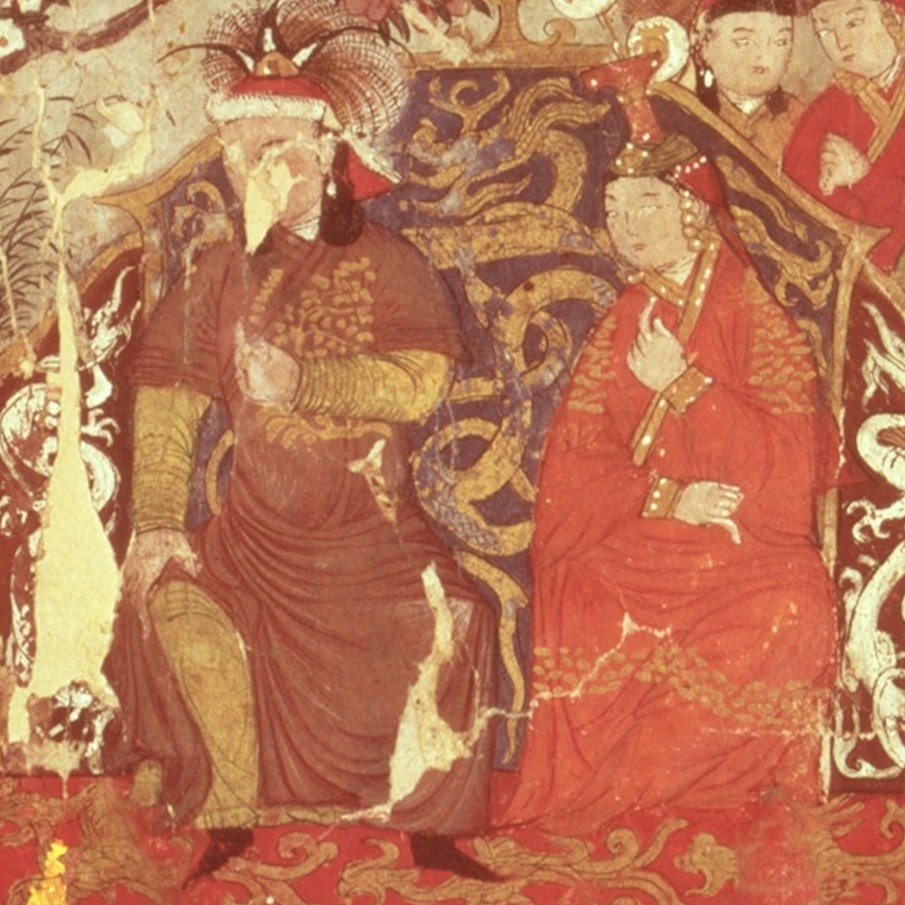
The histories say what he saw on the day young Temujin came to the place he would first meet the bride who would be by his side when he rose to the rule of his race. Although the scribes fail to give any detail of her hair or her form or her grace, word for word they retell what he said he beheld: “Bright eyes, and a shining face.” Bortai was her name, and her new husband’s fame would be warrior and leader and lord, remembered since then as the master of men – Chinggis-Khan of the great Mongol Horde; it’s never forgot that the sons he begot would rule kingdoms he conquered by sword; but the tale isn’t whole if you leave out his rôle as the husband of one he adored. This woman so dear, early in his career, was seized by an enemy sly; and the rescue was wild, but she came back with child, and in Temujin’s arms she did cry. But the baby he bless’t with a name that means “guest” – this boy, of dark hair and dark eye, he raised as his son, because Jöchi was one of the children of bright-eyed Bortai. The strength of his bands swept across all the lands with a force like the wind and the tide. After decades of strife, at the end of his life he called all his sons to his side. On the order he spoke, one arrow each broke; then a bundle of arrows they tried to break, all for naught. This last lesson he taught: “Stay together!” ... Then Temujin died. The strong sons Bortai bore him, through history roar like the thundering storms none can flee; yet they kept and obeyed all the laws that he made, as the duty they owed, loyally. Möngke Tengri * rewarded the virtues they guarded with steady and swift victory, and crownèd the good of their firm brotherhood with an empire that stretched sea to sea. But the greatest of trees must succumb to disease or the ages, and wither and die: the empire once won has been many years gone, and the centuries slowly roll by; while those that had lost it are tumbled and toss’d Into ev’ry land under the sky; they’ve been scattered and hurled all throughout the known world – the children of bright-eyed Bortai. In the place that he’s in now, does old Temujin scowl down and then sternly ask why his descendants have lost what he won at such cost? Does he mutter and grumble and sigh? Does he sneer with harsh scorn? Does he bitterly mourn? He might feel some such way... yet I think he’s glad, there above – they still live, strive, and love – the children of bright-eyed Bortai. (* Möngke Tengri : Mighty Heaven)
