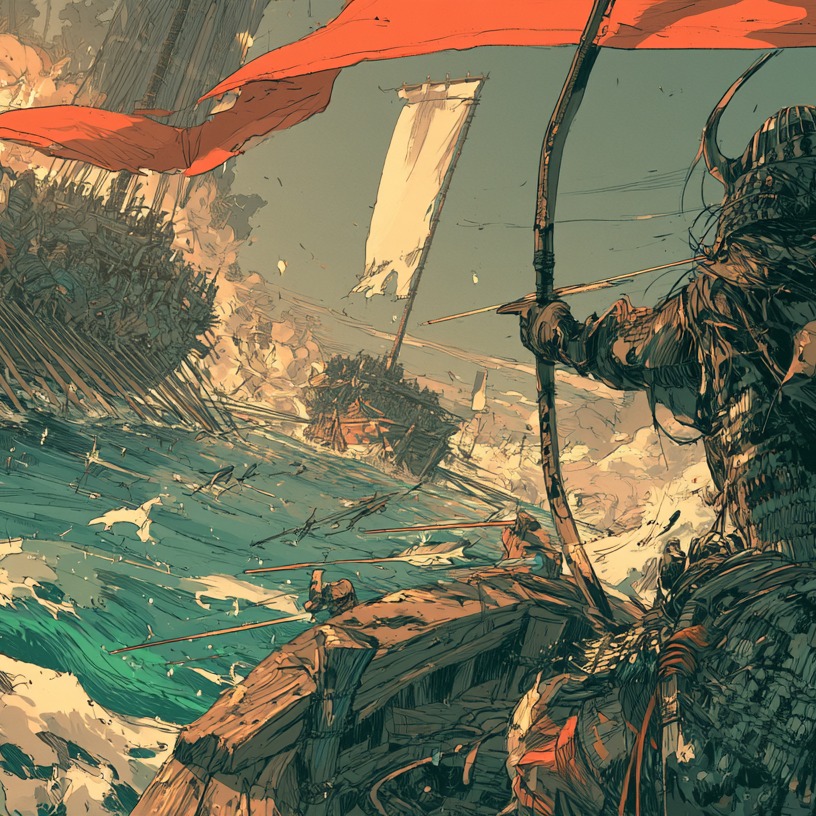

[Intro] [Chant] Gion shōja no kane no koe, shogyō mujō no hibiki ari, ogoreru mono mo hisashikarazu, tada haru no yo no yume no gotoshi. [Verse 1] The bell of Gion temple rings: nothing stays, the proud do not endure — they're a dream on a spring night, the mighty fall at last, like dust before the wind. [Verse 2] The Tie-rah ruled the capital, the proudest clan of all, the old lord's grandson was the emperor — a boy, still very small, then the Minamoto rose against them, white flags against the red, and five years of war drove the Tie-rah from the city, and they fled. [Verse 3] They fled west with the boy-king and the treasures of the throne, down the coast to the very edge of Japan, till the sea was all they owned, and at Dan-no-ura, in the narrow strait, they turned around to fight, red flags against the white on the water, from the first of the morning light. [Verse 4] In the morning, the tide ran with them, and the red flags held the strait, then at noon the current turned against them, and they knew it was too late, the white ships came in on the tide with archers on the rail, and the red flags started fallin', and the proud began to fail. [Biwa Solo] [Verse 5] His grandmother took the boy-king, six years old, into her arms, with the sacred sword tied to her side, and she held him close and warm, he asked her, "Where are we going?" and she smoothed his hair and said, "There's a capital beneath the waves" — and over the side they went. [Verse 6] And the Tie-rah women followed, and by evening on the tide, the red flags floated empty — the proudest clan in Japan had gone over the side, for centuries the blind monks walked the roads with this upon their backs, and sang it in the villages, the castles, and the fishing shacks. [Final Chant] Gion shōja no kane no koe, shogyō mujō no hibiki ari, ogoreru mono mo hisashikarazu, tada haru no yo no yume no gotoshi. [Outro]
