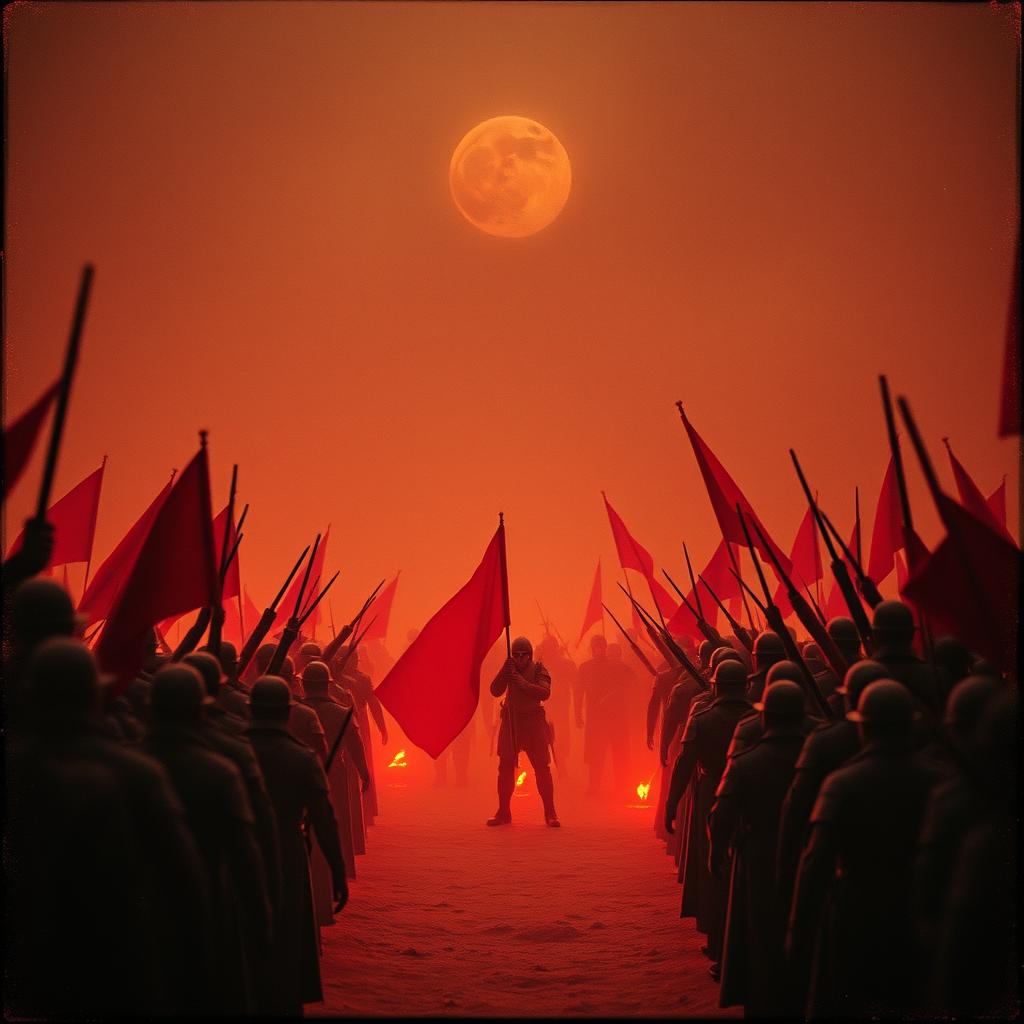
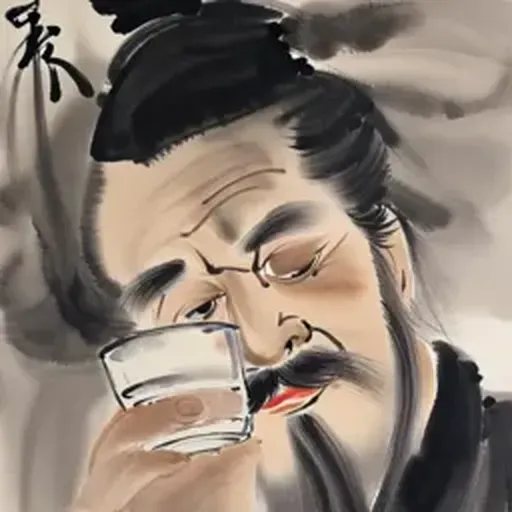
[Verse 1] 金殿颤 龙椅震碎山河裂 The golden hall quakes, the dragon throne cracks, tearing mountains and rivers. (Cultural note: “Golden hall” and “dragon throne” symbolize imperial or oppressive power in Chinese tradition. “Mountains and rivers” represent the nation, hinting at a society shaken by rebellion without explicit historical references.) 万骨枯 朱笔蘸血写诏页 Countless bones fade, the crimson brush dips in blood to scribe decrees. (Cultural note: “Countless bones” suggests mass suffering, while “crimson brush” (vermilion ink used by emperors) implies official narratives written at the cost of lives, evoking sacrifice without specific event ties.) 烽烟起 城门夜半鸦声绝 Beacon flames rise, city gates hush at midnight, crows’ cries silenced. (Cultural note: “Beacon flames” signal turmoil, and silent crows create an eerie atmosphere of oppression or aftermath, keeping the imagery broad to suggest conflict rather than a single event.) 谁在笑 说蝼蚁怎敢朝天阙? Who sneers, claiming mere ants dare defy the celestial spires? (Cultural note: “Ants” represent commoners, and “celestial spires” (天阙) alludes to the seat of power, framing a universal struggle of the powerless against authority.) [Chorus] 天子怒 千里血河淹日月 The emperor’s rage floods a thousand miles with rivers of blood, dimming sun and moon. (Cultural note: “Emperor” (天子, Son of Heaven) symbolizes tyrannical rule, and “rivers of blood” evoke widespread suffering, keeping the imagery archetypal rather than tied to a specific historical moment.) 匹夫恨 五步红梅绽石阶 A commoner’s fury blooms red plum on stone steps in five strides. (Cultural note: “Commoner” (匹夫) reflects the everyman’s defiance, and “red plum” symbolizes blood and nobility, with “five strides” suggesting swift, decisive rebellion, drawing on literary tropes of vengeance.) (嘶吼) (Roar) 布衣拔剑向天劫! A plain-clothed soul draws a blade against heaven’s wrath! (Cultural note: “Plain-clothed” (布衣) emphasizes the ordinary hero, and “heaven’s wrath” (天劫) suggests cosmic or systemic oppression, framing rebellion as a timeless act.) (鼓点暴烈) (Drums thunder wildly) 斩昏光 劈开永夜! Slash through shadowed light, rend the endless night! (Cultural note: “Shadowed light” and “endless night” symbolize moral or societal darkness, with the act of slashing evoking a universal fight for hope and justice.) [Verse 2] 草莽怒 寒刃挑破黄金帘 The wilds’ rage, a cold blade pierces gilded veils. (Cultural note: “Wilds” (草莽) denote outcasts or grassroots rebels, and “gilded veils” symbolize the opulent barriers of power, suggesting defiance from society’s margins.) 风雷啸 残旗卷过九重阶 Wind and thunder howl, tattered banners sweep past nine-tiered steps. (Cultural note: “Wind and thunder” evoke nature’s support for rebellion, and “nine-tiered steps” allude to the grandeur of power, now overrun, keeping the imagery mythic.) 侠骨裂 犹撞乾坤作洪钟 A hero’s bones may break, yet they ring the cosmos like a mighty bell. (Cultural note: “Hero” (侠) draws on the chivalrous archetype in Chinese culture, and the “mighty bell” symbolizes a resonant, enduring spirit shaking the universe (乾坤).) 自由歌 烫穿铁律三千卷 A song of freedom burns through three thousand scrolls of iron decrees. (Cultural note: “Three thousand scrolls” exaggerates rigid laws or traditions, and “freedom’s song” represents a fiery call for liberation, universal in its defiance.) [Bridge] 枷锁断 自由生在刀尖 Shackles snap, freedom sparks at the blade’s edge. (Cultural note: The “blade’s edge” symbolizes the perilous path to liberty, a poetic image of sacrifice and courage common in Chinese revolutionary literature.) 纵焚身 化星火 燎原! Though my body burns, it turns to sparks, setting the plains ablaze! (Cultural note: “Sparks setting the plains ablaze” (燎原) is a poetic nod to revolution’s spread, focusing on the universal idea of small acts igniting change, avoiding direct historical ties.) [Chorus] 天子怒 千里血河淹日月 The emperor’s rage floods a thousand miles with rivers of blood, dimming sun and moon. 匹夫恨 五步红梅绽石阶 A commoner’s fury blooms red plum on stone steps in five strides. 布衣焚天破戒! A plain-clothed soul torches the heavens, shattering all bounds! 换青天 重写誓约 Replace darkened skies with a clear dawn, rewrite the sacred vow. (Cultural note: “Clear dawn” (青天) symbolizes justice or a new era, and “sacred vow” suggests redefining societal promises, framed as a universal hope for renewal.) [Outro] 残阳坠 新碑刻满未竟愿 The fading sun falls, a new stone etched with unfulfilled dreams. (Cultural note: “Fading sun” (残阳) evokes an era’s end, and the “new stone” (碑) represents a monument to those who fought for unrealized ideals, emphasizing legacy over specific events.) 风起时 犹闻怒吼震长街 When winds rise, roars still echo through endless streets. (Cultural note: “Winds” signify change, and “endless streets” evoke public spaces of struggle, with “roars” symbolizing enduring defiance, kept timeless and universal.) (更坚定地重复) (Repeated with fiercer resolve) 残阳坠 新碑刻满未竟愿 The fading sun falls, a new stone etched with unfulfilled dreams. 风起时 犹闻怒吼震长街 When winds rise, roars still echo through endless streets.
