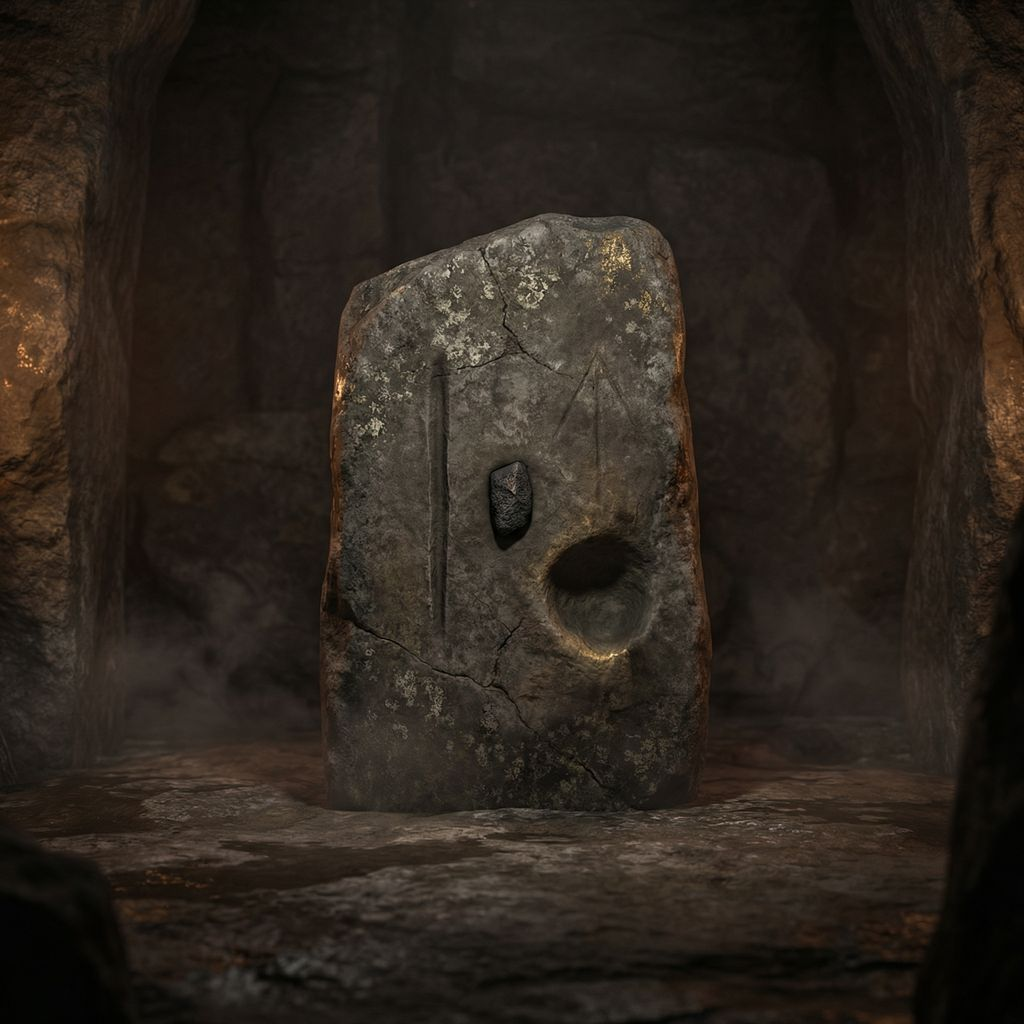
[ ▼ A philological rendering appears below the original text. ▼ ] Tuath Dé Danand na set soim. Cáit a fuaradar foglaim? Do rangadar suigecht slán A n-druigecht, a n-diabaldán. Iardanel Find, faith co feib, Mac Nemid, mac Agnomain, D’ar mac baeth Beothach bertach, Ba loech leothach, lánfhertach. Clanna Beothaich — beoda a m-blad — Rangadar sluag niath nertmar, Iar snim is iar toirrsi truim, Lín a loingsi co Lochluinn. Ceithri cathracha — clu cert — Gabsad a rém co rónert. Do chuirdis comlann co cas Is d’foglaim a fireolas. Fáilias ocus Goirias glan, Findias, Muirias na morgal, Ó maitea madmann amach, Anmanna na n-ardchathrach. Morfis ocus Erus ard, Uscias is Semiath sirgarg, Ré n-garmand — luag a leasa — Anmann suad a s-sarfeasa. Morfis fili a Fáilias féin, Esrus a Goirias, germen, Semiath a Muirias, dind dias, Uscias fili find Findias. Ceithri h-aisceda leo anall, D’uaislib Tuatha Dé Danand: Claideb, cloch, coiri cumal, Sleag rí h-aidid ardcurad. Lia Fáil a Fáilias anall, Géssed fo rígaib Érend. Claideb láma Loga luidh A Goirias — roga rocruid. A Findias tar fairrgi i fad Tucad sleag nemneach Nuadat. A Muirias, main adbol oll, Coiri in Dagda na n-ardglond. Rí Nime, Rí na fér fand, Ro-m-aince, Ríg na rigrand, Fear cá fuil fulang na fuath, Ocus cumang na caemtuath. — ❦ — This text is a significant excerpt from the Lebor Gabála Érenn (The Book of Invasions). It describes the origins, magical training, and the four hallowed treasures of the Tuatha Dé Danann, the divine race of Irish mythology. The Coming of the Host (Philological Rendering) The Folk of Danu, of the rich treasures, Where did they find their lore? Fullness of mastery they found in their wandering, In hidden-craft and enchantment-skill. Iardanel the Fair, a seer of power, Son of Nemed, son of Agnomain; Whose son was Beothach, bold and eager, A fierce hero, full of wonders. The kin of Beothach, vivid their fame, A host of warriors, hardy and strong, After weary wandering and weight of sorrow, Their fleet made landfall in the North¹. Four cities they held, a rightful rule, With strength they stayed their path. There they sought out the clash of contests, And learned the lore of true-knowledge. Fáilias and Goirias, gleaming cities, Findias and Muirias of the great deeds. From those high halls the heralds of victory Cried the names of the rock-fast burgs. Morfis and Erus, elder in wisdom, Uscias and Semiath, stern and grim, By their titles they were told, a token of honor, The names of the Sages of great-knowledge. Morfis the Poet in Fáilias sat, Erus in Goirias, a seed of growth, Semiath in Muirias, the second of two, Uscias the Poet in Findias dwelt. Four hallows they bore from the sea, For the lords of the Folk, the High-kings of Danu: A blade, and a stone, a cauldron of abundance, And a spear for the slaying of kings. The Stone of Destiny from Fáilias brought, To cry out under the Kings of the Isle. The Sword of Lugh’s hand from Goirias went, A choice of wealth, a warrior’s prize. From Findias, over the foam of the sea, The venomous spear of Nuada was borne. From Muirias, a mighty possession, The Cauldron of the Dagda of high deeds. The King of the Heavens, of the gentle hosts, May He ward me well, the Wielder of Realms, The Man who endures against all hatred, The Strength of the Tribes in the strife of the world. ___ Note on the Text 1. The North (Lochlann): In the Middle Gaelic original, the term used is Lochlann. In later historical contexts, this name refers specifically to Scandinavia or the lands of the Norsemen. However, in the Elder Lore of the Lebor Gabála, it signifies the Northern Isles of the World—a realm beyond the known seas where the Tuatha Dé Danann dwelt in their youth. To the philologist, the name suggests a "land of lakes" or "firths," yet in this mythic capacity, it represents the primordial source of their "enchantment-skill." Like the Uttermost North in other mythologies, it is a place of cold clarity and high wisdom, situated between the world of men and the dwelling of the gods. [Middle Gaelic text from Lebor Gabála Érenn (public domain).] [Philological rendering, production, and direction by Noizgenie.] [Cover Art Direction by Noizgenie. © 2026 Noizgenie.]
